

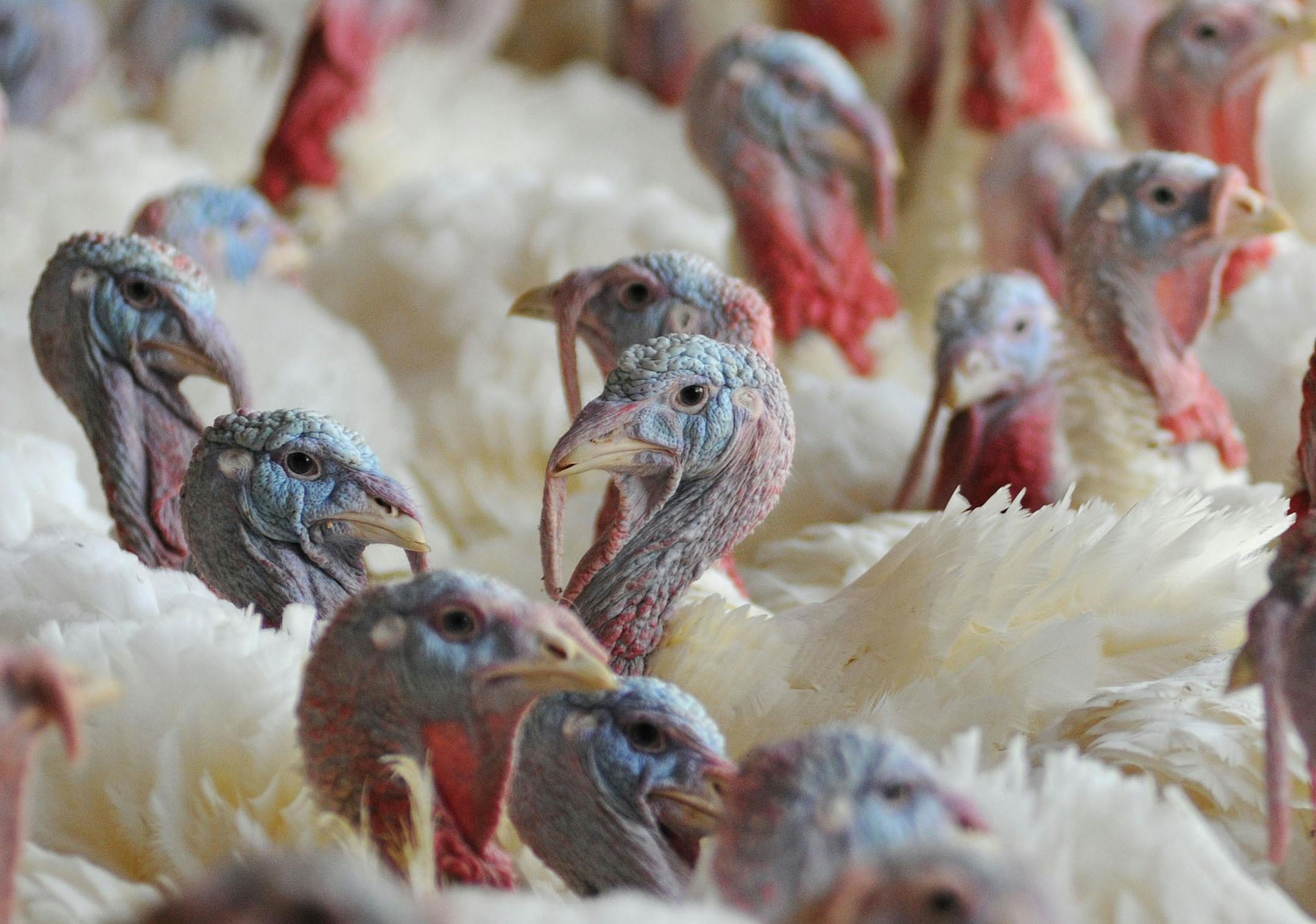
Farms that raise turkeys and chickens for meat and eggs are on high alert and taking steps to increase biosecurity, fearing a repeat of a widespread bird flu outbreak in 2015 that killed 50 million birds across 15 states and cost the federal government nearly $1 billion.
The new fear is driven by the discovery announced Feb. 9 of the virus infecting a commercial turkey flock in Indiana. The 29,000 turkeys in the flock were killed to prevent spread of the virus.
The poultry industry and government officials say they have plans to more quickly stop the spread that were learned from the 2015 outbreak, but they're urging caution since the virus strain is potentially deadly to commercial poultry. Egg, turkey and chicken prices could rise and availability could drop if birds at enough farms are infected.
"It's definitely considered a period of high risk now that we have a confirmed case of highly pathogenic avian influenza in the commercial poultry industry," said Dr. Denise Heard, a poultry veterinarian and vice president of research for the U.S. Poultry & Egg Association. "I feel positive that we can tackle this situation better and I have my fingers crossed that this will be an isolated case, however, I would hope for the best and be prepared for the worst."
Health officials say no human cases of avian influenza viruses have been detected in the U.S. and the disease doesn't present an immediate public health concern. The virus can spread from infected birds to people but such infections are rare and haven't led to sustained outbreaks among humans.
The 2015 outbreak led producers to kill 33 million egg-laying hens in Iowa, the nation's leading egg producer, and 9 million birds in Minnesota, the nation's leading turkey producer, with smaller outbreaks in Nebraska, South Dakota and Wisconsin.
The disease caused egg and turkey prices across the country to soar for months, with the cost of eggs up 61% at one point and prices for boneless, skinless turkey breasts rising 75% between May and July 2015.
The outbreaks were deemed the most expensive animal health disaster in U.S. history, costing the government nearly $1 billion for removal and disposal of infected birds and government indemnity payments to producers for the lost birds.


