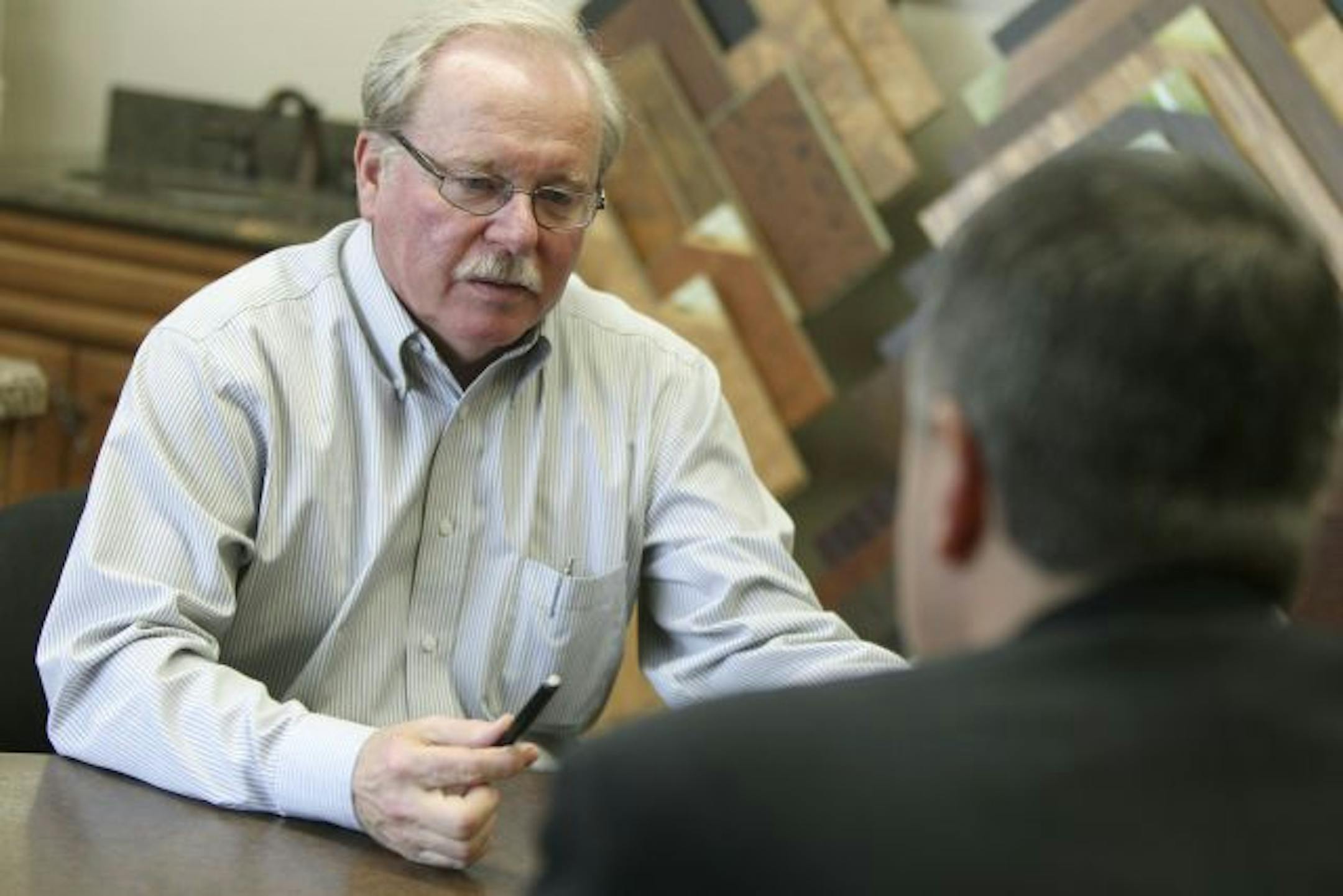
Roger Casper is darting through the driving rain to his car outside a strip mall in Bloomington, a folder of bank documents in one hand and a buzzing cellphone in the other.
Casper, a U.S. Bancorp branch manager, has a killer schedule ahead of him. It includes five hours of back-to-back meetings with small-business owners, including stops at a flooring retailer, a computer parts wholesaler, a technology consulting firm and a construction contractor. He won't set foot in his branch on Lyndale Avenue S. in Bloomington until sundown.
"You can't sit back in a branch and wait for a small business to pick up the phone," Casper, 46, said. "You have to go out and get it."
Casper is part of an ambitious and unorthodox experiment by the nation's fifth-largest bank, which is training more than 3,000 branch managers across the country to be part-time loan officers. No longer chained to their desks, branch managers at U.S. Bancorp are now required to spend nearly half their work hours either calling or visiting business owners.
Though other large banks have ramped up their small-business lending in recent months, U.S. Bancorp is believed to be the first to put branch employees out on the street to make loans to neighborhood businesses. Traditionally, loan prospecting was left to loan officers, while branch managers stuck to administrative tasks and serving consumers in the branches. The clear division of responsibilities kept confusion to a minimum.
The change reflects a newfound hunger on the part of the nation's largest banks for loan growth, which remains anemic despite the rebounding economy. Small-business owners are seen as a particularly attractive target because they often purchase other services, from payroll processing to credit cards.
However, by sending its branch managers into the field to knock on doors, U.S. Bancorp is entering virgin territory, and one fraught with potential risks.
The Minneapolis-based bank must teach the language of business and cash-flow accounting to thousands of branch employees, many of whom are former tellers with no experience making business loans. It risks distracting branch employees from serving regular customers, while alienating potential business clients if the employees appear unprofessional, say industry experts.