

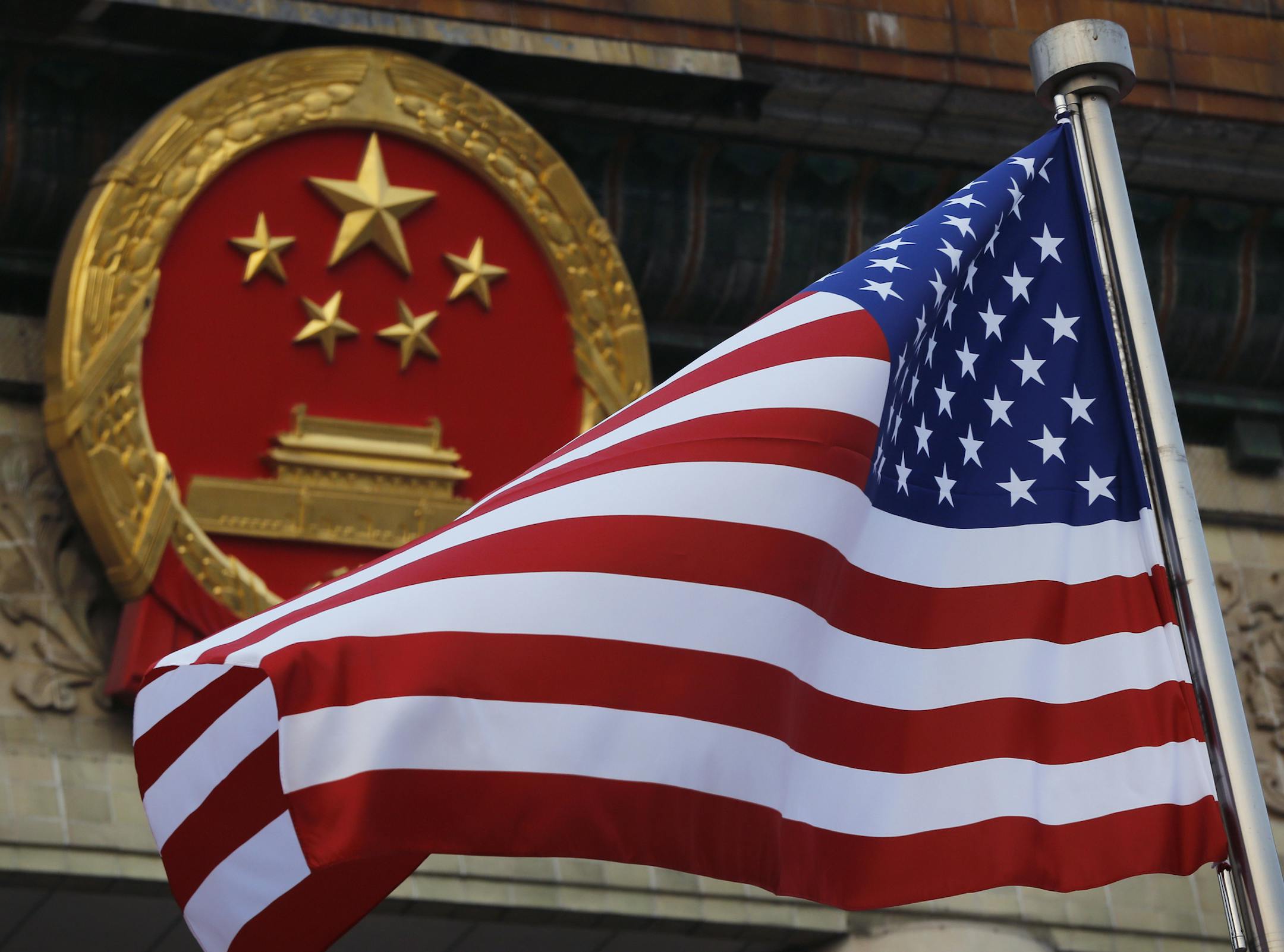
For the past quarter-century, America's approach to China has been founded on a belief in convergence. Political and economic integration would not just make China wealthier, they would also make it more liberal, pluralistic and democratic. There were crises, such as a faceoff in the Taiwan Strait in 1996 or the downing of a spy plane in 2001. But America cleaved to the conviction that, with the right incentives, China would eventually join the world order as a "responsible stakeholder."
Today, convergence is dead. America has come to see China as a strategic rival — a malevolent actor and a rule-breaker.
The Trump administration accuses it of interfering in America's culture and politics, of stealing intellectual property and trading unfairly, and of seeking not just leadership in Asia but also global dominance. It condemns China's record on human rights at home and an aggressive expansion abroad.
This month Vice President Mike Pence warned that China was engaged in a "whole-of-government" offensive. His speech sounded ominously like an early bugle-call in a new cold war.
Do not presume that Pence and his boss, President Donald Trump, are alone. Democrats and Republicans are vying to outdo each other in bashing China. Not since the late 1940s has the mood among American businessfolk, diplomats and the armed forces swung so rapidly behind the idea that the U.S. faces a new ideological and strategic rival.
At the same time, China is undergoing its own change of heart. Chinese strategists have long suspected that America has secretly wanted to block their country's rise. That is partly why China sought to minimize confrontation by "hiding its strengths and biding its time."
For many Chinese, the financial crisis of 2008 swept aside the need for humility. It set America back while China thrived. President Xi Jinping has since promoted his "Chinese Dream" of a nation that stands tall in the world. Many Chinese see America as a hypocrite that commits all the sins it accuses China of. The time to hide and bide is over.
This is deeply alarming. According to thinkers such as Graham Allison of Harvard University, history shows how hegemons like the U.S. and rising powers like China can become locked into a cycle of belligerent rivalry.


