

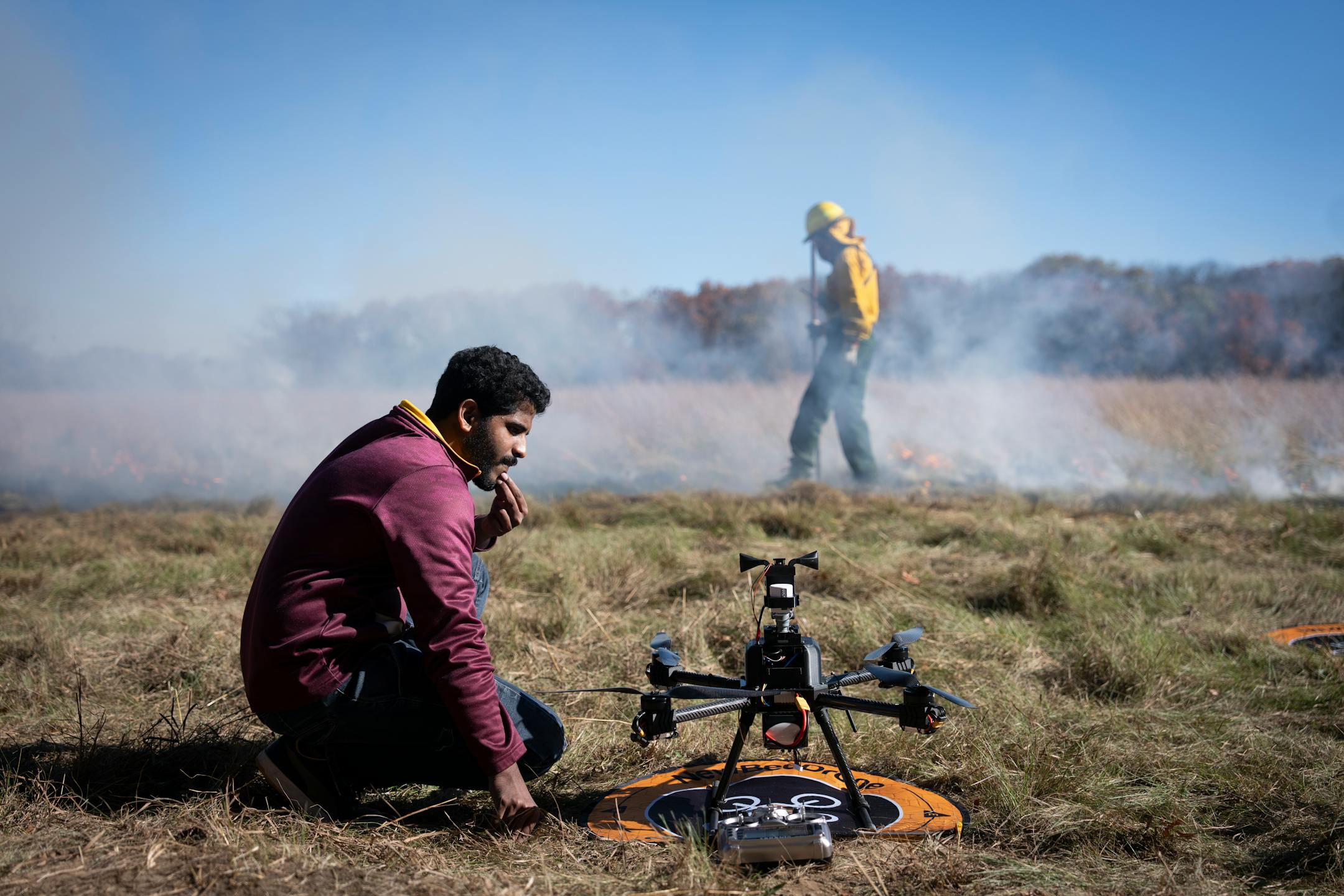
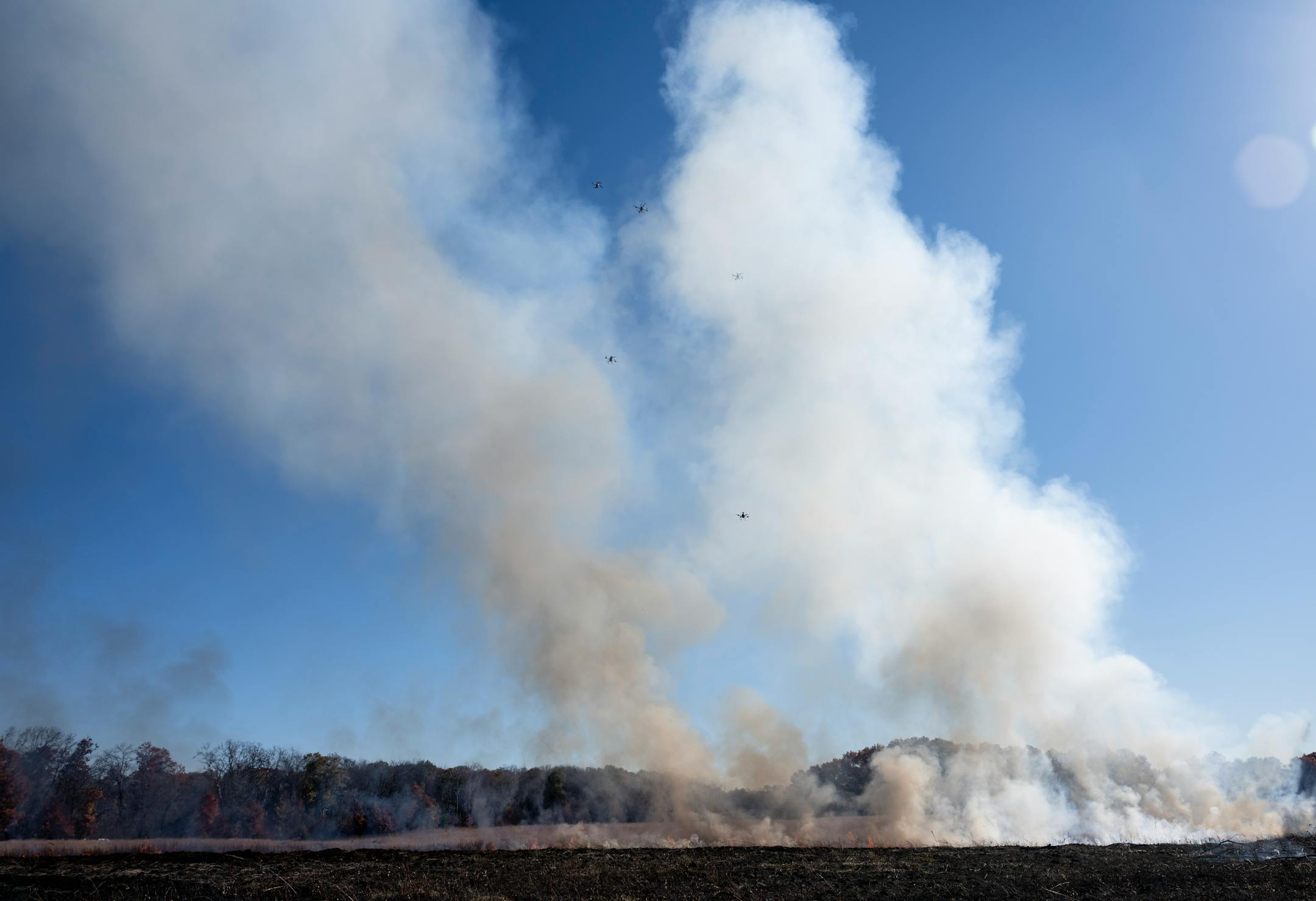
Plumes of smoke drifted up from a fire steadily taking over a 30-acre prairie at Cedar Creek Ecosystem Science Reserve, north of the Twin Cities. Amid the haze, five black drones zipped around.
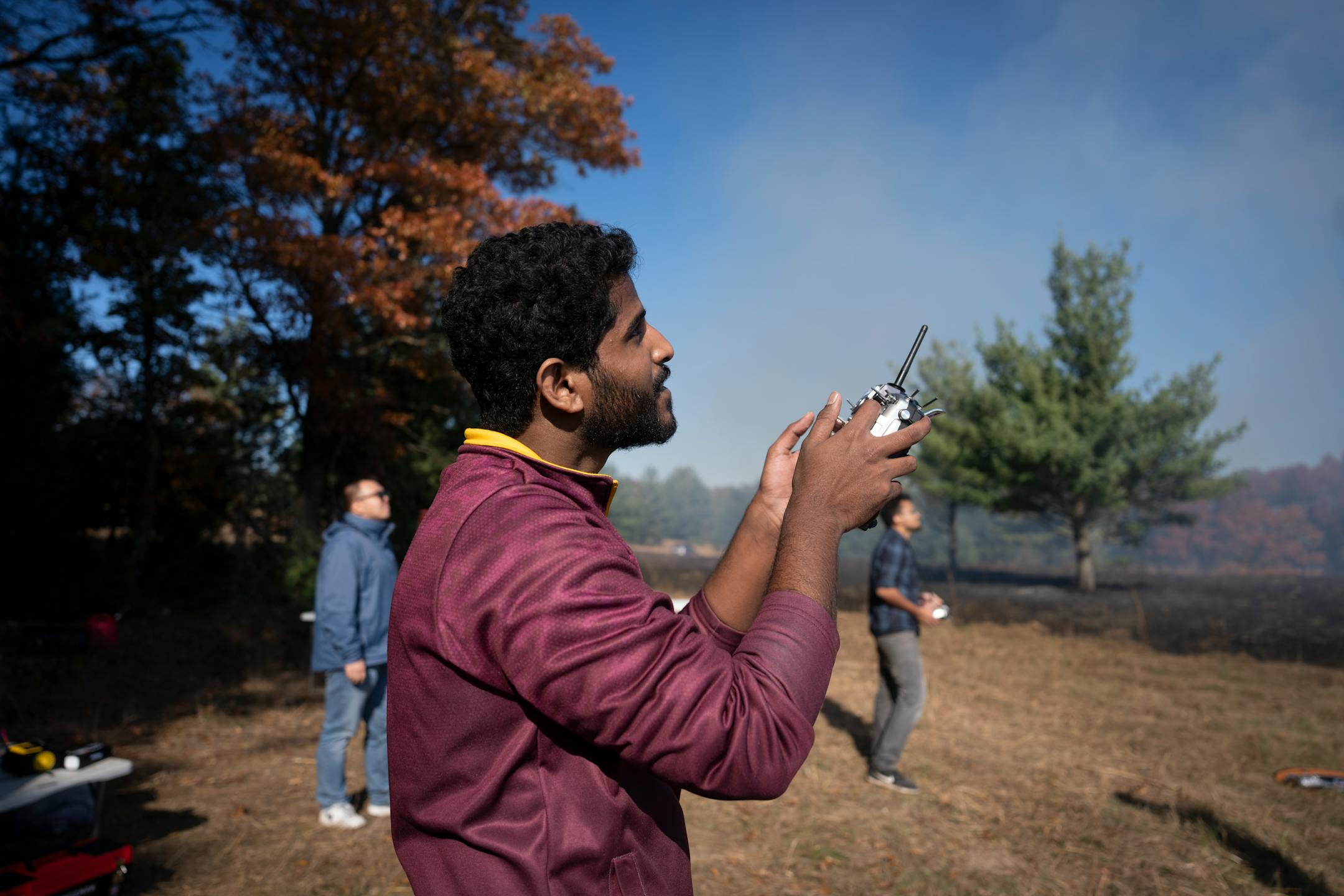
More than 150 feet below the flying robots, research student Nikil Krishnakumar raised the controller in the air.
“It’s all autonomous now,” he said. “I’m not doing anything.”
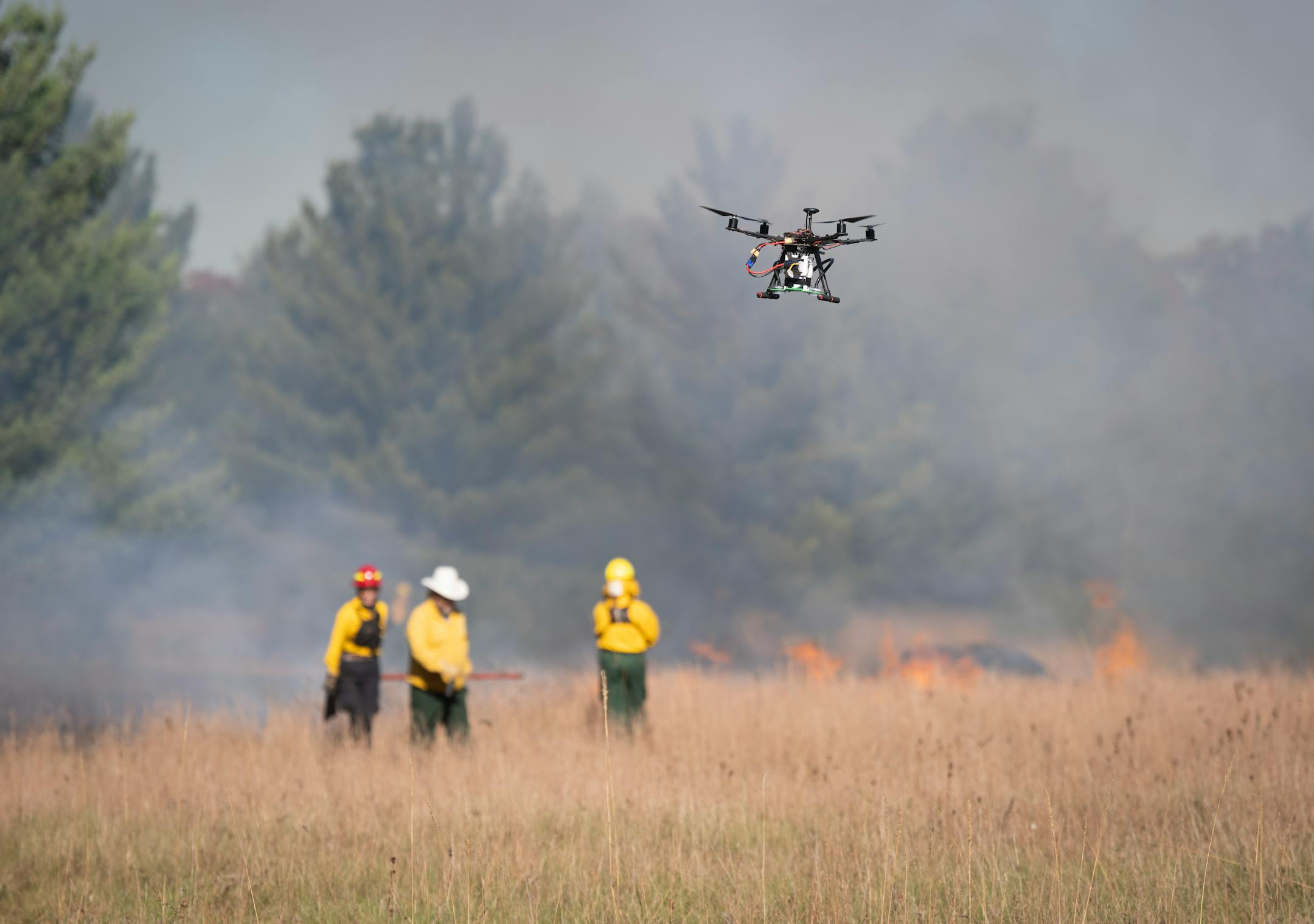
The aerial robotic team’s mission: examine the smoke from the prescribed burn and send the data to a computer on the ground. The computer then analyzes the smoke data to understand the fire’s flow patterns, Krishnakumar said.
The University of Minnesota project is the latest research into using artificial intelligence to detect and track wildfires. The work has become more urgent as climate change is expected to make wildfires, like those that devastated Manitoba this summer, larger and more frequent.
NOAA’s Next-Generation Fire System consists of two satellites 22,000 miles above the equator that detect new sources of heat and report them to local National Weather Service stations and its online dashboard. Earlier this year, the satellites were credited with spotting 19 fires in Oklahoma and preventing $850 million in structure and property damage, according to the agency.
In Minnesota, Xcel has installed tower-mounted, AI-equipped high-definition cameras near power lines in Mankato and Clear Lake. Thirty-six more are planned. When a fire is detected, local fire departments are notified.
Krishnakumar and other members of the U’s research team performed their 11th trial at the U’s field station in East Bethel on Friday, with notable improvements from their previous attempts.


![Attendees of Frostbike made their way through the convention Saturday at the Quality Bike Products campus in Minneapolis. ] (AARON LAVINSKY/STAR TRIBUNE) aaron.lavinsky@startribune.com Frostbike 2016 was held at the Quality Bike Products Campus on Saturday, Feb. 27, 2016 in Bloomington, Minn.](https://arc.stimg.co/startribunemedia/NH2BSHB74ND2V6GF2G2HI5X4MM.jpg?&w=252&ar=3:2&fit=crop)