

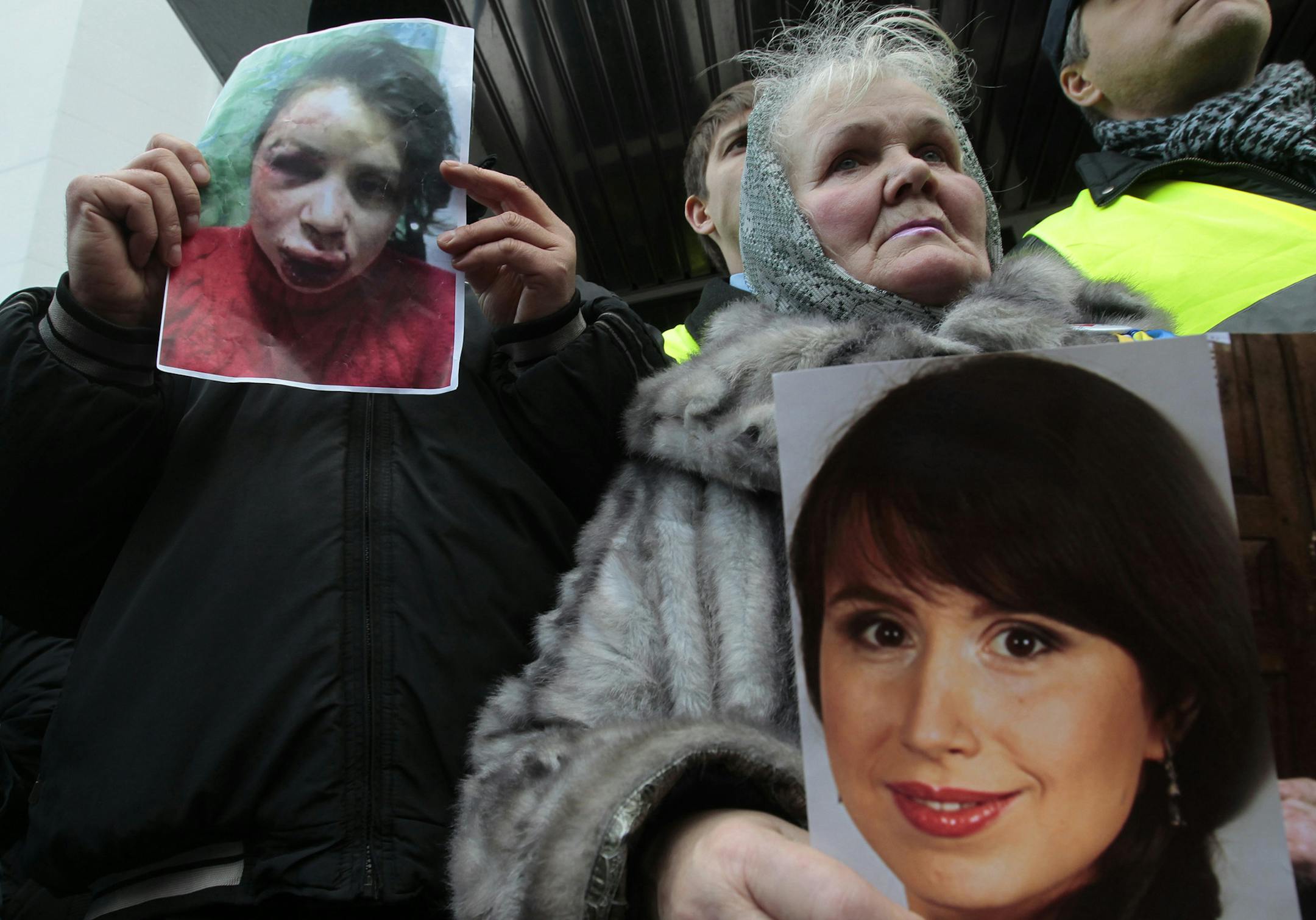
On Christmas, Tetyana Chernovil, a gutty antigovernment journalist and activist in Ukraine, was driving home. Having previously exposed the opulent excesses of Ukrainian President Viktor Yanukovych's residential compound, she had just finished covering one of the mass protests that have rocked Kiev since Yanukovych eschewed a European Union association agreement to instead consider a customs union with Russia. An SUV chasing Chernovil cut her off. She tried to flee, but the thugs in pursuit broke her car window, then savagely beat her.
The targeting of journalists like Chernovil is a growing global outrage, according to two recently released reports. On Monday, the Committee to Protect Journalists issued its annual tally on journalists killed. At least 70 lost their lives because of their work. While this was down slightly from the 74 journalists lost in 2012, CPJ is investigating 25 more deaths to determine if they were work-related. Since CPJ started tracking in 1992, 1,000 — about one a week — have been killed.
Certain journalism jobs have always been perilous, and 36 percent of those killed last year were due to combat or crossfire. Twenty percent died undertaking some other kind of dangerous assignment. But 44 percent were intentionally targeted because of their reporting.
About two-thirds were murdered in the Middle East — a "killing field" for journalists, according to the report. Syria's savage civil war, where journalists are often treated as targets, not observers, accounted for 29 deaths in 2013. At least 63 have died there since 2011's peaceful protests spiraled into violence. The Mideast killing fields include countries closely associated with the United States. Iraq, wracked anew by sectarian violence, saw 10 deaths, with nine deliberate. Egypt's six killed include three in one day who were chronicling postcoup raids on supporters of ousted President Mohammed Morsi. In Pakistan, four of five were lost in bomb blasts.
In Somalia, five were murdered, which was actually down from a record 12 in 2012. Two killed in Mali were foreign correspondents for Radio France Internationale.
But worldwide, nine out of 10 murdered journalists were local reporters covering local stories, reported CPJ.
Along with the killings, 2013 saw a sharp spike in kidnappings: 87 journalists were abducted in 2013, compared with 38 in 2012, according to a Dec. 18 analysis from Reporters Without Borders. Once again, Syria led the way, with 60 journalists kidnapped this year alone (30 are still missing).
Even more are incarcerated. There are at least 178 jailed journalists, with China, Eritrea, Turkey, Iran and Syria the world's worst offenders, according to RWB.


