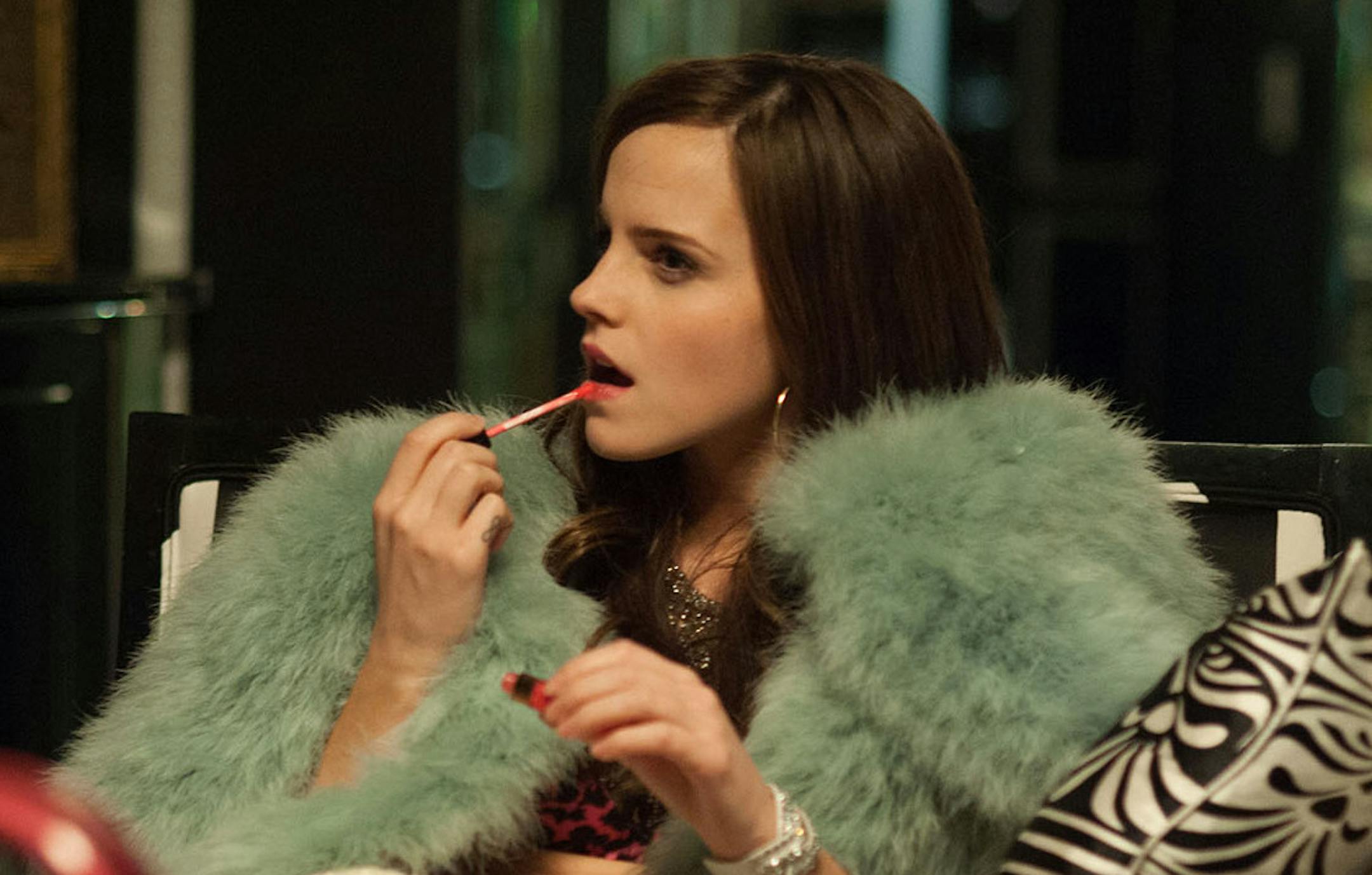
Hacking, phishing and the National Security Agency revelations have led many to wonder: Who is watching us? But two new movies with simultaneous, serendipitous Friday premieres, invert the question. Who, or what, are Americans paying attention to?
The more celebrated film, "The Bling Ring," is about celebrity obsession. The bling refers to the clothes, shoes, jewelry and cash of Hollywood's A-list. The ring — privileged teen thieves living around Los Angeles — is motivated by celebrity obsession as much as by materialism.
Sure, the goods the gang steals are expensive. But the real value seems to be stealing a moment, or memento, from famous lives like Orlando Bloom, Megan Fox, Lindsay Lohan, Paris Hilton, Audrina Patridge and other real and reality-TV stars targeted by the burglars.
"The Bling Ring," based on real events, shows that the thieves weren't poor. But they were on the outside looking in. (At least until they got in — and got away with goods perceived to have high value in part because they were owned by the rich and famous.)
Celebrity obsession is nothing new. But like so much in today's technologically transformed, modern-media era, its impact is amplified by niche networks, programs and websites dedicated to celebrity watching, as well as by soaring social-media use.
This media saturation sometimes results in stories morphing into postmodernism. For example, once caught, the real-life bling ring was chronicled by E!, TMZ, and other celebrity-watching websites, networks and programs. In fact, the thieves achieved their own degree of fame (or infamy) for their crime spree. Sure, they ruined their futures. But to some, that brief paparazzi present seemed to be a gift.
Some involved in the film are intimately familiar with fame, which makes "The Bling Ring" even more intriguing. Director Sofia Coppola grew up in a famous family, sometimes surrounded by Academy Award-winning talent directed by her famous father, Francis Ford Coppola, in monumental movies like "The Godfather." And "The Bling Ring's" most notable star, Emma Watson — who inverts her image of "Harry Potter's" whip-smart heroine Hermione Granger into a vacuous Valley Girl — would have been the type of star targeted by the ring had she had a Hollywood house. Most remarkably, Paris Hilton, famous for being famous, makes a cameo, and even allowed Coppola to film in her home (which to audiences appears like exhibit A of A-list excess that seems to sum up this era).
Meanwhile, "Dirty Wars" is the antithesis of the themes explored in "The Bling Ring." Part documentary, part personal journalistic journey by Jeremy Scahill, an investigative foreign correspondent for the Nation magazine, "Dirty Wars" is about the metastasizing military response to the "war on terror." In an emotional first-person narrative, Scahill argues that President Obama's antiterrorism tactics, including drone strikes and special-forces nighttime raids, represent a counterproductive, shady strategy.