



The book on Ben Revere is that he is a slap-hitting, bloop-knocking, fast-running, somersaulting offensive contributor.
In his first full season at the major league level last year, he demonstrated outstanding contact. Of course, the catch was that his contact did not go anywhere. Revere would drive the ball into the ground and try to leg it out. In fact, among those with at least 400 plate appearances last year, his 68.5% ground ball rate led baseball. When he did put the ball in the air, the majority of the time it was a dying quail just past the arms of an outstretched infielder. Had Revere been on a slow-pitch softball team, none of his hits would have left the yard.
From his hit distribution chart from TexasLeaguers.com (an aptly named website in this case) of his 2011 batted balls, you can see the Twins would need to haul in their fences a good 150 feet in order to turn Revere into a home run hitter:
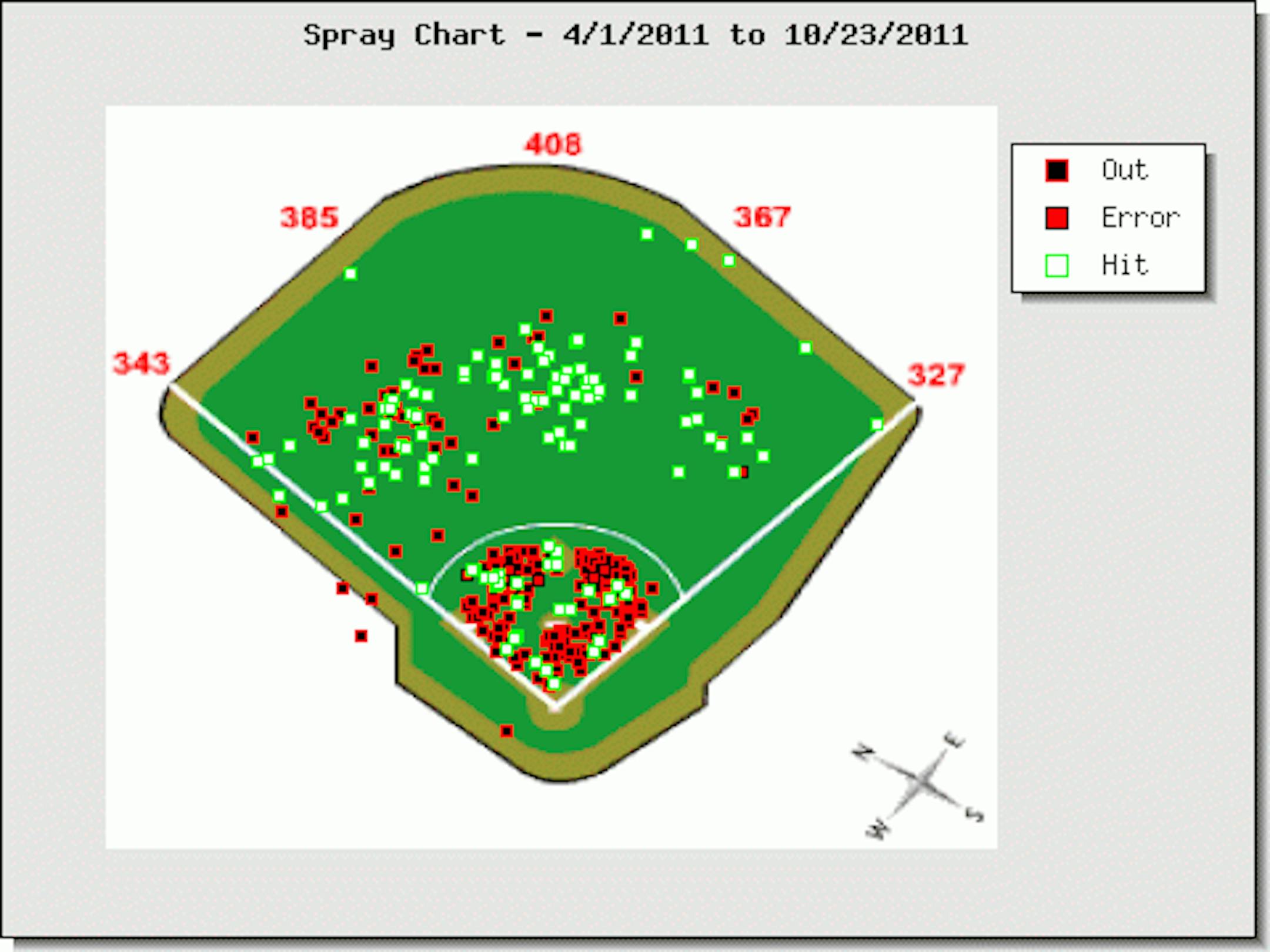
The rookie season results were none too impressive for the outfielder. In 450 plate appearances, Revere posted a .267 average but matched that with a disappointing on-base percentage (.310) and non-existent slugging percentage (.309). Because of his lack of power, any extra base hits would have to come in the form of shooting the ball through the drawn in outfield alignment.
While his time with the Twins in 2012 has been brief, it has felt like he is getting a bit more distance on the ball than he had a year ago. In Milwaukee he doubled on a ball that one-hopped the warning track – a veritable Thome-ian blast for Revere. Later, he flew out to center in which the center fielder had to gallop all the way to the dirt to field. Last night in Chicago, he sent White Sox center fielder Alejandro De Aza near the warning track to nab another fly ball.
Perhaps this was all based on a small sample sized memory but it felt like Revere was sending more pitches deeper into the ballpark then he ever did last year. Turns out, I wasn't crazy. A cursory check at the website BaseballHeatMaps.com confirms that the sophomore is indeed getting more distance on his drives versus a year ago. In 2011, his fly balls and line drives averaged 243.47 feet off of his bat. This year, he's added almost 30 feet, hitting his flies and liners 272.87 feet.
Twins fans like to offer the Kirby Puckett comparison for Ben Revere's potential. After all, Puckett, like Revere, began his career as a light-hitting speedster. And it was not until Puck's third year in the majors that he hit 31 home runs after hitting a total of four in the previous two seasons. Eternal Twins optimists believe that maybe, just maybe, the 24-year-old Revere can somehow elevate his power the same way Puckett did at age-26. Now after watching him for almost two seasons worth of at bats, I do not see in anyway Revere adds legitimate clout like Puckett had. His swing is too direct to the ball and drives down at the pitch, leading to a high amount of grounders and line drives – which is perfectly suited to fit his speed.
If Revere is not capable of developing any sort of real power, why would the fact that he's driving his few fly balls and occasional liners a tad further noteworthy?


