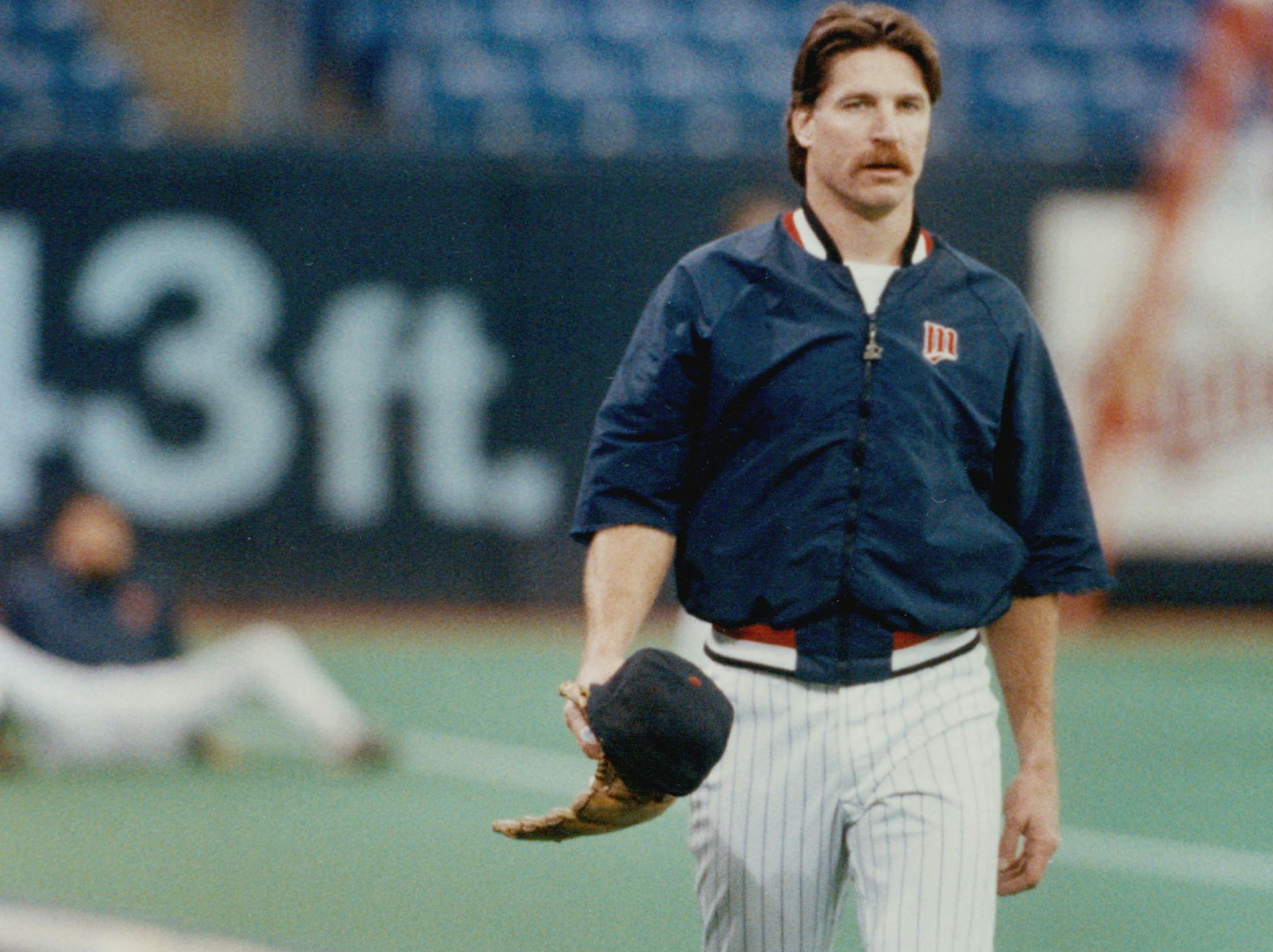
LAKE BUENA VISTA, FLA. – Jack Morris had spent more time preparing to be let down than wondering how he'd react if told he was finally a Baseball Hall of Famer.
So when the St. Paul native and 1991 Twins World Series hero got the call to the Hall — right at 4:45 p.m. Sunday — he was undone.
"I was so emotional," Morris said. "I didn't expect it, I'm not lying to you. I didn't expect it because I realize how difficult it has been."
The curious case of Jack Morris is now closed as he was voted into the Hall of Fame by a special Modern Baseball Era committee. This group of former players as well as executives and media members was entrusted with examining candidates who did not get into the Hall after spending 15 years on the Baseball Writers Association of America ballot, and whose greatest contributions to the game occurred from 1970-1987.
The 62-year-old Morris, one of 10 on the ballot, received 14 of 16 votes — 12 were needed for induction. Also voted in, with 13 votes, was former Detroit Tiger Alan Trammell — the best shortstop in baseball not named Cal Ripken Jr. for a large part of the 1980s. Morris and Trammell played together from 1977 to 1990 and are the first players from the Tigers' 1984 championship team to reach Cooperstown, N.Y.
"They told me to be by my phone between 5:15 p.m. and 5:45 p.m.," Morris said. "And right at 5:45, the phone rings. I'm like, 'Oh, no!' In two minutes, I would have been fine."
Morris and Trammell will be inducted on July 29. The rest of the class will be announced on Jan. 24.
Morris, a workhorse righthander who pitched from 1977 to 1990, won 20 games three times while amassing a career record of 254-186. He played on four World Series-winning teams, and his 162 victories in the 1980s were the most of any pitcher. Yet his 3.90 career ERA becomes the highest of any pitcher in the Hall of Fame, and he never won a Cy Young Award. That and having nothing stand out when you dive deep into his stats led him on a slow walk to Cooperstown, much like that of Bert Blyleven, the last former Twin enshrined. But these voters, full of contemporaries such as Rod Carew and George Brett, felt differently.