

Opinion editor’s note: Strib Voices publishes a mix of guest commentaries online and in print each day. To contribute, click here.
•••
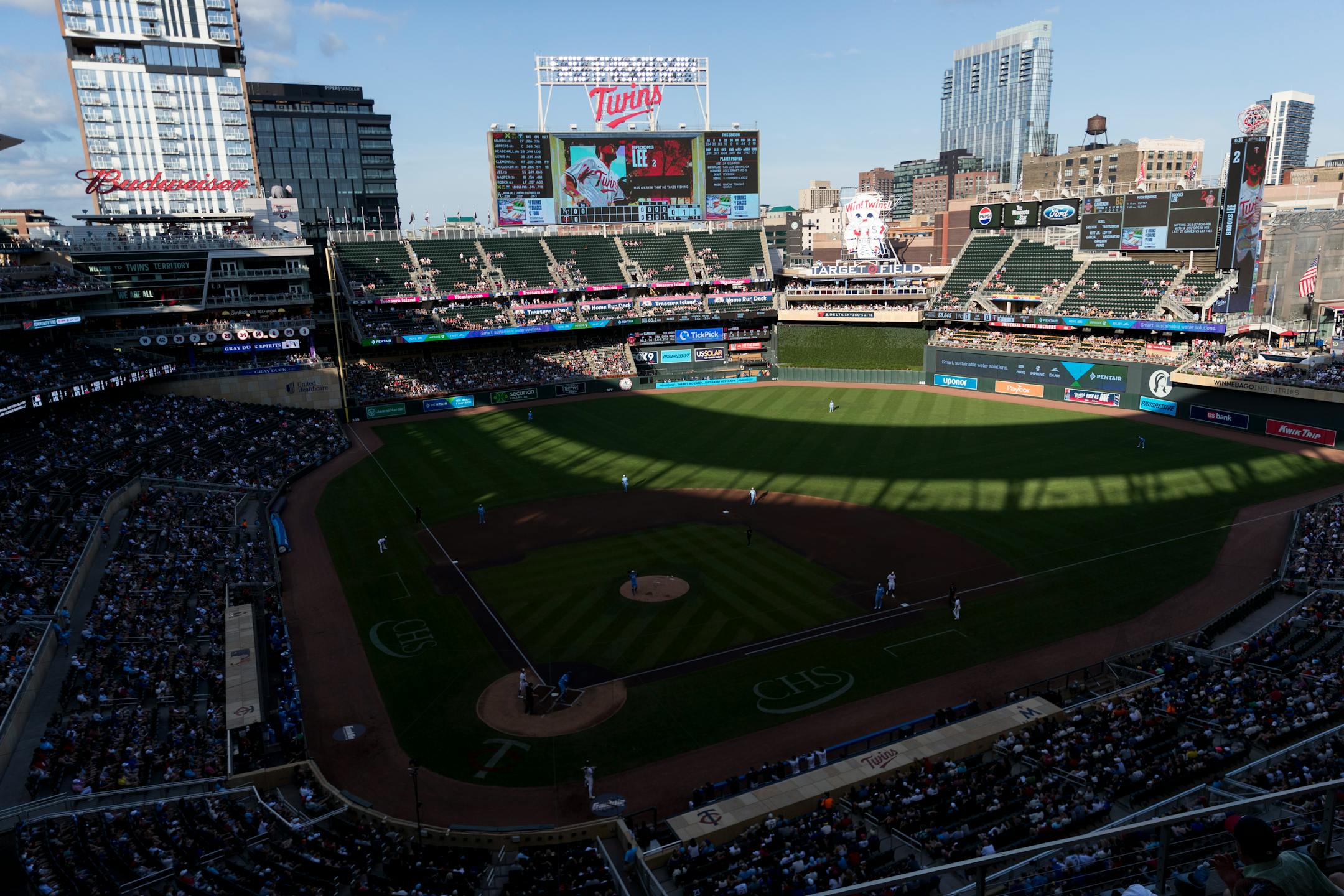
If you are like us, summer represents another opportunity to hope that baseball will bring a magical fall. This summer has mostly been a nightmare for Minnesota baseball fans, though. It culminated in a trade deadline fire sale that saw the Twins shed 40% of their roster. In the case of closer Jhoan Duran, even his iconic entrance was shipped out to a new team. If there was any silver lining to be had in this misery, it was that these trades were widely seen as a restart of the Pohlad family’s efforts to sell the team. Instead, Minnesotans remain stuck.
Yet, while a full sale of the team is off the table, the Pohlads statement announcing their intent to keep the team also opened the door to a more democratic ownership model. “To strengthen the club in a rapidly evolving sports landscape — one that demands strong partnerships, fresh ideas, and long-term vision — we are in the process of adding two significant limited partnership groups.” While we are not holding our breath that these new minority owners represent a dramatic departure from the usual class of rich dudes, what if an alternative was possible?
Fans currently have to pin their hopes on billionaires who might lavish their team in personal riches or be more tightfisted than even the Twins. Instead of continuing to play billionaire roulette, this could be the start of turning over the Twins to an ownership model as Minnesotan as tater tot hotdish or duck duck gray duck. We are speaking of course about cooperatives — enterprises owned and democratically run by their members — that have been a part of Minnesota communities for more 100 years.
Cooperatives first came to prominence in Minnesota and the Upper Midwest, allowing farmers to use their collective power to fight exploitation by monopoly businesses and get a fair price for what they had produced. In 1914, farmers in Yellow Medicine County organized the first cooperative providing electric service in the country. In 1922, U.S. Rep. Andrew Volstead on Minnesota led passage of the Capper-Volstead Act, which effectively fully legalized co-ops across the country. In the 1970s, Minnesotans organized the grocery cooperatives that launched the modern food co-op movement. Today, Minnesota has more than 800 co-ops with 3 million co-op members contributing tens of billions of dollars to the state’s economy.
These are not all small businesses either — Fortune 500 companies like CHS and Land O’Lakes are cooperatives and much larger and more complex than a sports franchise, making partial ownership of the Twins by a fan cooperative a realistic alternative. In fact, this would not be the first time more democratic ownership has been considered. During the 1997 legislative session a bill emerged that would have given the state of Minnesota a 49% ownership interest in the Twins as part of taxpayer financing of a new stadium.
There are more than theoretical examples, though. Stay with us, Vikings fans, but since 1923 the Green Bay Packers have been a nonprofit that today boasts 539,029 fan shareholders with shares selling for $300 during the team’s most recent offering in 2022. Despite being in the smallest metro area in the NFL, the Packers are the 13th most valuable team, according to Forbes. But the Packers are not the only pioneers. The Minnesota Aurora, a new professional women’s soccer team, is owned by a collection of more than 3,000 fans from across the country.


