Minnetonka latest suburb looking at ways to deter homeless encampments

The city is among several suburbs that have recently considered updating their ordinances following a Supreme Court decision allowing bans on sleeping outside on public property.

The Minnesota Star Tribune
July 31, 2025 at 11:00AM
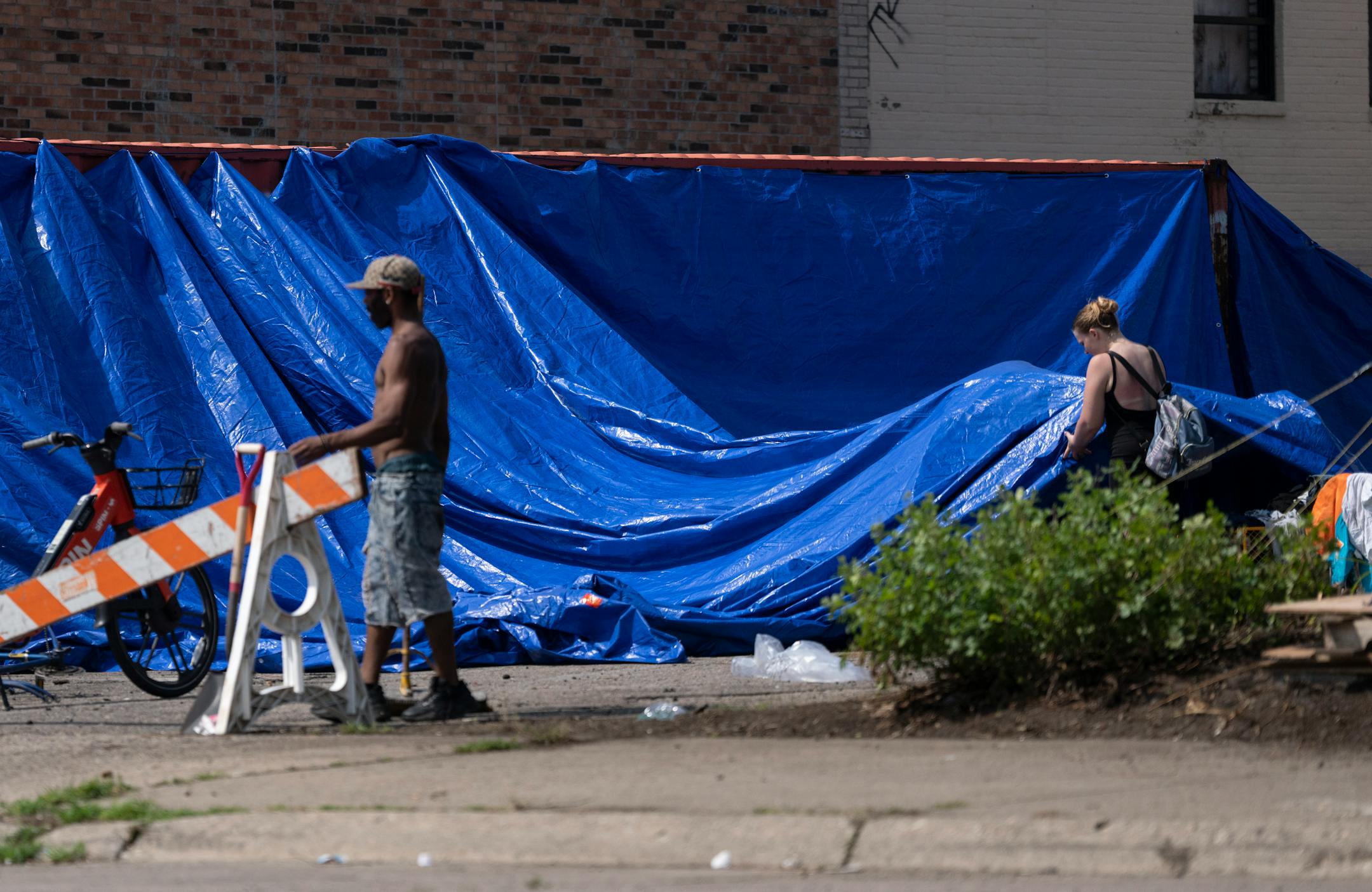
Some Twin Cities suburbs have been mulling changes to their camping ordinances so they have a plan if people set up homeless encampments, like this one in Minneapolis where people put up a tarp on Friday. (Renée Jones Schneider/The Minnesota Star Tribune)

Another Twin Cities suburb is looking to expressly ban camping on city property amid concerns about homelessness.

Minnetonka began discussing an encampment ordinance shortly after the U.S. Supreme Court ruled last year that cities can enforce bans on sleeping outside on public property. Following that decision, Minnesota cities including Duluth, Brainerd and Shakopee banned camping on city property, citing public health and safety concerns. Recently, Robbinsdale narrowly voted down a similar effort.

The Minnetonka ordinance would apply when there is more than one tent and requires city staff to try to connect homeless people to social services before citing them. It would then require campers to leave within 72 hours or face a misdemeanor citation.

Minnetonka Community Development Director Julie Wischnack said the policy would clarify the city’s approach to camping on city property.

The city would not penalize people in cases where shelter and services were unavailable, and Wischnack said no one would be arrested for camping unless they also committed a crime, like assaulting a police officer. The ordinance would further require staff to take “reasonable steps” to preserve personal items.

“Minnetonka hasn’t experienced encampments, like large encampments that we hear about,” Kendyl Larson, housing coordinator for Minnetonka, told the city council at a recent study session. “But we want to be proactive, we don’t want to be reactive.”

Some City Council members raised concerns about how the ordinance could affect people who are vulnerable. Council Member Kissy Coakley said she wanted to make sure the policy doesn’t penalize people for mental health conditions.

“If someone is not accepting help, then it could be something else going on with them,” she said. “I just don’t want us criminalizing those folks.”
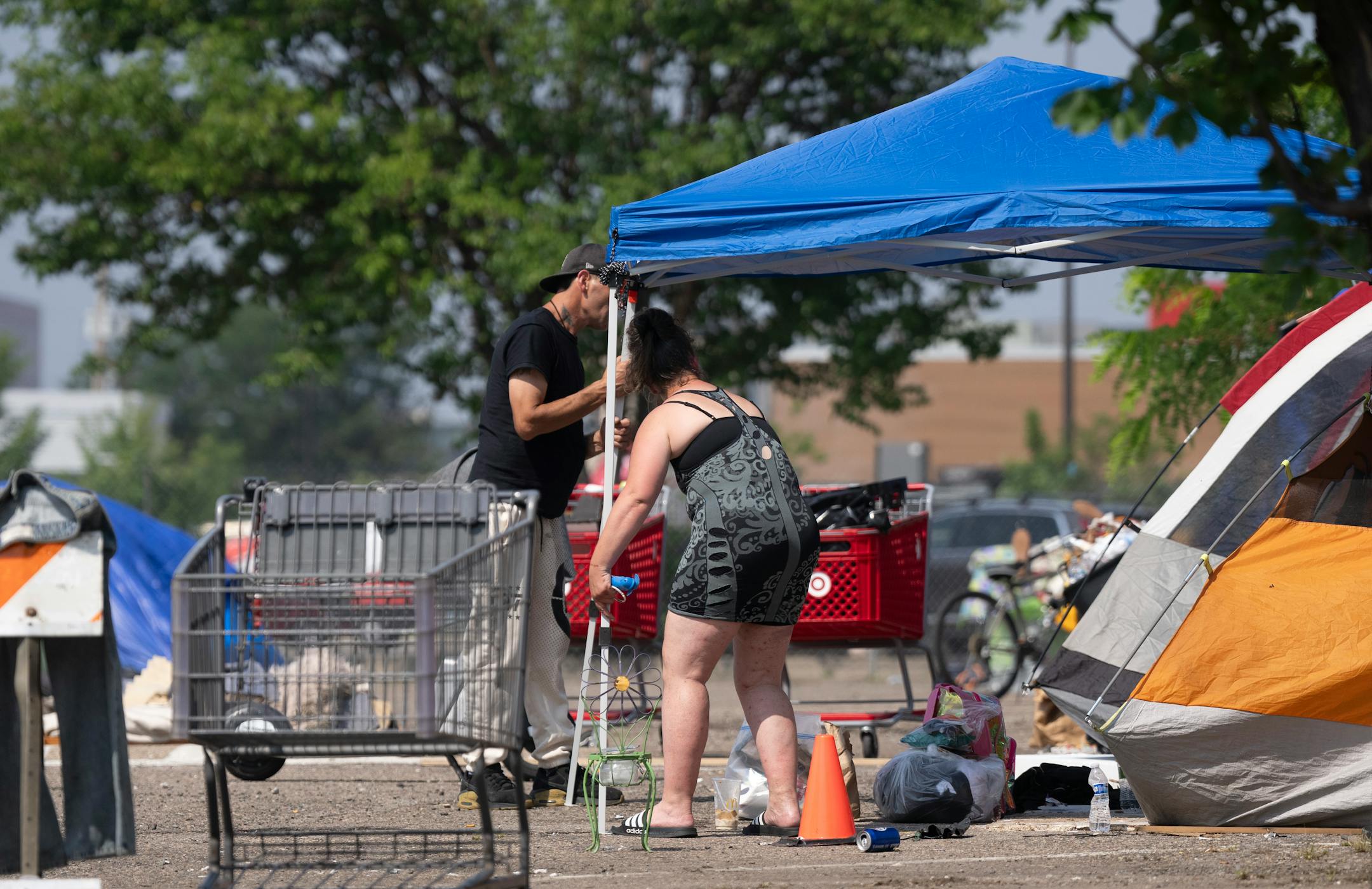
Homelessness isn’t always as visible in the Twin Cities suburbs as in the core cities, said Rebecca Sales, co-director of the Minnesota Homeless Study conducted by Wilder Research every three years.

But that doesn’t mean it’s not there. About 700 homeless people were living in the suburbs in the most recent count, about 11% of the overall number across the metro.

People put up a tarp in an encampment on Friday at 28th Ave. S. and E. Lake St. in Minneapolis. (Renée Jones Schneider/The Minnesota Star Tribune)

Regardless of where they live, most people experiencing homelessness cite the lack of affordable housing as the reason they became or remain homeless, Sales said.

The number of homeless people in a city can fluctuate widely, said Michael Mondor, the fire chief in Maplewood. Staff there recently held a meeting outlining the city’s approach to homelessness as the city noticed an uptick in people without shelter.

Mondor said it matters what neighboring cities are doing, such as clearing an encampment.

He said Maplewood, which doesn’t ban encampments, works with partners, including Ramsey County, but he thinks more regional coordination is needed, especially as cities brace for the consequences from cuts to federal programs such as Medicaid.

Kyle Hanson, executive director of Agate Housing and Services, a Minneapolis organization that provides services to the homeless, said in an email that he’s glad cities like Minnetonka plan to collaborate with service providers before clearing encampments.

But he also said if cities are going to propose ordinances to remove encampments, they should also work help fund organizations that house people.

“Encampment clearings done without partnership simply makes our work harder,” he said.

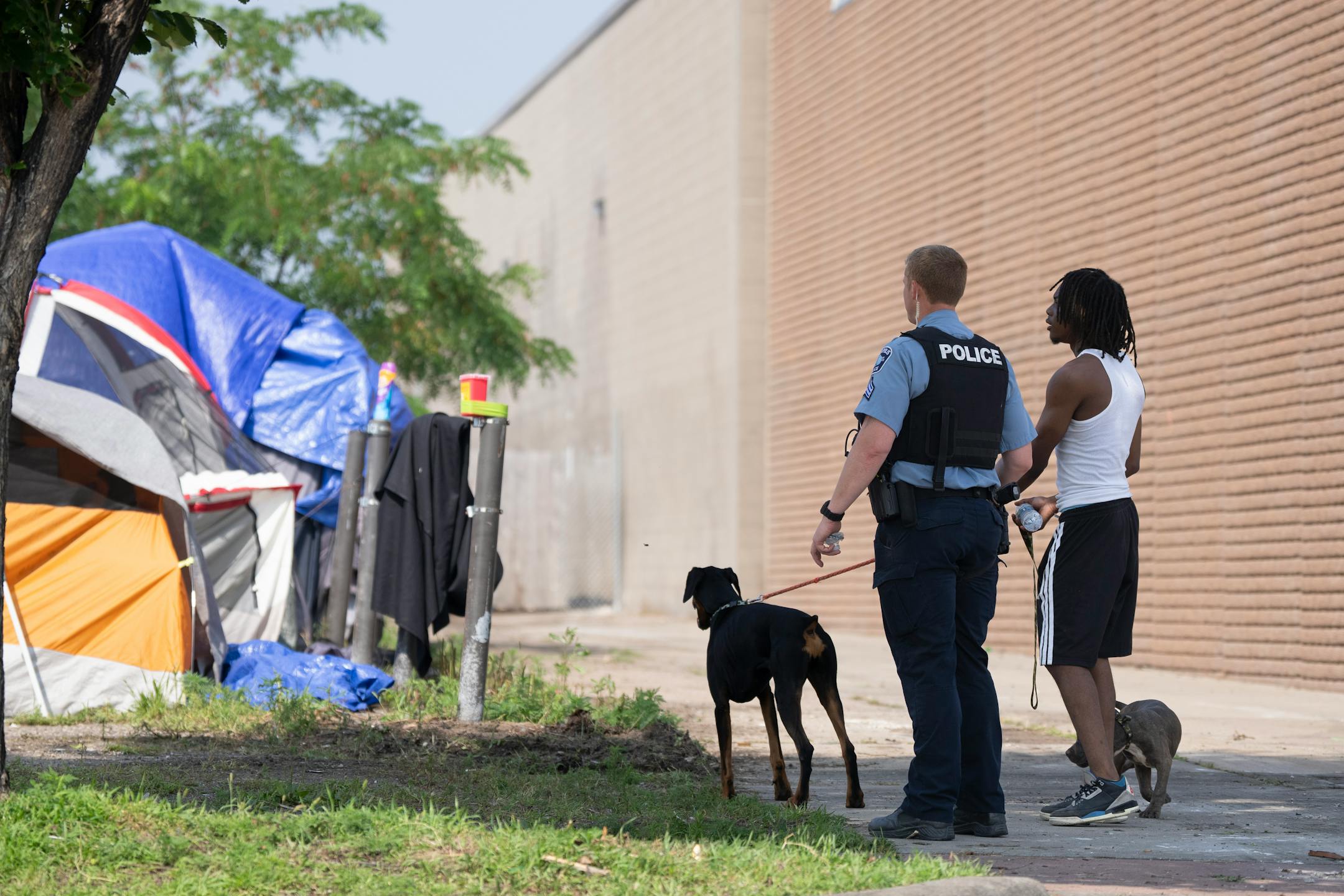
An officer talks with someone in an encampment Friday, near S. 28th Ave. and E. Lake St. in Minneapolis. (Renée Jones Schneider/The Minnesota Star Tribune)

Other Metro cities debate camping ordinances

Minnetonka’s move came after several other suburbs have taken steps to deter encampments. Shakopee passed its anti-camping ordinance in February, citing encampments along the Minnesota River.

A Shakopee spokesperson declined to comment on its policy or whether it has been used since its passage, though city officials also said the rule was aimed at bringing the city in line with state policies on riverside camping.

In Robbinsdale, a proposal that would restrict overnight camping in public places failed on a 3-2 vote in July after council members heard from members of the city’s Human Rights Commission. Some residents worried the ordinance would effectively criminalize homelessness.

Residents also worried the ban could push people from one place to another due to a lack of shelter beds, putting them at greater risk and making it harder for social workers to find their clients.

In a letter to the council, members of the city’s Human Rights Commission said the current policy of connecting unhoused people with services has been effective — including recently when two people were reported camping by the city water tower.

Sarah Ritter of the Minnesota Star Tribune contributed to this story.

about the writer

about the writer

Greta Kaul

Reporter

Greta Kaul is the Star Tribune’s built environment reporter.

See Moreicon