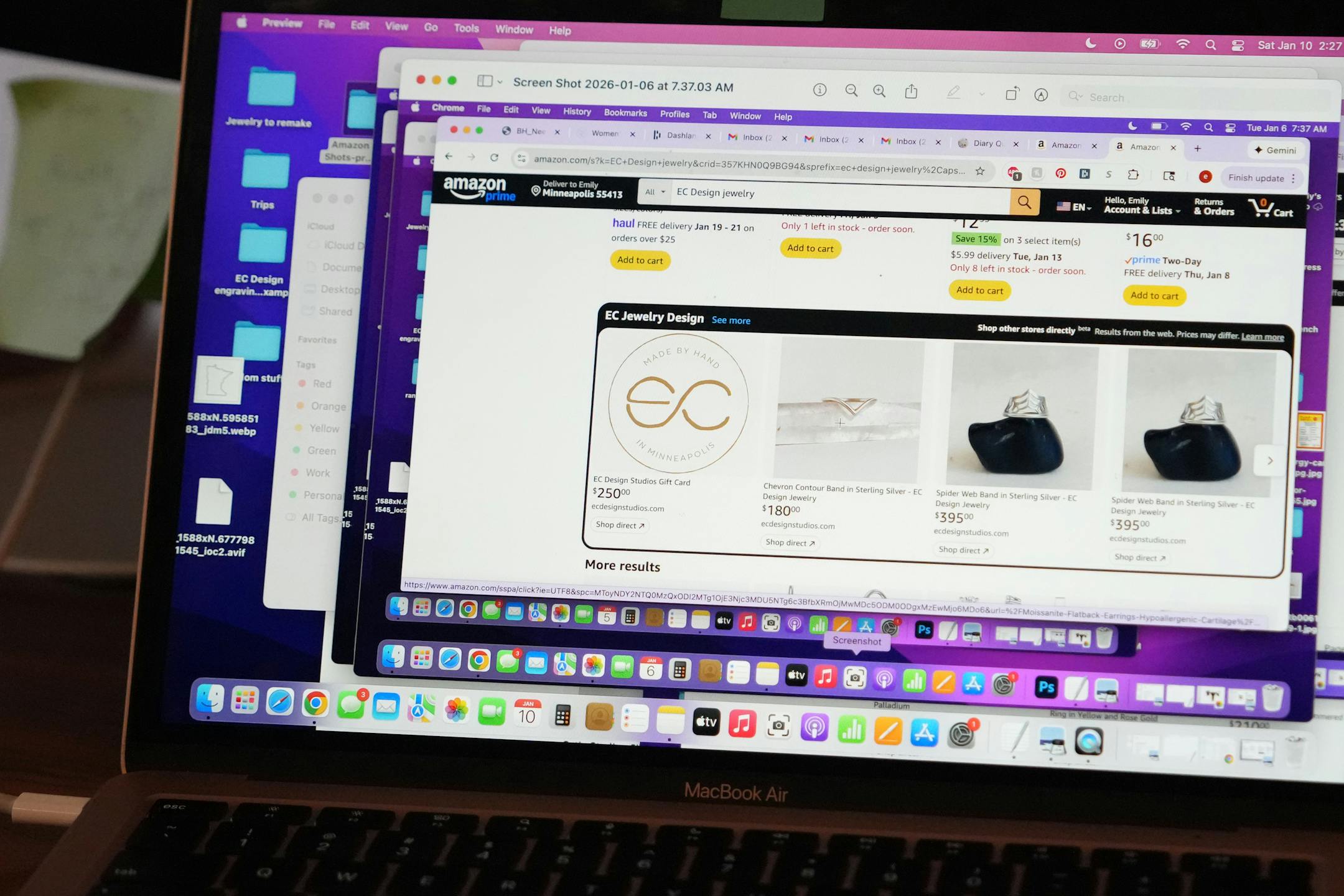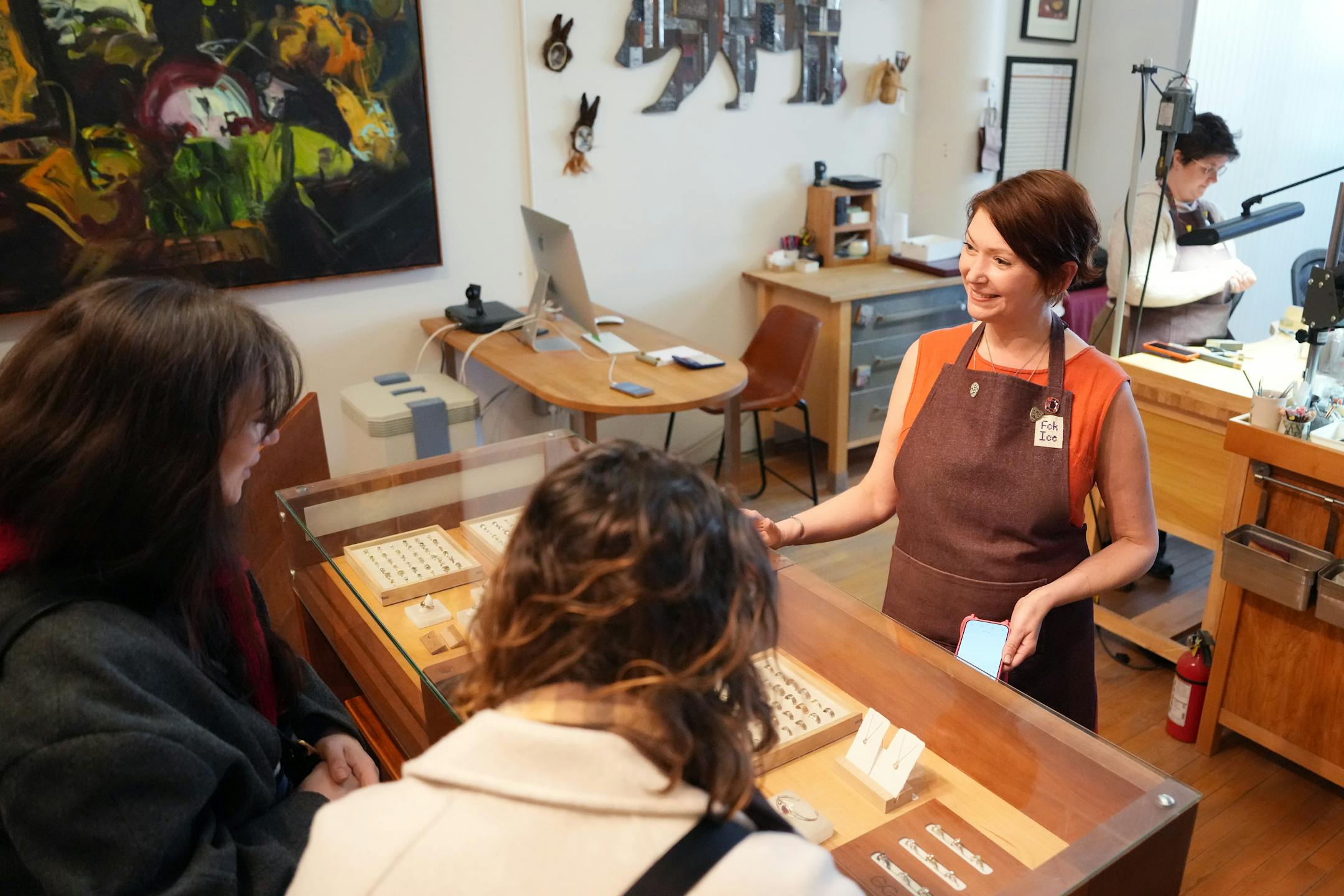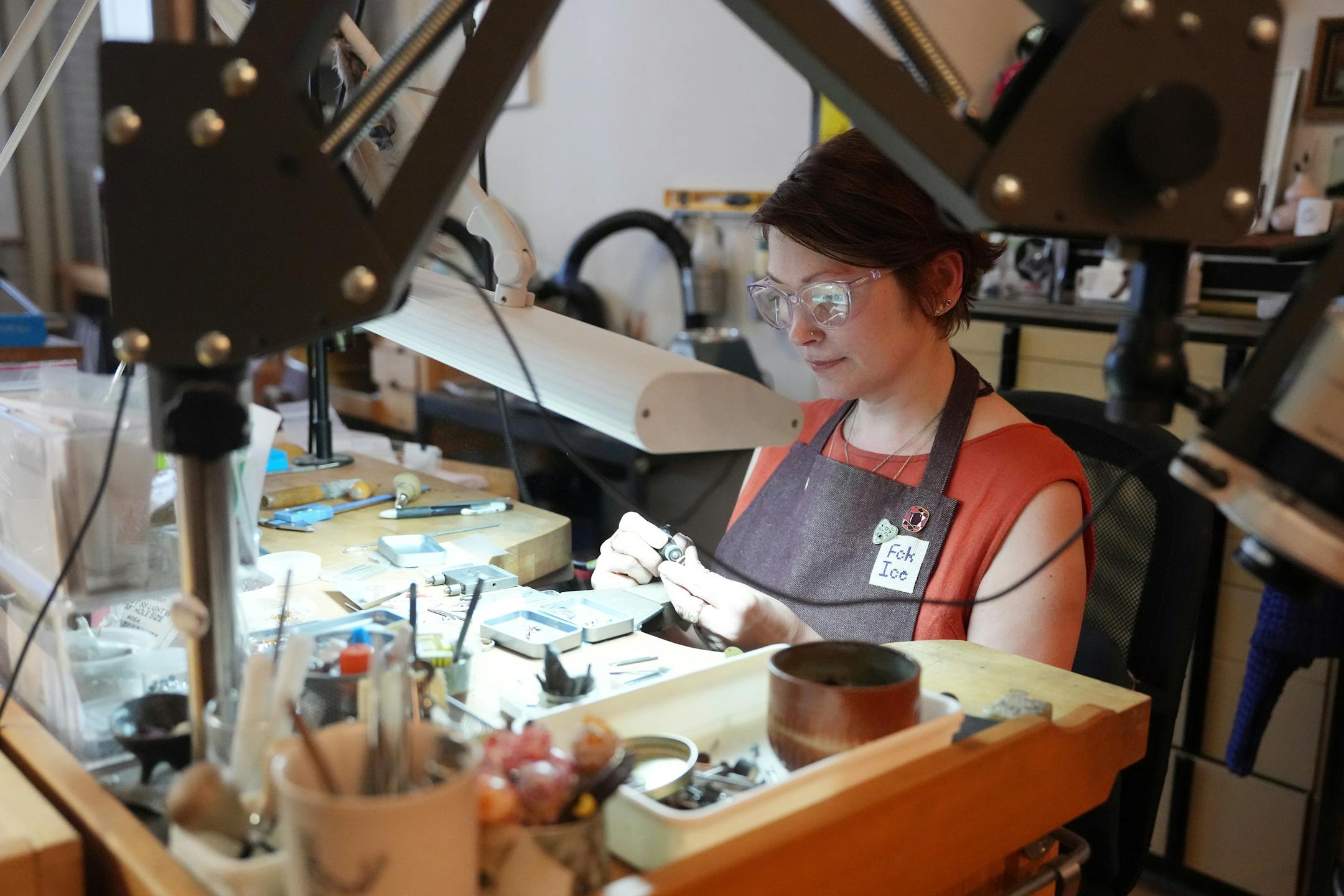
Emily Johnson sells most of her fine jewelry out of her studio in the Northrup King Building in Northeast Minneapolis. She deliberately keeps her wares off Amazon.
So it surprised her earlier this month when she discovered her rings, necklaces and bracelets were advertised on the Seattle-based mega-retailer’s website.
“I thought it was a scam, at first,” Johnson said.
A growing number of small business owners around the country are learning their products are for sale through Amazon’s Buy for Me and Shop Direct programs, part of the retailer’s push into agentic AI. Amazon inserts itself as a middleman in the sale, seeming to sell the product via its own website and then sending the order to the local merchant.
Such AI features are seen as a powerful draw for consumers and sellers with the promise to expand in popularity. The issue with Amazon’s: These small business owners never signed up.
Amazon is adding merchants that maintain some level of online presence to its platform by default, creating problems for and causing anxiety among many like Johnson. It uses information from a merchant’s website, through a controversial process known as “web scraping,” to effectively build a mirrored catalog on Amazon.
Many small business owners are discovering their own products are sold by Amazon through word of mouth or on social media. Others figure it out when orders come in under strange-looking email addresses that lead back to Amazon.
In some cases, the practice is causing logistical problems for businesses — such as when AI makes a mistake. Johnson said Amazon described one of her silver rings as gold.