

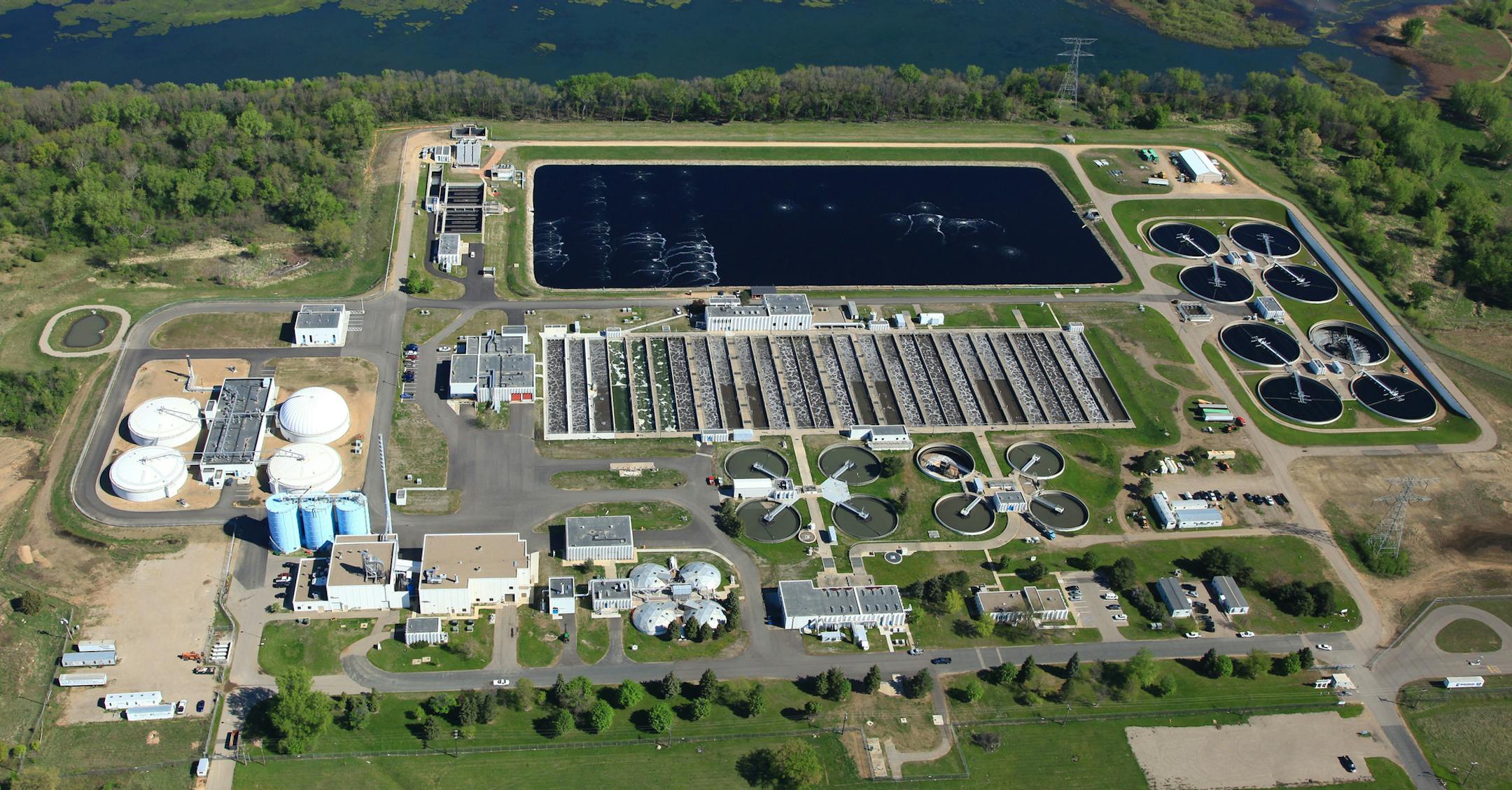
There's a green revolution in the local sewage treatment trade that is yielding economic and environmental dividends.
Jason Willett, director of finance and energy for the Metropolitan Council Environmental Services Division, which operates seven energy-intensive sewage treatment plants in the Twin Cities metropolitan area, reports new developments, with business partners, that will further cut the big energy bill and carbon footprint.
Since 2006, the council's wastewater operations have achieved energy savings totaling nearly $4 million annually, or a 20 percent decline in electricity acquired from Xcel Energy. As a result, it is no longer one of Xcel's top three Minnesota power consumers.
The council has reached agreement with winning bidder Oak Leaf Energy Partners of Denver, which will lease up to 10 acres for a solar-energy installation paid for by Oak Leaf, that will provide about 10 percent of the energy needs of the Blue Lake Wastewater Treatment Plant in Shakopee. The plant will purchase power at below-market rates in an arrangement that's being subsidized by Xcel as part of its conservation-and-renewables push.
The Blue Lake plant is the third-largest wastewater treatment plant in the system and handles 29 million gallons of wastewater per day from nearly 300,000 residents in 27 communities. The plant has also switched from natural gas from CenterPoint Energy to its own "biogas" generated by anaerobic digesters. That will net the plant $500,000 annually in fuel savings.
Meanwhile, a new biogas-driven electric generator will be installed at the Empire Township plant, south of St. Paul, to convert the plant gas to electric power that will cover about one-third of plant energy requirements, resulting in an annual savings of about $350,000 alone in the electric tab. Increasingly, sewage treatment plants are seen as energy source generators that will power themselves as "carbon-neutral" facilities and provide extra electricity to the grid, as well as ample supplies of fertilizer with treated waste.
Colder products seeing hot sales
It was 35 years ago that three entrepreneurs started a specialty manufacturer to make a quick-disconnect fluid coupling device for plastic tubing widely used by the medical, industrial and chemical industries.
The company, now located on once-polluted land in a St. Paul industrial park near University Avenue and Hwy. 280, was called Colder Products, because St. Paul was colder than just about anywhere.


