On a Saturday morning in the middle of December, a couple dozen people gathered at a largely empty Kmart store on Lake Street soon after the doors opened.
As Christmas music played from the sound system, they surrounded four long tables, set up next to the Donald Trump and Hello Kitty Chia Pet heads. Sealed cardboard boxes marked “TOYS” were placed on the tables.
Precisely at 9 a.m., a store employee gave a signal, and each person quickly slit open a carton and started rifling through the contents. According to the rules of the event, they had exactly five minutes to find what they were looking for.
It wasn’t the latest hard-to-get toy for a child at home.
These guys — and they were mostly men — were buying for themselves, hunting for playthings that will never be played with, toys that will never be taken out of their packages.
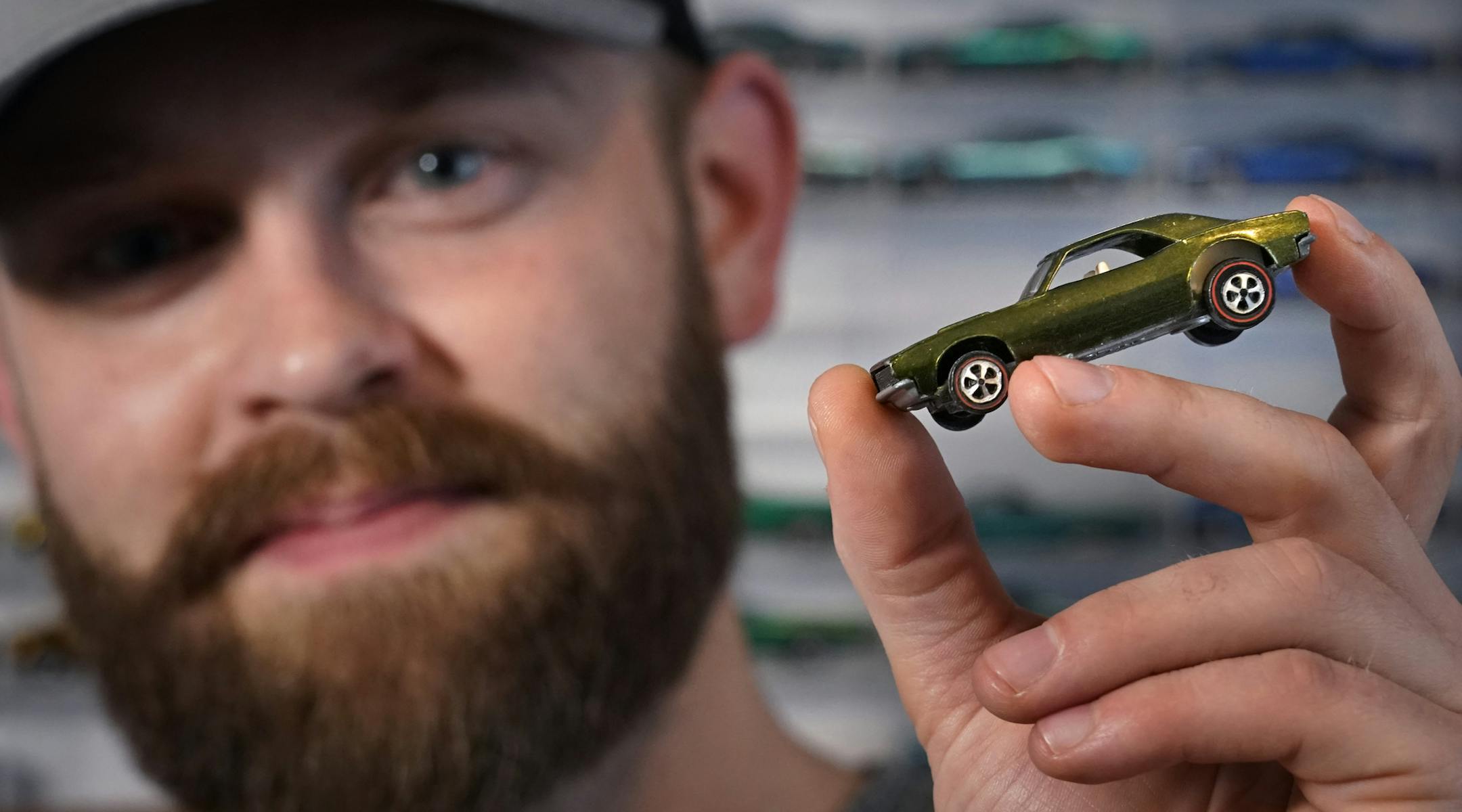
This is the world of the Hot Wheels collector.
Hot Wheels, launched by Mattel in 1968, have turned out to be one of the world’s most successful toys. The miniature cars — engineered to roll fast, painted in flashy metallic colors and modeled after American muscle cars — were a hit from the start, speeding past the older, stodgier British toy car competitor, Matchbox.
Mattel has produced more than 6 billion cars, almost enough for every person on the planet to have one. Every year, another half a billion cars roll off the assembly line, about 16 cars per second.