

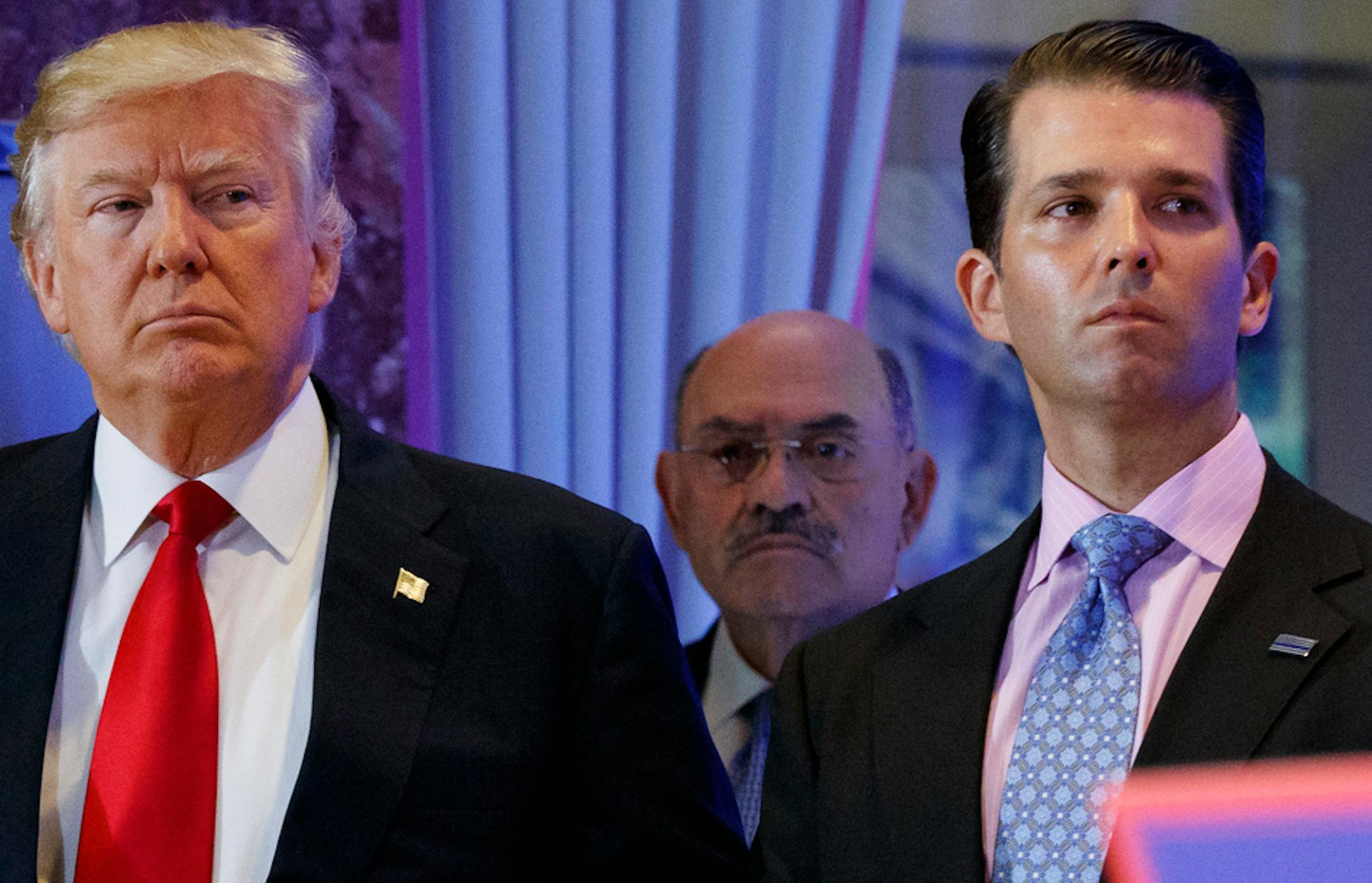
Donald Trump and his accountant, Allen Weisselberg, have spent decades crunching the Trump Organization's numbers together. During a 2007 deposition stemming from an unsuccessful libel suit Trump filed against me, the former president testified under oath that he and Weisselberg routinely worked jointly to prepare summaries they shared with banks that were trying to assess Trump's financial wherewithal.
"He shows me. We'll talk about it. He'll do it," Trump noted. "And he'll show me, before we go to the final drafts and put down everything."
"Do you review the asset values and liabilities in the statement of financial condition prior to providing this financial statement to any other party?" my lawyer asked.
"Yes, I review them," Trump responded.
Manhattan District Attorney Cyrus Vance Jr. has spent almost three years investigating whether such tag-teaming by Trump and his accountant involved misrepresentations meant to defraud banks, tax authorities and others. On Thursday, in an attempt to resolve these questions, Vance's office unsealed an indictment of Weisselberg and the Trump Organization on charges of tax fraud.
The indictment is more sweeping than anticipated. It alleges that a 15-year tax-fraud scheme enabled Weisselberg to pay no taxes on cars, apartments and private-school tuition that the Trump Organization gave him. Such benefits are supposed to be accounted for as compensation, and to intentionally avoid paying taxes on them is a crime. The indictment cited about $1.76 million worth of perks that Weisselberg received, and the charges include falsification of business records and grand larceny.
The indictment is meant to squeeze Weisselberg and thus convince him to testify against Trump. While Trump and his supporters have painted the charges as part of a partisan witch hunt, Vance is following a classic prosecutorial strategy. It may appear brutal, and these initial charges might seem underwhelming, but this is how prosecutors build cases. Vance also convened a special grand jury to decide whether the criminal indictment was warranted, a move meant to insulate the process from partisan politics by taking that decision out of his hands.
The immediate consequences are serious. A criminal indictment will imperil the Trump Organization's business and banking relationships, possibly derailing the company regardless of where the litigation leads. Weisselberg and the Trump Organization pleaded not guilty and will fight the charges. But Weisselberg's trial is probably months away, and during that time, as he ponders the possibility of a 15-year prison sentence, his loyalty to Trump will be tested.


