

BEIJING – Donald Trump, who tears into Chinese economic policies with the subtlety of a chain saw, has accused the nation of "raping" the U.S. with job-destroying currency and trade policies. China is engaging in "the greatest theft in the history of the world," according to the presumptive Republican presidential candidate.
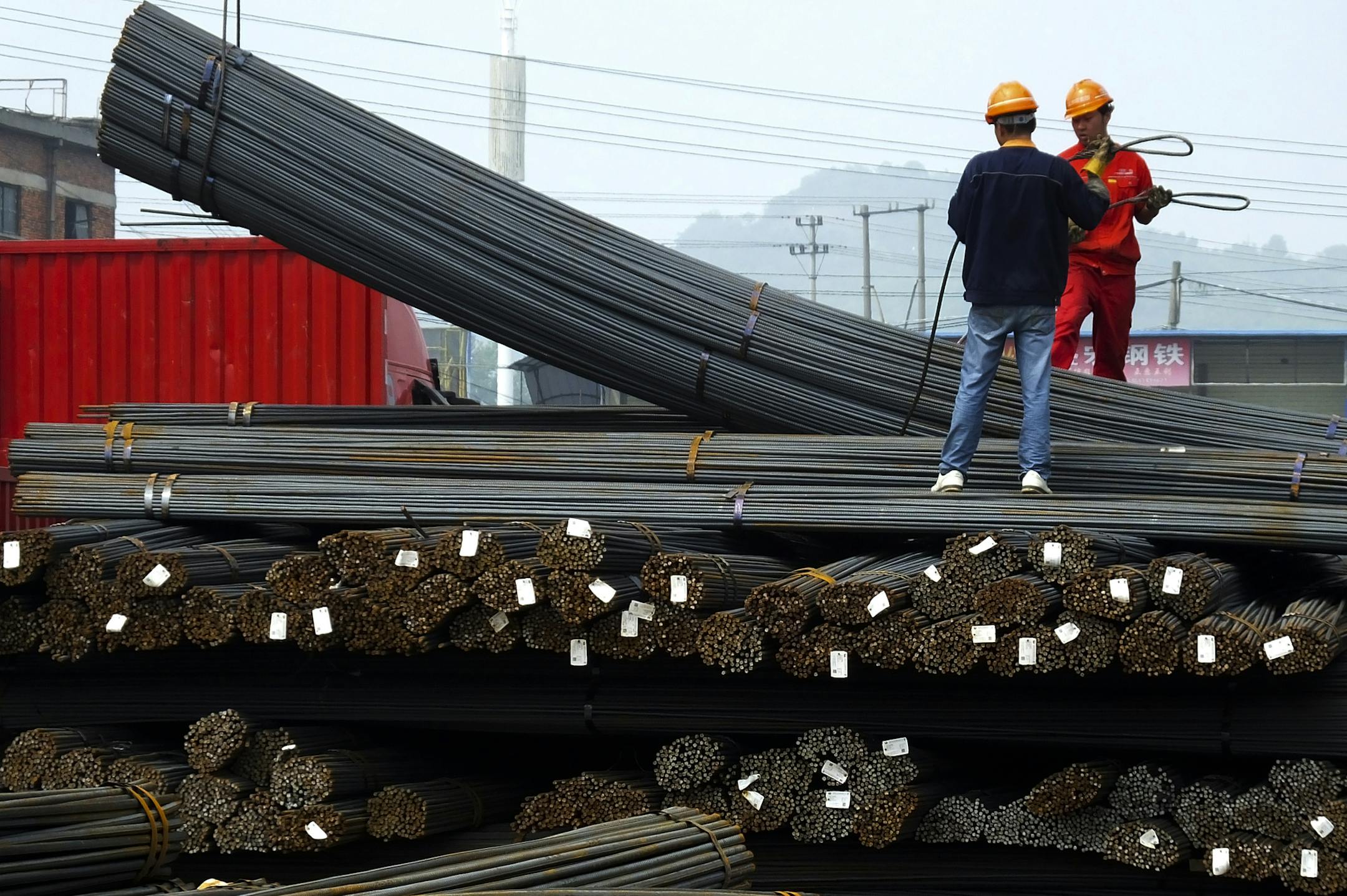
Such blustery rhetoric, often directed at China's massive steel industry, plays well in the U.S. industrial heartland. Yet it ignores an equally painful economic reality in China, whose own Rust Belt is in distress. Its industrial Northeast is losing jobs in a decelerating economy, with the nation's steel industry set to lose as many as 500,000 more.
Caught in the middle is Ma Chao, who works for Delong Steel Ltd. in Xingtai, a declining hard-scrabble steel town of 7.8 million about five hours southwest of Beijing. His factory wages have dropped about 15 percent during the past two years, even as his shifts increased to 10 hours from eight.
Nearly all his colleagues have been fired and he sees no hope for his hometown's steel industry. Ma, 23, says he's delaying his planned marriage this year because he doesn't have enough money to sustain himself, let alone his fiancée.
It's the kind of hardship story that's been familiar in steel towns like Gary, Ind., or Port Talbot in the U.K. for years. Yet, until recently, such tales were rare in China, where the economy boomed with few interruptions from 1980 until 2012. And Western steelworkers have far more of a safety net, in terms of unemployment insurance and retraining programs.
Regardless of whether Trump ever makes it to the White House to follow through on his threat to slap tariffs on Chinese exports, the outlook for Xingtai is grim. Its historical ties to steel date back 2,000 years to the Han Dynasty, when it served as one of China's three major iron smelting centers. Today, it's ranked by the Ministry of Environmental Protection as one of the worst cities in terms of air quality.
Iron ore production in Xingtai slumped 38.5 percent last year, while output of crude steel fell 3.4 percent and prices of factory products overall plunged 15.5 percent.
The pain inflicted on steelmakers across the globe by the double whammy of overcapacity and slowing demand in the world's No. 2 economy is also inflicting pain at home in China. Steel mills are being shuttered in places from Xingtai to Tonghua in Jilin Province in the northeastern rust belt region. Medium- and large-sized mills that are members of the China Iron & Steel Association swung to a total loss of $9.9 billion last year, and China's crude steel output fell last year for the first time since 1981, the association said in January.


