

Opinion editor’s note: Strib Voices publishes a mix of guest commentaries online and in print each day. To contribute, click here.
•••
I remember finishing my mile in gym class and standing on the edge of the track. I watched as each classmate finished behind me. One by one, they crossed the line and joined me on the side of the track — some red in the face and gasping for air after pushing themselves to their limit. Others carried a look of defeat as they gingerly finished walking the last lap. We were instructed to cheer each other on as they crossed the finish line, but instead, we watched in awkward silence as kids struggled to meet the “average” time. While it was intended to motivate young people to be physically active, it didn’t feel that way — it felt like an opportunity to shame the subpar and sort us by our physical abilities.
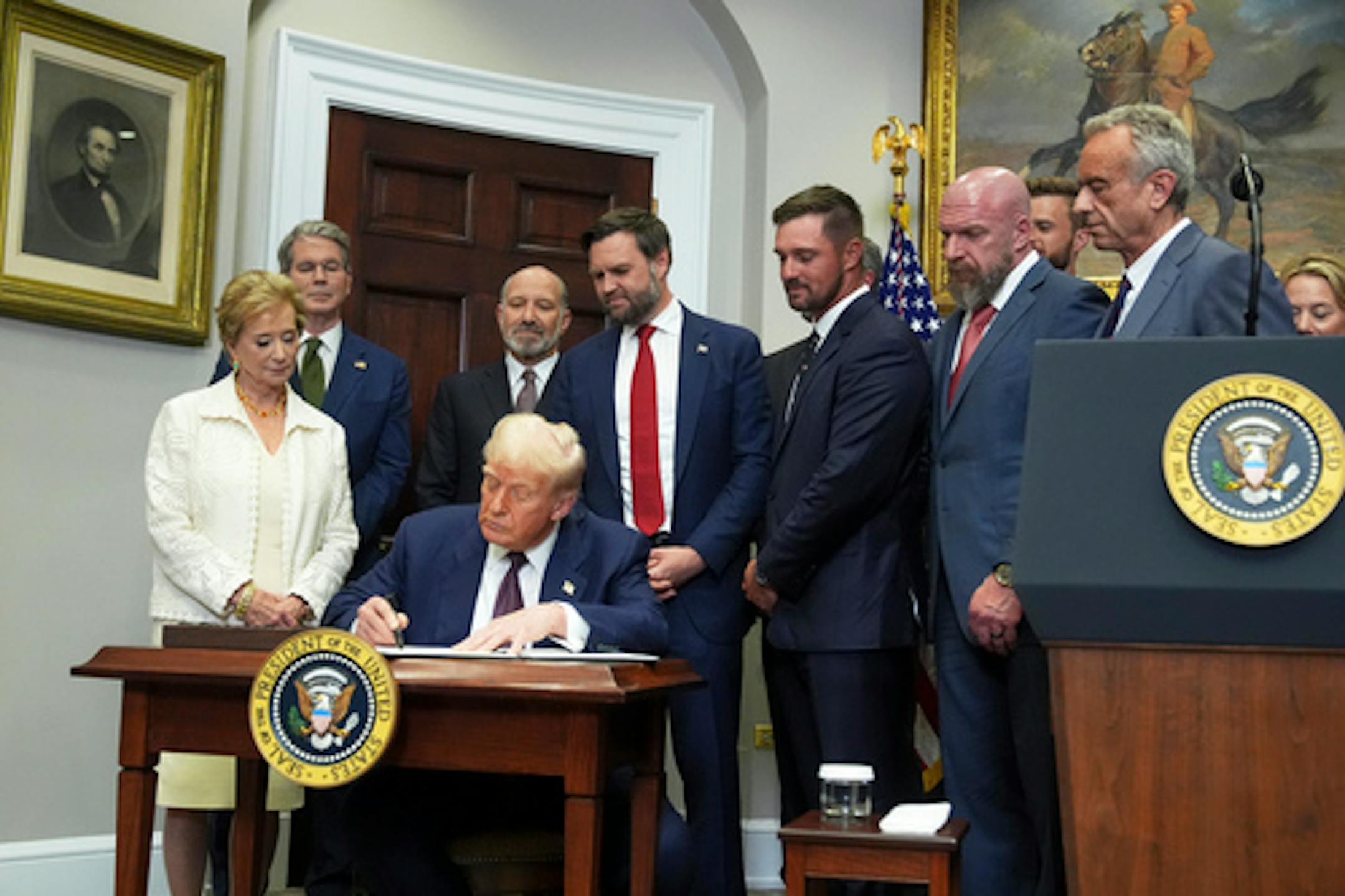
That memory returned on July 31 when President Donald Trump signed an executive order to formally bring the Presidential Fitness Test back to schools. While originally intended to improve students’ health and fitness, the test instead created worry, embarrassment and a lifetime of distaste toward exercising. If fitness tests are to return to our schools, we must ensure they inspire confidence — not fear and anxiety.
The original test was born out of fear of an unfit nation during the height of the Cold War in 1964. It included measured exercises such as pushups, situps, pullups and the mile run — graded against the national standard. It was created to improve students’ health and fitness, but in reality, the test was far from encouraging. Instead, students were ranked, singled out and shamed in front of their classmates.
As a student-athlete, I know physical fitness is essential. I wrestle year-round and know the value of pushing yourself toward difficult physical goals. Nevertheless, at the same time, I know that every student who comes to P.E. class is not the same; they each have different capabilities, interests, physiques and comfort levels. This makes it impossible to expect everyone who steps on the gym floor to meet the same benchmark, let alone in front of their peers. Regardless, the test assumes all students can meet the same standard — so instead of making them healthier, it makes them self-conscious.
With student mental health becoming a growing concern, the direction schools take in gym class is critical. Concerns over rising anxiety and depression rates among teens have been raised at the U.S. surgeon general level. A public test assessing one’s “athleticism” only exacerbates the dilemma. The Presidential Fitness Test, which pits students against one another and national standards, can and will result in body image issues such as body dysmorphia disorder during a critical time in adolescents’ development. Gym class should be a place for young people to learn and enjoy physical activity, not open the door to comparison and shame. To facilitate a healthy America, social pressures must be removed from the equation.
Rather than bringing back the old test, we should reconsider what fitness in schools means in a modern world. We must acknowledge that fitness is different for everyone. For students with disabilities, genetic disadvantages or mental health struggles, the test was never fair — and it still won’t be unless it’s scratched and rebuilt from square one.


