

President Donald Trump's delayed response to the coronavirus pandemic has already cost the nation: He ignored early advice and warnings from experts inside his administration and from at least some members of Congress, wasting precious weeks in what is now a national and global race to save lives. It's why so many Americans cringe when he takes the podium every day to deliver crisis response updates, and why so many Americans are relieved any time Trump momentarily defers to either of two of the physicians on his task force, Anthony Fauci and Deborah Birx. It's why we cringe again when there's any report that the president might be "losing his patience" with either of them.
Their perseverance in attempting to manage the federal government's coronavirus response — despite Trump's intransigence — is reassuring. So, it's not hard to imagine the gravity of a situation in which either of them, or any of their other dedicated colleagues, would be replaced if, for instance, they fall out of favor with Trump. But that's a real risk: In a moment when the White House might need to quickly vet and appoint critically needed personnel, the Presidential Personnel Office, the department designed to perform exactly that function — which I ran during the last year of the Obama administration — has been gutted and turned into a vehicle for enforcing loyalty and carrying out vendettas.
Over the past few years, Trump has put a premium on having people at executive branch agencies who prioritize his personal political agenda over national interests. As a consequence, several federal agencies are without a deep bench of experts in leadership roles and, in the midst of the greatest public health crisis of our lifetimes, could require a swift infusion of additional talent. For example, the Department of Homeland Security is rife with vacancies. If the FEMA administrator were to become incapacitated or need to be replaced, there is no deputy administrator (acting or otherwise) currently on the job, and it's unclear whether a vetted or competent official is ready to come off the bench.
Before the COVID-19 crisis, the widespread number of vacancies across the executive branch were well-known. Trump has tried to place the blame on Senate Democrats, but the reality is that he hasn't bothered to put forward nominations for close to 150 key federal positions. He has said he doesn't want to fill all the vacant positions and has admitted to preferring temporary, "acting" officials in senior roles, who aren't subject to Senate confirmation, and therefore not vetted for the benefit of the public and less accountable to Congress. Because of rapid turnover in his administration, some individuals in key administration positions — like the FDA commissioner, who oversees efforts to bring new coronavirus tests and treatments to market — are new on the job.
This neglect is consistent with Trump's governing approach, which sidelines and substitutes experts' judgment for his own, and demands more subservience from executive branch agencies than is the norm. Indeed, he has demonstrated downright hostility toward expertise, whether it comes from senior diplomats, scientists, military commanders, meteorologists or statisticians. And contra the president's assertions that he can fill positions quickly if needed, the executive branch is not well-positioned to make this happen.
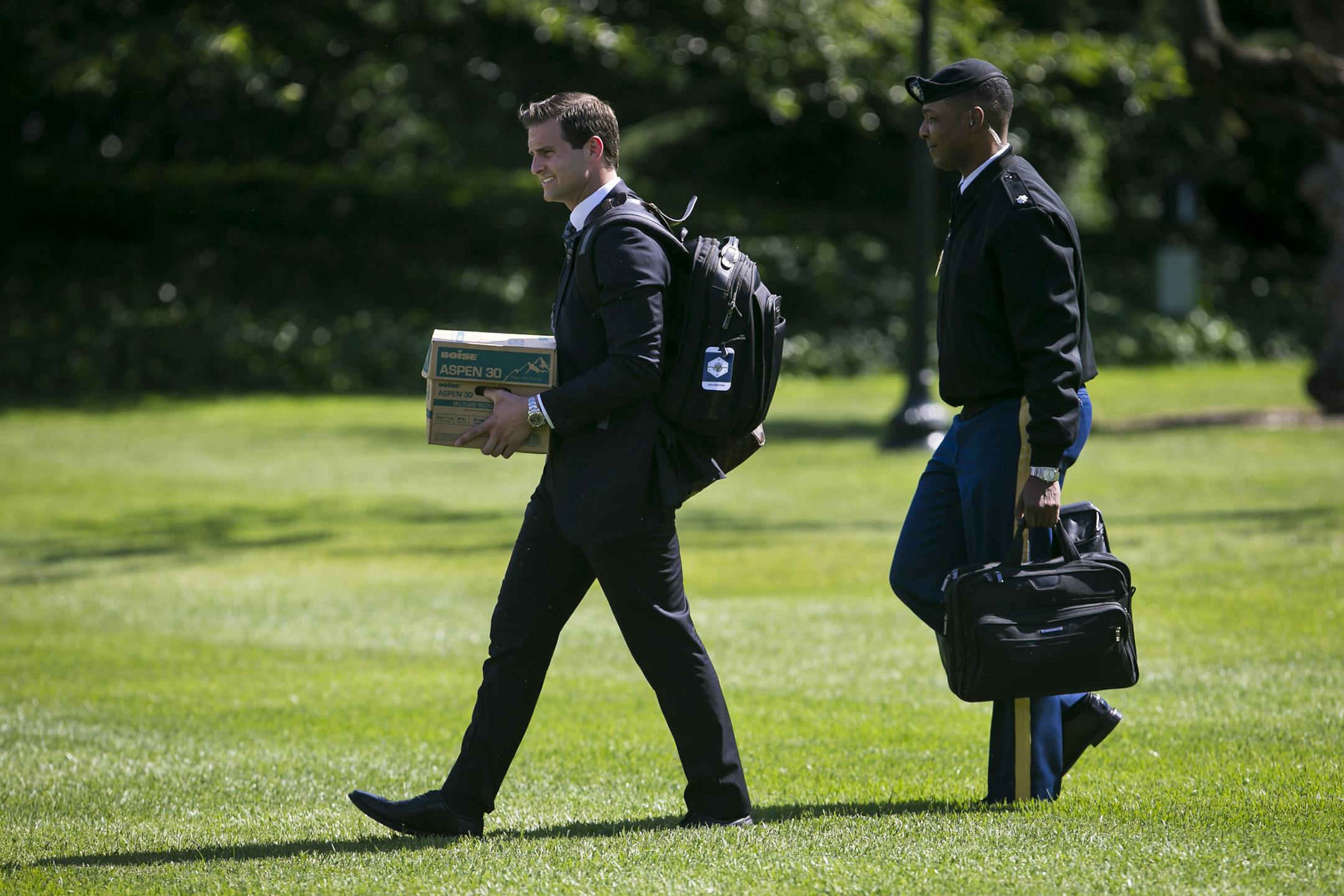
The Presidential Personnel Office (PPO) has been reorganized to focus on rooting out dissenters in the administration rather than its core responsibilities of recruiting and appointing political officials to key positions. As a part of that effort, Trump empowered John McEntee — a former aide with no personnel experience who was fired from an earlier White House role for financial and tax issues that reportedly prevented him from obtaining a permanent security clearance.
With Trump's backing, McEntee has moved quickly to exact retribution. At his introductory meeting with White House liaisons — the political appointees who serve as intermediaries between executive branch agencies and the PPO — he asked for lists of appointees believed to be anti-Trump. In February alone, the undersecretary of defense for policy, the deputy national security adviser and the acting director of national intelligence were all removed from their posts. More recently, the deputy assistant secretary of public affairs at DHS was transferred, and the director of the Office of Personnel Management resigned, reportedly due to poor treatment from McEntee. (Shocking developments considering DHS's leading role in pandemic response and that agencies are frantically looking to OPM for guidance as they move toward teleworking.) PPO also added new political litmus tests to its hiring questionnaire, asking candidates to identify the part of Trump's campaign message that most appealed to them. And McEntee replaced the office's director of operations, who had served in every Republican Presidential Personnel Office since the Reagan administration, with a college senior.
As constituted today, the office is built for success if, as one administration official put it, success "is to purge Never Trumpers and reward loyalists." The abrupt firing, last week, of the inspector general of the intelligence community, Michael Atkinson, and the announcement that Trump intends to nominate a White House lawyer who defended him in the impeachment inquiry to serve as the inspector general overseeing the $2 trillion coronavirus stimulus serve as cases in point. It's a now-formalized and emboldened version of loyalty-policing that goes back to the beginning of the administration, a practice that stands dangerously in the way of ensuring competence and accountability at the highest levels of government.


