

Until the 1980s, in cases involving historic treaties with American Indian tribes, the U.S. Supreme Court was guided by a pair of Indian law canons:
First, ambiguities in treaties were to be resolved in favor of the Indians. Second, treaties were to be interpreted as Indians themselves had understood them.
These canons were not controversial. Their corollary in civil law — that ambiguities in a contract should be construed against the drafter of that contract — finds ample support in legal jurisprudence. However, as Stanford Law Prof. Gregory Ablavsky has noted, "recent Supreme Court decisions have sometimes honored [these canons] in the breach."
Led by late Chief Justice William Rehnquist, over the last three decades an activist Supreme Court began substituting its own policy judgments in place of the rights secured by Indian treaties and federal statutes. For example, in South Dakota vs. Yankton Sioux (1998) the court permitted South Dakota to build a landfill on the Yankton Sioux Reservation over the tribe's objection.
In Idaho vs. Coeur d'Alene Tribe (1997) the court had denied the Coeur d'Alene Tribe the ability to file a claim asserting rights to land under Lake Coeur d'Alene which abuts the Reservation
And in South Dakota vs. Bourland (1993) the court had held that the Cheyenne River Sioux Tribe lost the exclusive right to regulate hunting and fishing on the portion of the reservation that was flooded by dams built by the United States to provide flood control to non-Indian cities downstream.
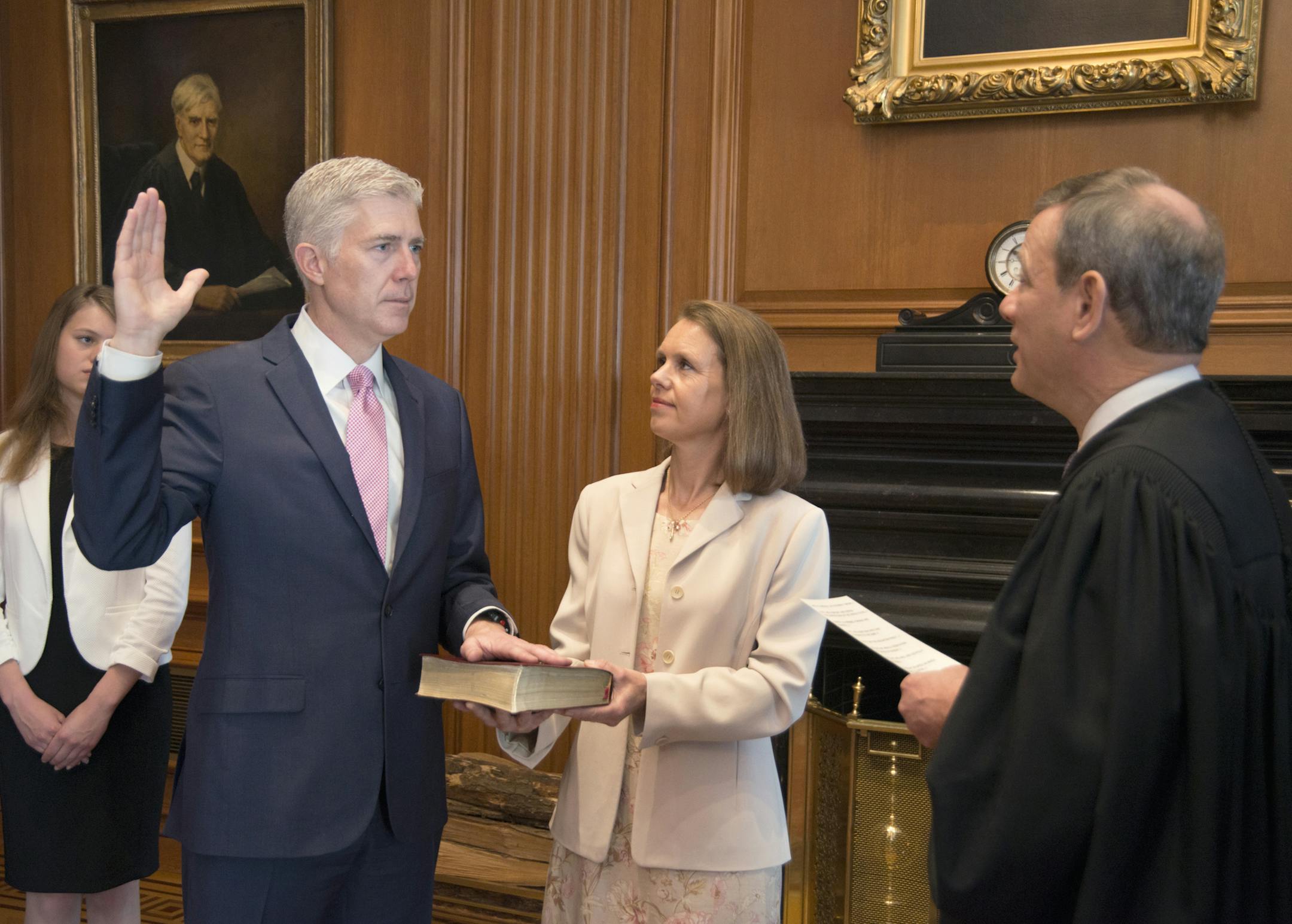
But after more than 30 years it appears that the canons are finally making a comeback. The late Justice Antonin Scalia voted with the majority in all of the cases above, but when Justice Neil Gorsuch took Scalia's seat in 2017 — the judicial math began to change.
On May 20, the Supreme Court issued its second 5-4 Indian law opinion of the current term, and in both cases Justice Gorsuch joined the four liberal justices (Ginsburg, Breyer, Sotomayor and Kagan) in a majority ruling favorable to tribal rights.


