

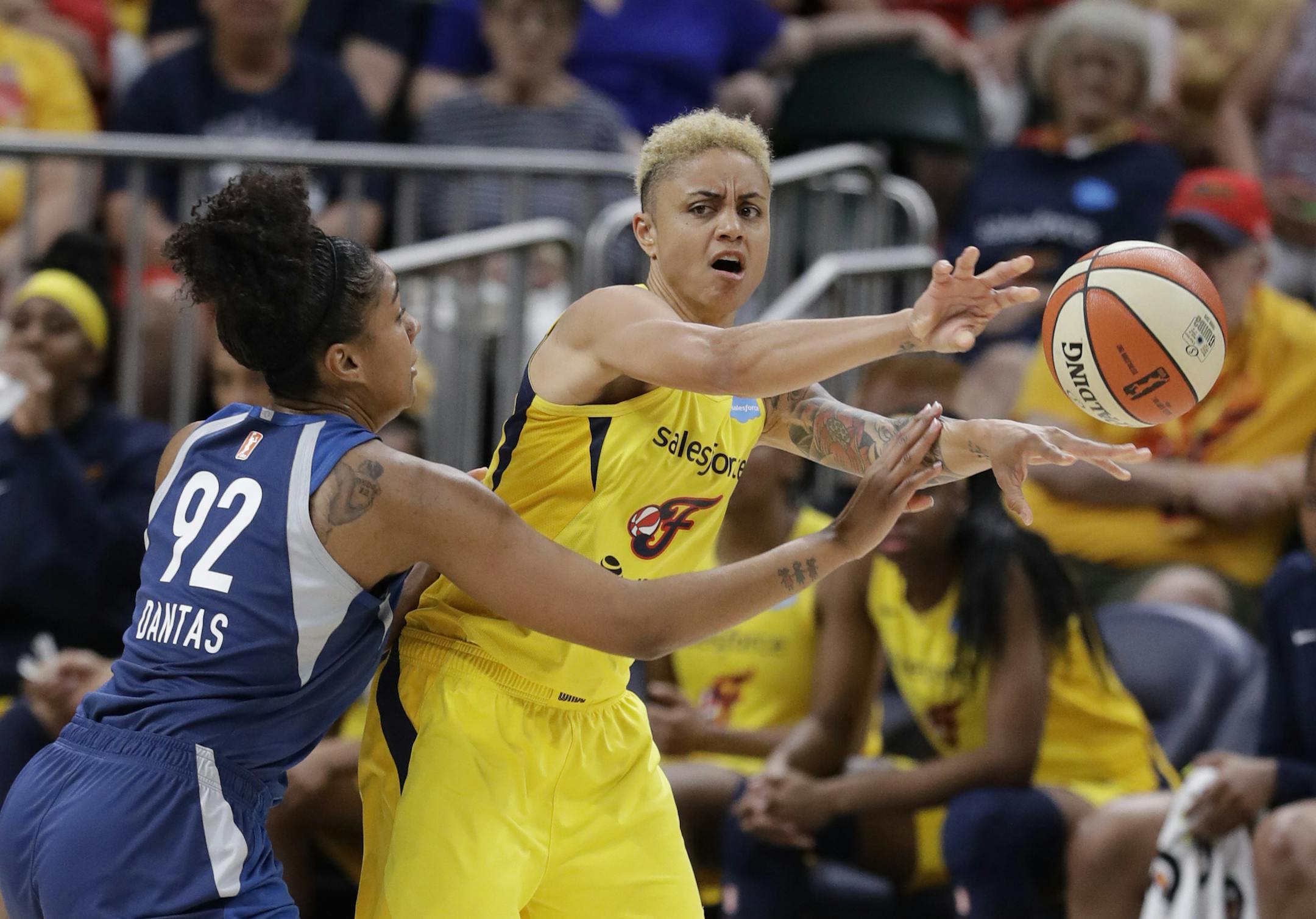
It's the kind of nightmare travel story that a friend or colleague might tell you. But this one happened to a professional team at the highest level of its sport.
The Indiana Fever of the WNBA had a game Sunday in Seattle, and the team was supposed to fly back to Indianapolis afterward Sunday night. They arrived at the Seattle airport around 7:45 p.m. for a 10:30 p.m. flight.
But from there, per the frustrating but often hilarious account on Twitter from Fever forward Natalie Achonwa, Indiana had a postponed flight … then a route through Atlanta on a new plane … then an overbooked connecting flight … then an eight-hour bus ride to Indianapolis that included a stop for mechanical troubles … before finally getting back home Mondy evening, about 24 hours after starting out. Indiana turned around and played host to the Lynx on Tuesday — hardly the best way to prepare — and lost 78-74. But it could have been worse: Las Vegas had to forfeit a game last season because of travel problems.
Both examples are reminders of a fundamental difference between the WNBA and the NBA: WNBA players take commercial flights while NBA players take private charters. The WNBA prohibits teams from using charters in an attempt to keep a level playing field between those teams that can afford them and those that can't (which is ridiculous, by the way; a team that wants to spend the money should be able to spend it).
It's an interesting disparity. On one hand, NBA players didn't start flying charter until more than three decades into that league's existence. The WNBA is barely two decades old, so there is an argument to be made that these things take time.
Major League Soccer, which began play only a year before the WNBA, still has teams operate primarily using commercial flights — but there is an exception that allows four charter flights per season.
The bigger issue, as with most things, is cost. The price of a charter flight varies, but flying commercial is certainly the less expensive option. It can be argued that the WNBA's economics don't support charter flights — and in fact NBA Commissioner Adam Silver at least provided some measure of it in an ESPN interview last year.
"It would cost more than the value of every single ticket sold in the WNBA last season," Silver said. "But I think the players are being realistic there, too. What they are saying is there may be particular instances where we should be using charter planes. … Even if we do a modified charter program for certain special occasions, there's enormous expense involved in it."


