

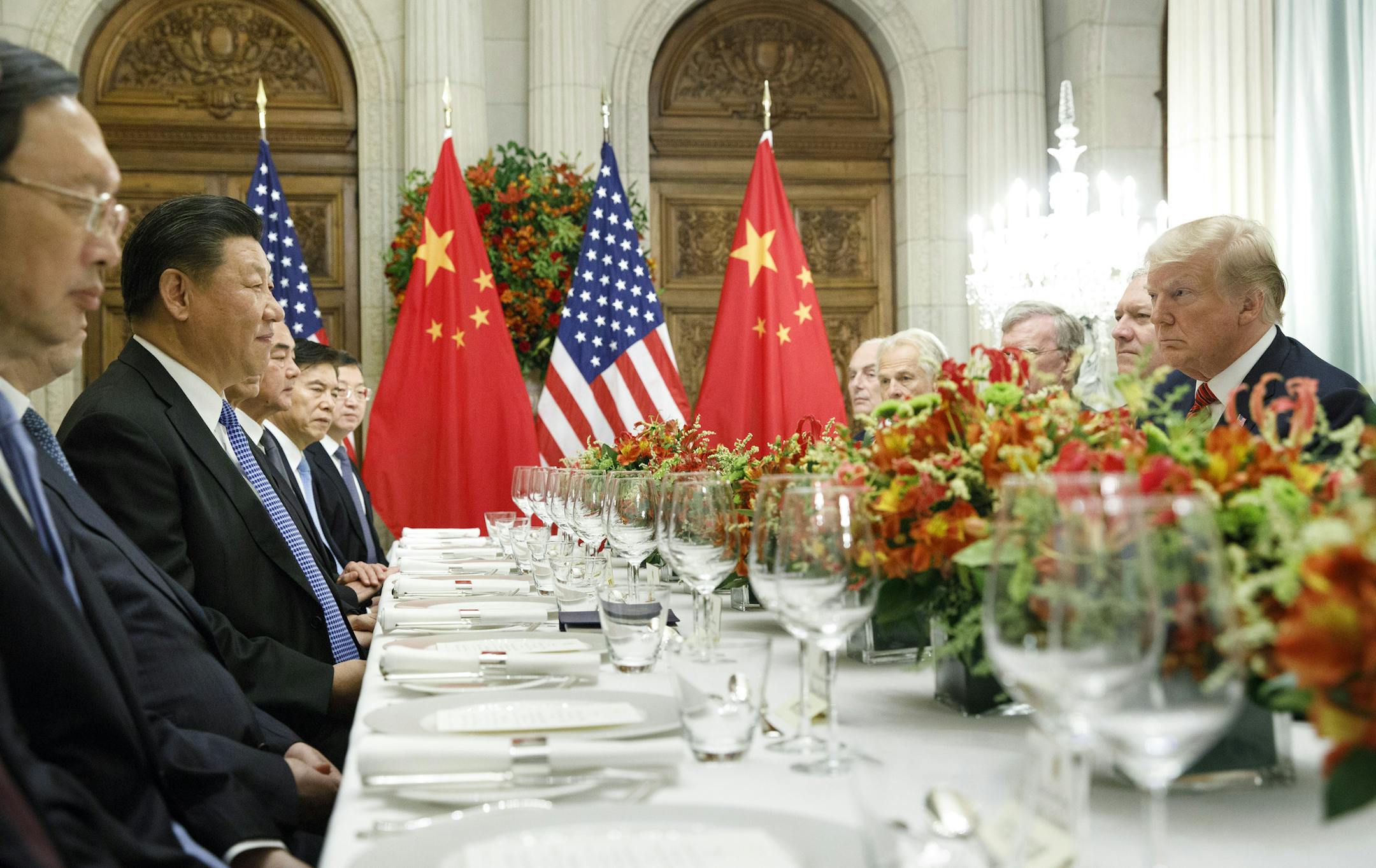
Volatility in the administration is leading to volatility in the stock market. When President Donald Trump made it sound as though he had worked out a trade deal with China, or at least a temporary halt in the escalation of hostilities, markets rose smartly. When Trump tweeted that tariffs are wonderful and a fine substitute for a deal, stocks fell even faster.
The market verdict is clear: Trade conflict is bad for the expected value of American companies. But so far Trump has not heeded the market signals. What might make investors blanch even more is that Trump may, from the standpoint of his re-election prospects, be right to ignore them.
That's true even though many of Trump's Republican allies have made a political case against his administration's tariffs that seems, at first glance, like a strong one. These free-trading Republicans have advised Trump that his trade policies endanger the strong economy that is one of his principal political assets. They also point out that the policies are unpopular in themselves. As Scott Lincicome points out in a recent study for the libertarian Cato Institute, public support for free trade has been climbing.
Trump has persisted in waging his trade war anyway, probably out of conviction. To the extent Trump is a true believer in anything, it's in protectionism. His market-roiling tweet spelled out his conviction: When foreign companies sell products to Americans, it's a way for those companies to "raid the great wealth of our Nation." He thinks, too, that those companies pay tariffs, ignoring the likelihood that most of their burden falls on American consumers.
Tariffs typically impose more costs than they yield benefits for the country that imposes them. George W. Bush's tariffs on imported steel were estimated to have destroyed more jobs in steel-using industries than they saved in the steel industry itself. Barack Obama's tariffs on tires imported from China had a similarly negative effect.
Yet presidents have resorted to such tariffs anyway. They have had a variety of motives. In part, though, they were responding to the same political logic that might ultimately make the tariffs pay off for Trump.
The political virtue of tariffs is that while the costs may exceed the benefits, the costs are diffused and the benefits concentrated. (The same pattern holds for many other government policies, such as farm subsidies.) The winners from a tariff generally have a bigger stake in imposing and keeping them than the losers have in stopping them. The losers, such as the people who would have gotten a job at a carmaker if not for tire tariffs, may not even know that they are paying a cost at all.
The benefits can be concentrated geographically, too, and in an electorally advantageous way. Trump will probably be following a narrow path to re-election in the Electoral College, one that again runs through the industrial Midwest. He will need the renewed strong support of working-class white voters in Michigan, Wisconsin and Pennsylvania (and may make a play for their counterparts in Minnesota). He will probably need almost all of those voters who backed him in 2016 after backing Obama in 2012.


