
Trade Secret gets makeover

Using a nationwide rollout of upscale PureBeauty boutiques, Regis Corp. makes a bold play to expand beyond shampoos and get into cosmetics and skin care.

March 13, 2008 at 3:30PM
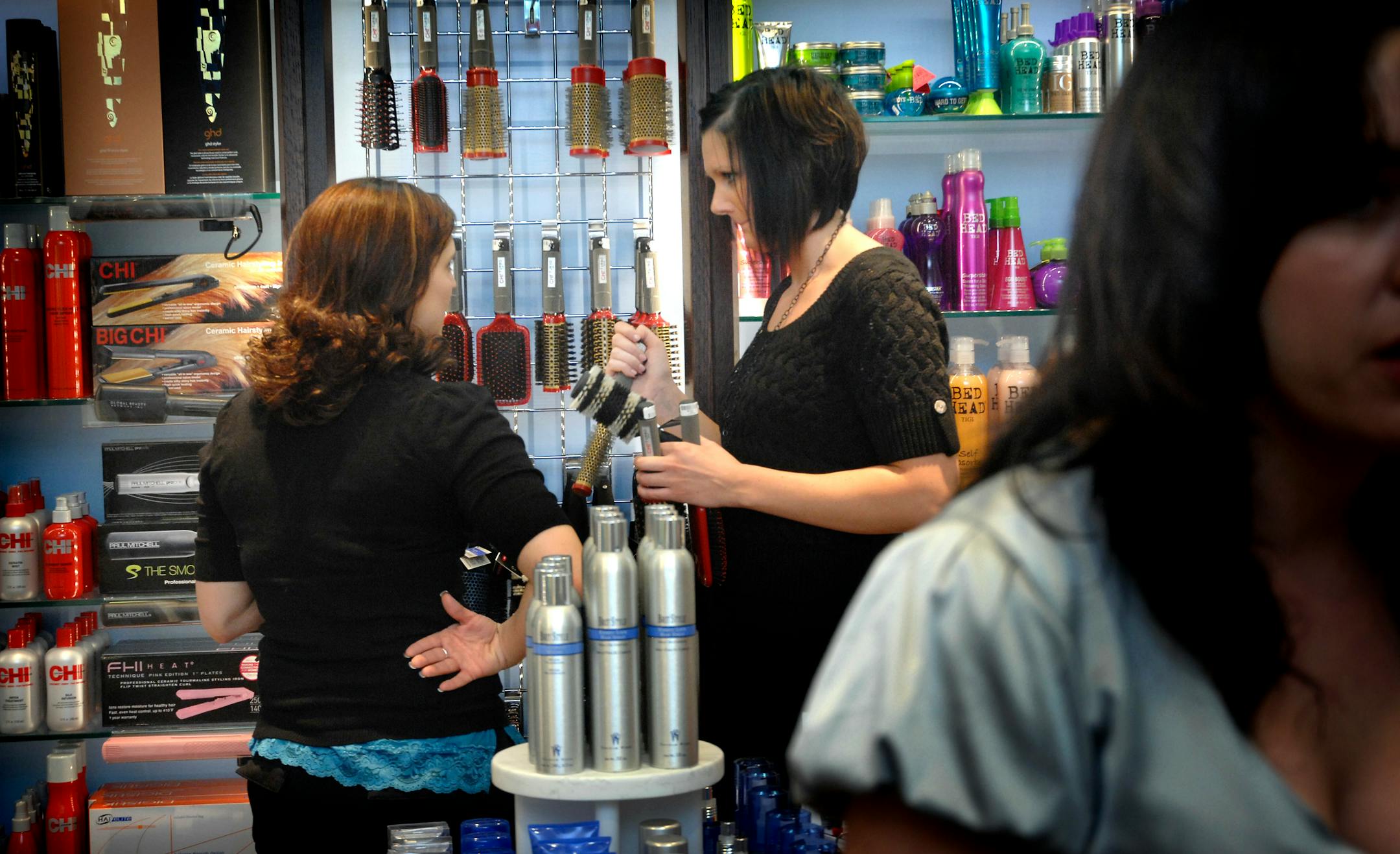
Stylists Kate Scheel, left, and Kate Suek on Tuesday discussed today's opening of the new PureBeauty store at the Mall of America. "What we really have to do is broaden our universe," CEO Paul Finkelstein said of Edina-based Regis Corp., which is expanding from hair salons into cosmetics, skin care and bath products.
Stylists Kate Scheel, left, and Kate Suek on Tuesday discussed today’s opening of the new PureBeauty store at the Mall of America. “What we really have to do is broaden our universe,” CEO Paul Finkelstein said of Edina-based Regis Corp., which is expanding from hair salons into cosmetics, skin care and bath products. (Star Tribune/The Minnesota Star Tribune)

Trade Secret, the chain of value-priced salons and retail stores operated by Regis Corp., is undergoing an extreme makeover. In the next few years, all of the estimated 635 stores will be transformed into European-style luxury boutiques -- known as PureBeauty. ¶ With crystal-laced chandeliers, product-filled armoires and faux marble tabletops, the PureBeauty stores look nothing like the more functional Trade Secret stores, where stacked shelves of bottles and spritzes dominate the layouts. But the changes are more than cosmetic. ¶ Regis executives see the new store concept -- it finalized the purchase of the Kansas-based chain last month -- as a way to expand its reach beyond hair care -- which has stunted the company's growth in recent years -- and expand into cosmetics, skin care and bath products. It's a market that could prove much to be more lucrative.

"What we really have to do is broaden our universe," said Paul Finkelstein, CEO of Edina-based Regis Corp.

"Everybody is selling hair products. We'll be morphing into something more current. Traditional retailers have to transform themselves on a regular basis, and we're in the process of doing that with Trade Secret."

Known for such chains as Supercuts, Cost Cutters and Hair Club for Men and Women, Regis is the largest owner, operator and franchiser of hair products and salons in the world. It operates 12,500 stores in the United States, Europe, Asia and Africa. About 8,500 stores are company-owned; the rest are franchises.

With $2.7 billion in revenue, Trade Secret makes up just 9 percent of Regis' total sales. But in the past year, Trade Secret's sales have dropped 8 percent, its first dip into negative territory since it was purchased in 1992.

But if the PureBeauty model takes off, it could signal a bigger merchandising shift for Regis. Bath, body, skin and cosmetics make up about 23 percent of PureBeauty sales, compared with 2 percent for Trade Secret. Regis, which on Feb. 20 acquired the 114 PureBeauty and BeautyFirst salons, has wasted little time on a nationwide rollout.

Minnesota gets its first peek at the PureBeauty concept store today, when Regis pulls back the curtain on its Mall of America store in Bloomington.

Regis has been stung by the same consumer cutbacks facing the broader retail industry, as consumers face tighter credit and skyrocketing prices for gasoline, food, housing and heating oil.
People still are getting haircuts, but they're coming in eight times a year instead of 11. They're also waiting longer to touch up highlights, trading down from high-price styling foams and not even considering the $150 hair iron.

That trend has hurt the bottom line. Regis said revenue from product sales in U.S. stores grew just 2 percent in the most recent quarter. Sales at stores open more than a year, a key indicator of a retailer's health, fell 3 percent domestically and 0.8 percent worldwide. Earnings, too, have been flat.

The stock has lost 39 percent of its value in the past year, closing Wednesday at $25.07.

Bypassing department stores

Regis Corp. grew by leaps and bounds in the 1990s, snatching up small chains and expanding its hair-care empire domestically and overseas. Today, the shampoo business has become highly competitive and fragmented, and Finkelstein acknowledges that Regis has "morphed into a mature company."

Target Corp. and Wal-Mart Stores Inc. carry brands that 15 years ago were available only at salons. Large cosmetics chains such as Ulta are thriving. Even Victoria's Secret has gotten into the beauty business, adding a highly profitable line of cosmetics and body-care products in recent years.

"I used to go to department stores for makeup, but I hardly ever go there anymore," said Sheryl Graham, 55, who was shopping Tuesday at Sephora at the Mall of America with her 15-year-old daughter, Linnea.

Graham gets a makeup consultation every year, usually at a specialty retailer or at her hair salon. She buys the products, and said she sticks with the brands until she gets tired of them.

Graham is in lock-step with the masses. And that's one reason why analysts such as Neely Tamminga, who covers Regis for Piper Jaffray in Minneapolis, considers the company's expansion into cosmetics and other skin-care products a positive move, even though she's neutral concerning Regis stock.

"We believe there's market share to be had, primarily from department stores, if the strategy is well-executed," said Tamminga, citing a proprietary survey of teens and their mothers that shows discounters and drugstores are gaining ground on cosmetic sales. "And Regis, vis-à-vis PureBeauty, is attempting to capture that market share."

PureBeauty aims to attract what Finkelstein playfully calls the "beauty junkies." These typically are women in their 30s and 40s who have incomes of more than $125,000, visit salons on a weekly basis and like to try the latest products. They're about a fourth of Trade Secret's Style Club members.

PureBeauty, which has had its own problems, even filing for bankruptcy in 2006 after a rapid expansion, may be more upscale, but still will sell some of Trade Secret's midrange brands such as Redken and Paul Mitchell, as well as OPI fingernail polish.

At the high end, customers can find YSL cosmetics as well as the full line of Intelligent Nutrients, when it becomes available in late spring or early fall. (Regis has a 49 percent ownership in the certified organic line founded by Horst Rechelbacher.) A bottle of the certified organic shampoo will go for about $35.

There are 26 Trade Secret stores in Minnesota, the bulk of them in the Twin Cities. Finkelstein said that it could take as long as two years to recast the stores into PureBeauty boutiques. It's unclear whether there's a future for the second Trade Secret store at the Mall of America.

Leah Schulte, 35, of Woodbury has shopped at Trade Secret and thinks it's time the stores got a new look. She once bought Mary Kay "religiously," then she discovered MAC. These days, "I cannot do without the bareMinerals and MD Formulations," which she learned about through a TV infomercial, she said.

She was excited to hear about the PureBeauty concept, but offered words of warning to Regis execs: "If they're going to specialize with more skin-care products, they're really going to have to market it, because there's already a lot of really great stuff out there."

Jackie Crosby • 612-673-7335

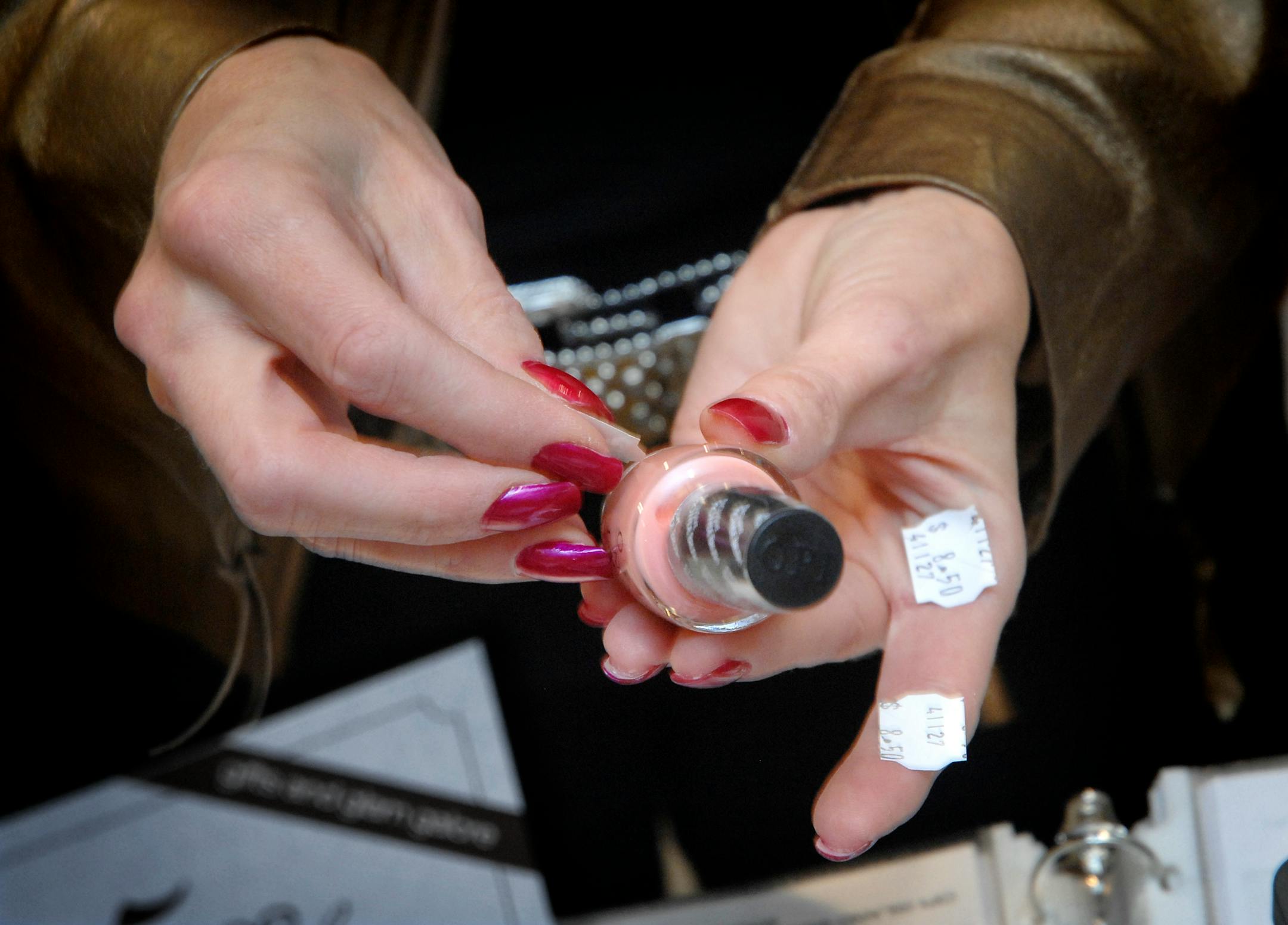
Nail polish is put out for sale at the new PureBeauty, which sells much more such items than did Trade Secret.
Nail polish is put out for sale at the new PureBeauty, which sells much more such items than did Trade Secret. (Star Tribune/The Minnesota Star Tribune)
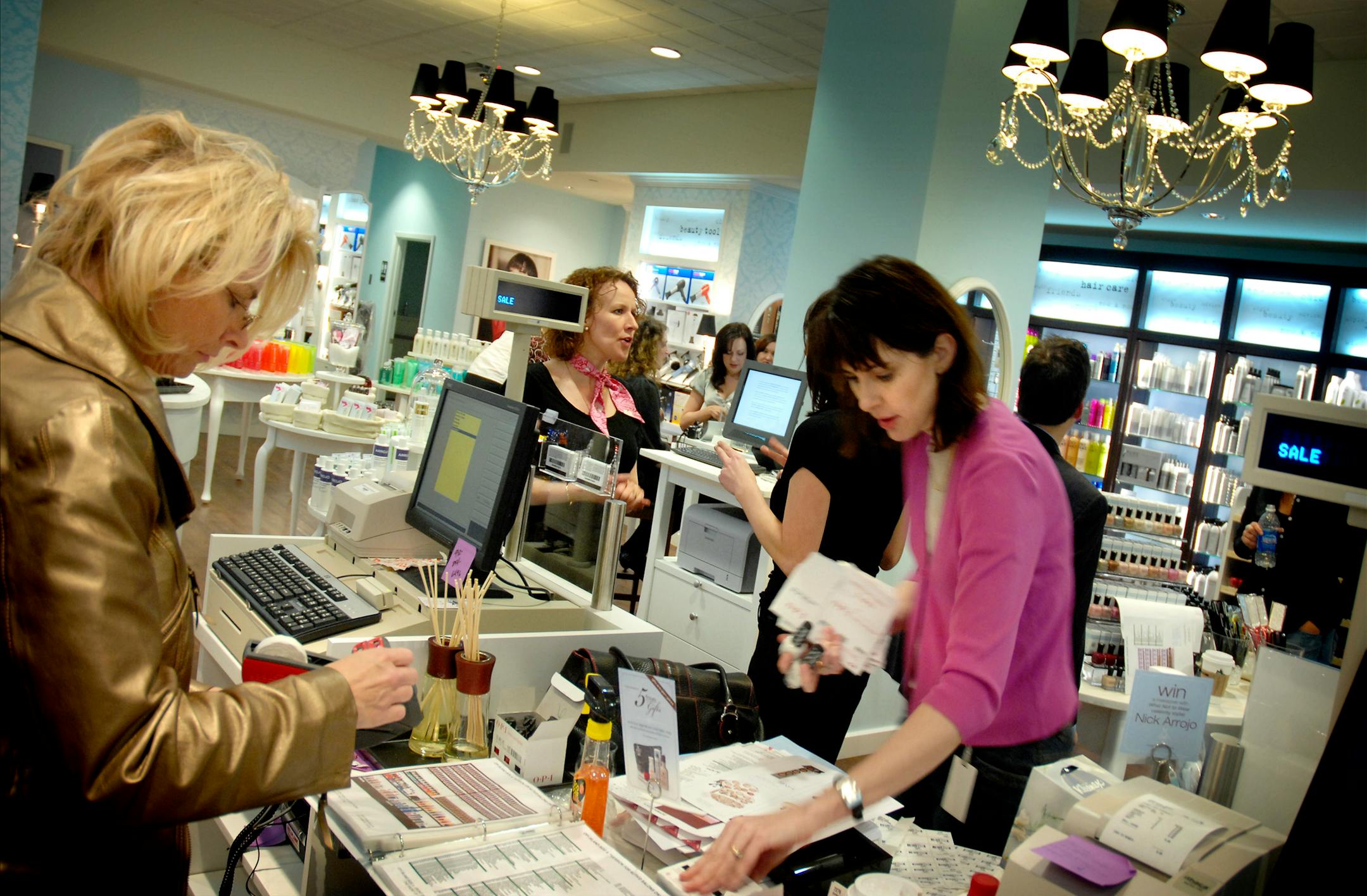
Corporate product manager Darci Boyum, left, and director for automatic replenishment Melisa Devine checked inventory Tuesday at the new Mall of America PureBeauty store, opening today.
Corporate product manager Darci Boyum, left, and director for automatic replenishment Melisa Devine checked inventory Tuesday at the new Mall of America PureBeauty store, opening today. (Star Tribune/The Minnesota Star Tribune)
about the writer

about the writer

Jackie Crosby

Reporter

Jackie Crosby is a general assignment business reporter who also writes about workplace issues and aging. She has also covered health care, city government and sports. 

See Moreicon

More from Business

See More
card image
Anthony Soufflé/The Minnesota Star Tribune

Minnesota jewelry designer Emily Johnson is among those upset with Amazon over its new AI feature, which uses product images and descriptions from their websites.

card image
card image