

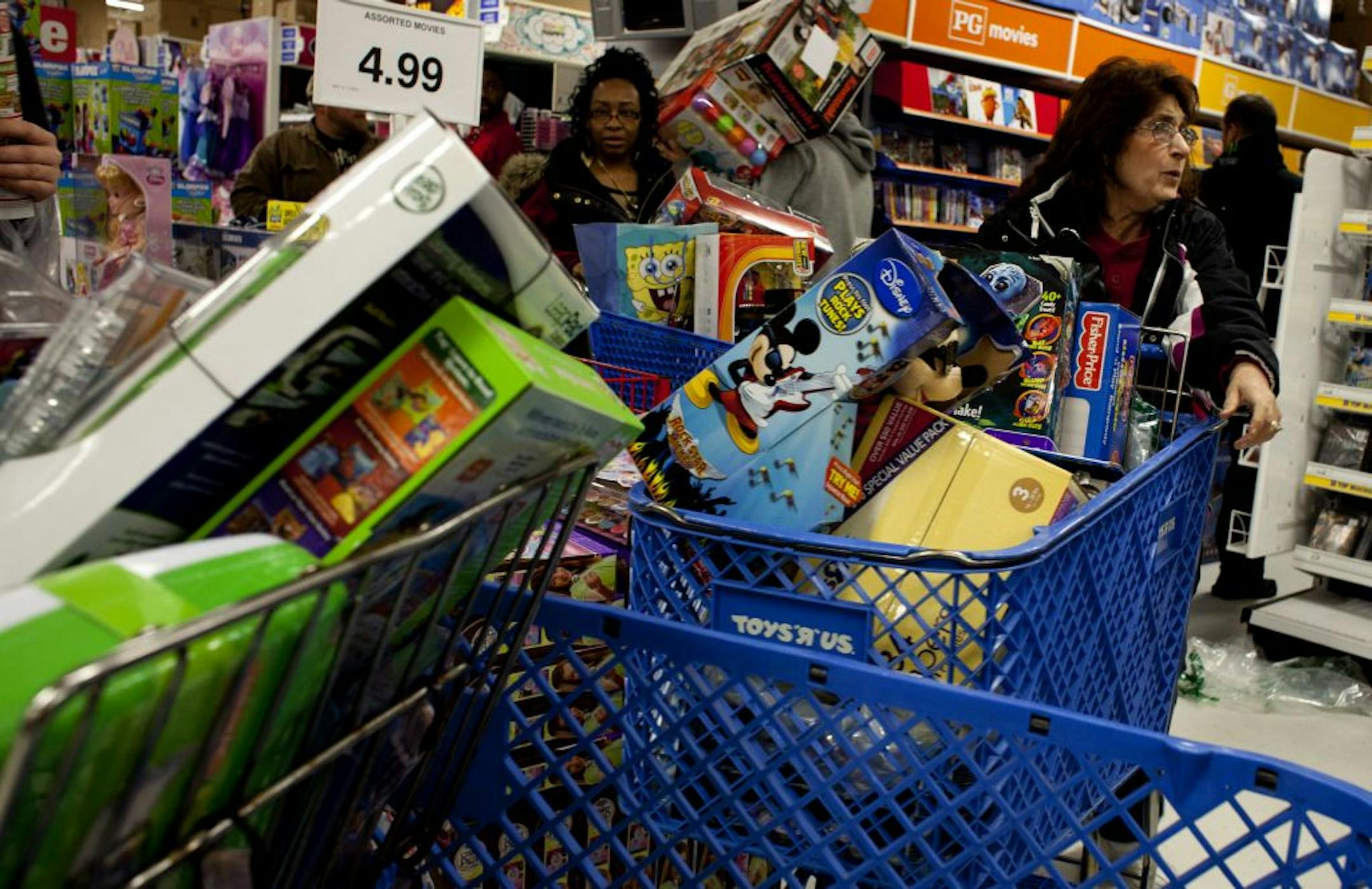
Toys R Us' holiday rallying cry for the past six years has been: "We're playing to win." This year, they're not playing. It's war -- a dead-serious battle to hang on to market share won over previous years and to show Wall Street it can grow its sales.
The Wayne, N.J.-based toy seller has thrown every sales-boosting weapon in its arsenal into the fight, launching an unprecedented number of special deals and new marketing strategies. Since September, it has announced 13 major holiday initiatives. Toys R Us has expanded layaway and waived layaway fees, promised it would match competitors' prices, opened earlier than ever on Thanksgiving and announced its flagship store in New York's Times Square would be open round-the-clock for the final 543 hours leading up to Christmas.
Jim Silver, a veteran toy industry authority and editor of Timetoplaymag.com, a toy-review website, said Toys R Us is being "much more aggressive than ever before" in terms of competing with rivals such as Wal-Mart, Target and Amazon.com.
"Their [strategy] this year is they're not going to lose the business for not trying," Silver said. "They're going to make every effort to get the customer to Toys R Us," unlike past years, when they relied too heavily on their status as the best-known toy retailer.
In past years, efforts by Toys R Us to ramp up holiday sales have been seen as a sign the company, which was taken private in a leveraged buyout in 2005, was finally preparing to move forward with the stock offering that has been in the works since Bain Capital, Kohlberg Kravis Roberts and Vornado acquired the toy retailer. Toys R Us registered for an initial public offering in May 2010 after reporting its best holiday results in more than a decade.
That IPO, however, has been on the shelf so long -- stalled by an unfavorable climate for IPOs and by two holiday seasons in which Toys R Us missed expectations -- that it no longer is the primary driving force behind the holiday game plan. Instead, industry experts said, the new reality is Toys R Us has to be this aggressive every year, because if it can't win the holiday toy battle, it might as well get out of the game.
"It's a survival mode," said Jonathan Samet, publisher of The Toy Insider. "This is all they do. Wal-Mart sells a lot of products besides toys. Amazon sells a lot of products besides toys. Toys R Us sells toys."
"They're not looking five or 10 years down the road," he said. "They need to be successful this year and in the short term, especially if they are planning to go public again. They have to show increased sales revenue and profitability."


