

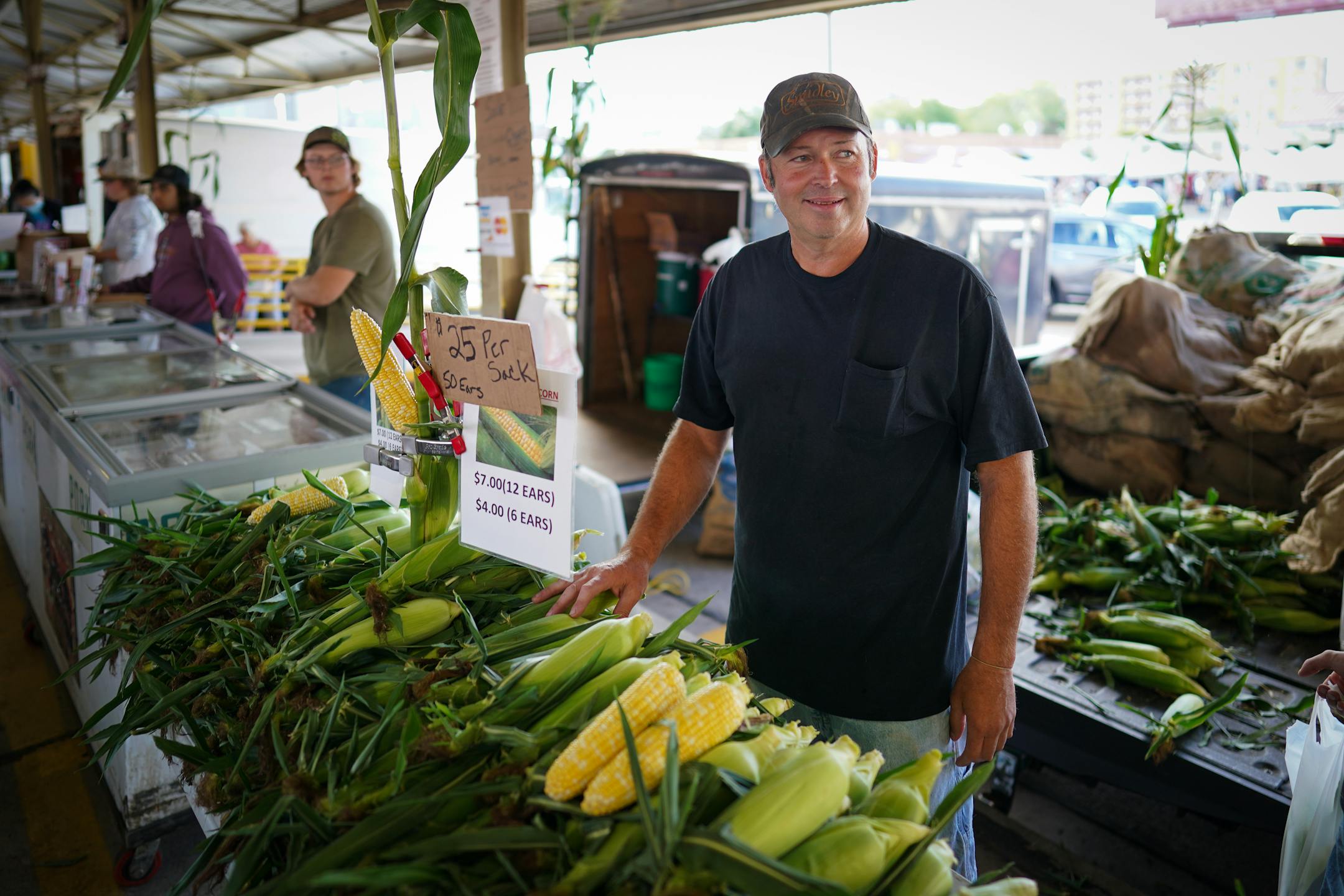
It's been a tough year for the 160 acres of sweet corn that Dave Nathe grows near Elk River, Minn. And as the last weeks of a hot, dry season approach for this staple of late-summer barbecues, he's worried things could still get worse.
"It's never been this dry for this long," Nathe said. "There's been some spotty showers where some farms will catch an inch, 2 inches. But we haven't caught anything in weeks."
As sweet corn reaches its seasonal peak, filling roadside stands and grocery shelves, the quantity and quality is being shaped by drought in much of the Midwest.
At some farmers markets and co-op grocery stores that rely heavily on sweet corn grown in areas around the Twin Cities, there's less supply, and higher prices, at least at certain times.
"I've had less I'm able to sell this summer," said Cher Yang, who grows corn on a plot of land in Rogers and sells it at the Minneapolis Farmers Market. He doesn't have dedicated irrigation but has taken to watering it himself. "This year has been very hard — it's regrow, regrow, regrow, water, water, water."
Yang raised his prices this year over last, to $5 for eight ears of corn compared with $5 for a dozen.
But the food chain is complex. Most of the sweet corn Minnesotans eat comes from somewhere else. And most of the sweet corn Minnesota farmers grow gets processed into canned products or as ingredients in other foods.
Since 1980, Nathe has run Riverside Farms, a family business that supplies sweet corn and other vegetables to farmers markets and grocery stores around the Twin Cities, including Lunds & Byerlys.


