


Last spring, I wrote a column about how desolate farm country looked with all the fields plowed up and nothing allowed to grow but corn or soybeans.
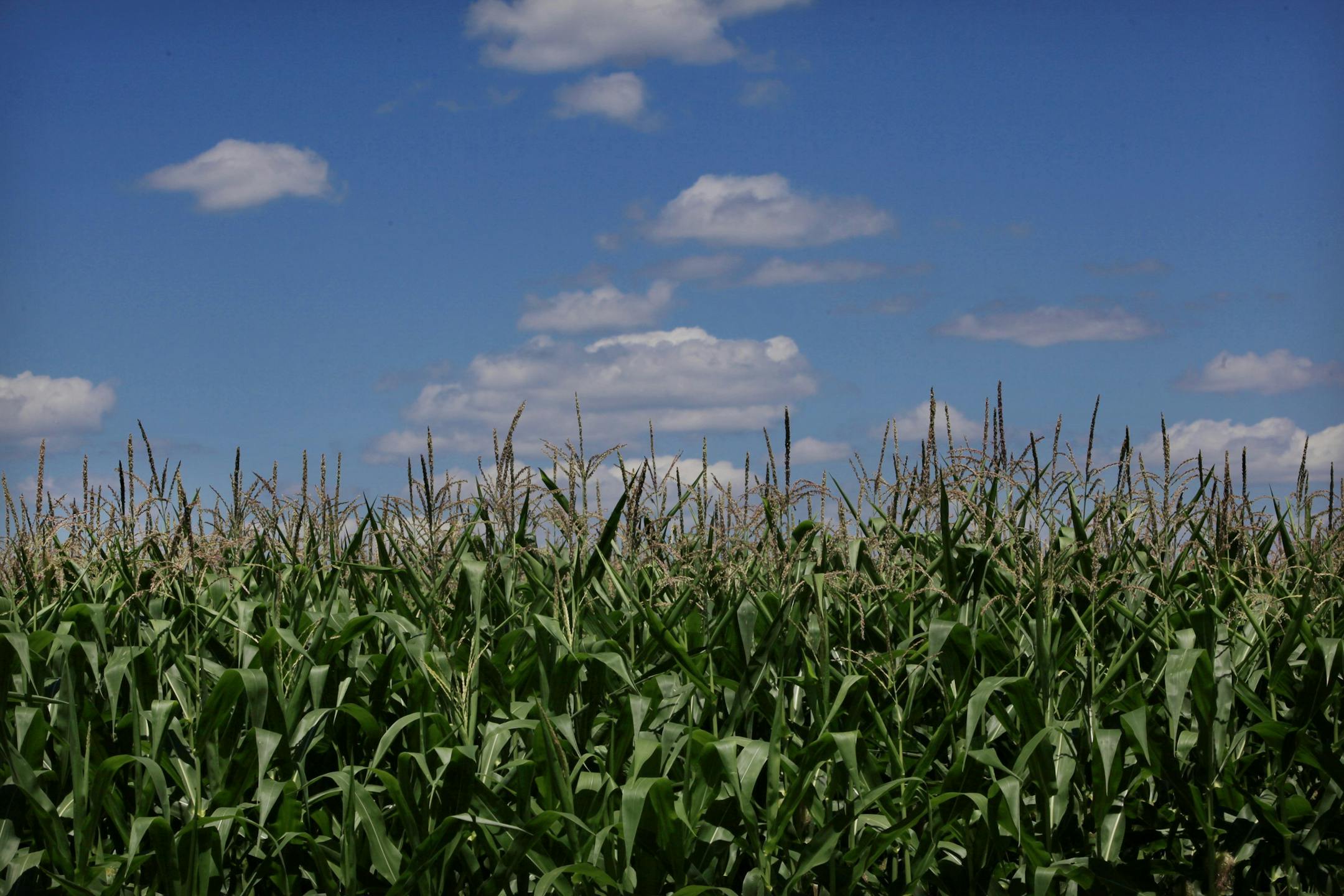
Now the fields are grown up with the corn plants over my head, packed so densely you can barely slide a notebook between the rows.
We’re not talking about sweet corn here. We’re talking about field corn, the stuff that primarily feeds animals and ethanol plants. In farm country, there are endless seas of field corn, corn as far as you can see, swelling and falling hills of stalks bearing heavy cobs.
In good years, field corn brings a lot of wealth into Minnesota. We grow about 1.5 billion bushels a year on about 8 million acres. It’s big business, and it may be foolhardy to argue that we should grow less corn. But I’m going to try anyway. Here’s why.
- Corn needs tremendous amounts of fertilizer, which often pollutes lakes, streams and drinking water. While most of Minnesota’s community water systems meet federal guidelines, many private wells are contaminated with nitrates, especially in central, southeastern and southwestern Minnesota. In 2023, the small city of Ellsworth in southwestern Minnesota told parents not to give babies tap water because nitrate levels had reached 15 milligrams per liter, a level that can starve infants of oxygen. And fertilizer runoff has contaminated lakes in Minnesota farm country.
- Corn is a monoculture that destroys habitat. Corn growers can grow significantly more corn per acre than they used to, but the density of the corn and the chemicals used on them displace wildlife. Wayne Berglund, 74, of Columbia Heights remembers hunting pheasants in cornfields around Faribault from the 1960s through the 1980s. The pheasants would hide in the weeds around the cornstalks, but as the years passed, the corn grew thicker and the weeds disappeared, and so did the pheasants. Berglund isn’t alone in his observations. Conservationists also blame large-scale agriculture for a big share of the loss of North America’s birds.
- The farm economy depends too heavily on corn. When corn prices are high, fine. But this year, they dropped below $4 a bushel, not as low as in the 2010s, but still a big enough hit that it hurts rural areas. Any economy benefits from diversity, and the farm economy is no different.
- Its use in biofuels heats the planet. Corn received a big boost in 2005 and 2007 with federal laws requiring biofuels, primarily corn-based ethanol, to be mixed into the nation’s fuel supply. This provided a significant market for corn. There are now some 200 ethanol plants in the U.S., about one-tenth of those in Minnesota, making Minnesota the fifth-largest ethanol producer in the U.S., according to the Minnesota Bio-Fuels Association. However, ethanol, often touted as an environmentally friendly fuel, still consumes copious amounts of water and contributes to greenhouse gases and pollution all along its supply chain.
- When we grow too much corn, we dump it on Mexican markets at rates well below the cost to produce, destabilizing our southern neighbor even as Mexico attempts to shore up small, sustainable farms.
- It’s expensive. Corn is one of the most taxpayer-subsidized crops in the U.S., with growers receiving billions of dollars a year, mostly through insurance subsidies.
- Corn makes summer extra humid. All plants release moisture into the air, but corn does so prodigiously. It sucks water out of the ground, uses what it needs and releases the rest into the air through its huge leaves. It’s capable of raising the dewpoint by 5 to 10 degrees from mid-July to mid-August, already the muggiest time of the year.
I’ve pointed out in this column before that farmers can’t willy-nilly switch crops when they’re growing on a commercial scale. Different crops require different equipment and the markets to buy them. Minnesota farmers are adept at growing corn and soybeans, and the infrastructure exists to serve them. So they need incentives to change.
This is also why public policies should promote small farms over commercial acreages, and food and fiber over fuel. Small growers are more flexible and more adaptable if they have the right supports in place. Unfortunately, the federal government eliminated some of those supports earlier this year, including those that encouraged schools to purchase healthy foods from local farmers, but many states, including Minnesota, have stepped in.
Another option is to pay farmers annually to permanently take cornfields out of production and plant trees, not as a cash crop, but as a long-term solution to climate change and pollution concerns. Trees sop up carbon, provide habitat, stabilize the soil, cool the Earth and protect our water supply.
The federal Conservation Reserve Program already pays owners annually to grow native plants and trees on sensitive and marginal farmland, but every decade, owners have the option of putting that land back into agriculture production. Permanent subsidies would encourage landowners to keep that land forested. And the subsidies would have to be significant. For nearly a quarter century, Minnesota’s Sustainable Forest Incentive Act has paid landowners to protect their forests, but it pays only up to $23.74 per acre, compared with the several hundred dollars per acre from corn in a good year. Maybe the state could allow landowners to piggyback on other programs like carbon credits.


