

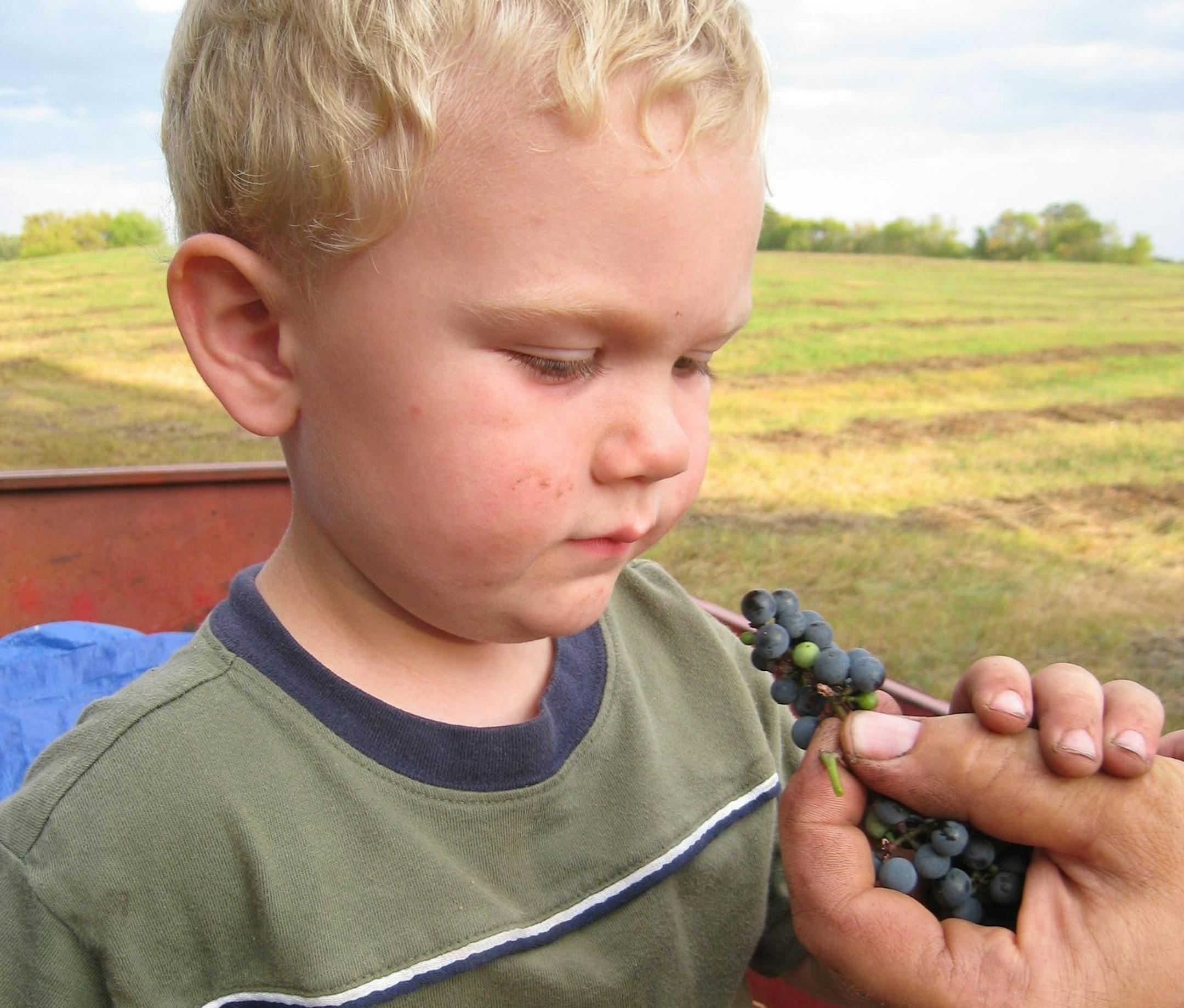
CLITHERALL, Minn. - The raspberry bushes were growing alongside the gravel road in Bemidji not far from our home. I would never have noticed had not my farm-boy husband made his way toward them and began eating the berries. He offered me a few. I made a face.
Eating berries from the side of the road? What if the township had sprayed chemicals? What about exhaust from passing vehicles? What if birds or bugs had soiled the berries?
This didn’t faze my husband. He didn’t see any sign of chemical spray. The birds had been eating them and that was good enough for him. Tentatively I ate one. It was tart but not mouth-puckering. There was sweetness, too. Before I knew it, I’d eaten a handful, and we left the rest for the birds.
One of the biggest transitions for people moving from city to country can be trusting the land around you as a source of food. Like me, many were raised solely on grocery store food, especially in the 1970s and 1980s. Some of our neighbors in Plymouth grew gardens, but my family never did. I trusted grocery store food in its plastic packaging, assuming that food companies employed experts and sanitary processes to ensure that it was safe.
I had read Upton Sinclair’s novel “The Jungle,” which led to the passage of U.S. food safety laws, which I assumed would keep me safe. To me, food seemed best to eat after it had run through the system, been inspected and signed off on. The wild world seemed full of pathogens. That was how I saw things, never mind that throughout human history, people thrived eating from the wild. I along with many of my peers was a product of the modern food system that separates us from growing or gathering our own food.
People who grew up in rural Minnesota will likely laugh at my naivete. They’ve gardened or foraged for generations.
Foraging has caught on again in recent years, with groups devoted to finding mushrooms, wild asparagus, plums and berries. It’s become so popular that the DNR is considering limiting how much foragers can remove from state parks; the public will be able to comment on that sometime this year. Well-known forager Sam Thayer says on his website that his 2006 book, “The Forager’s Harvest,” has sold more than 250,000 copies.
You can eat dandelions. You can eat hosta shoots. You can eat purslane, a wild succulent that frequently grows in gardens, although people with kidney disease should steer clear. Recently a new yellow flower began popping up in our hayfield. An online wildflower website identified it as salsify, a plant that is edible from flower to root.


