

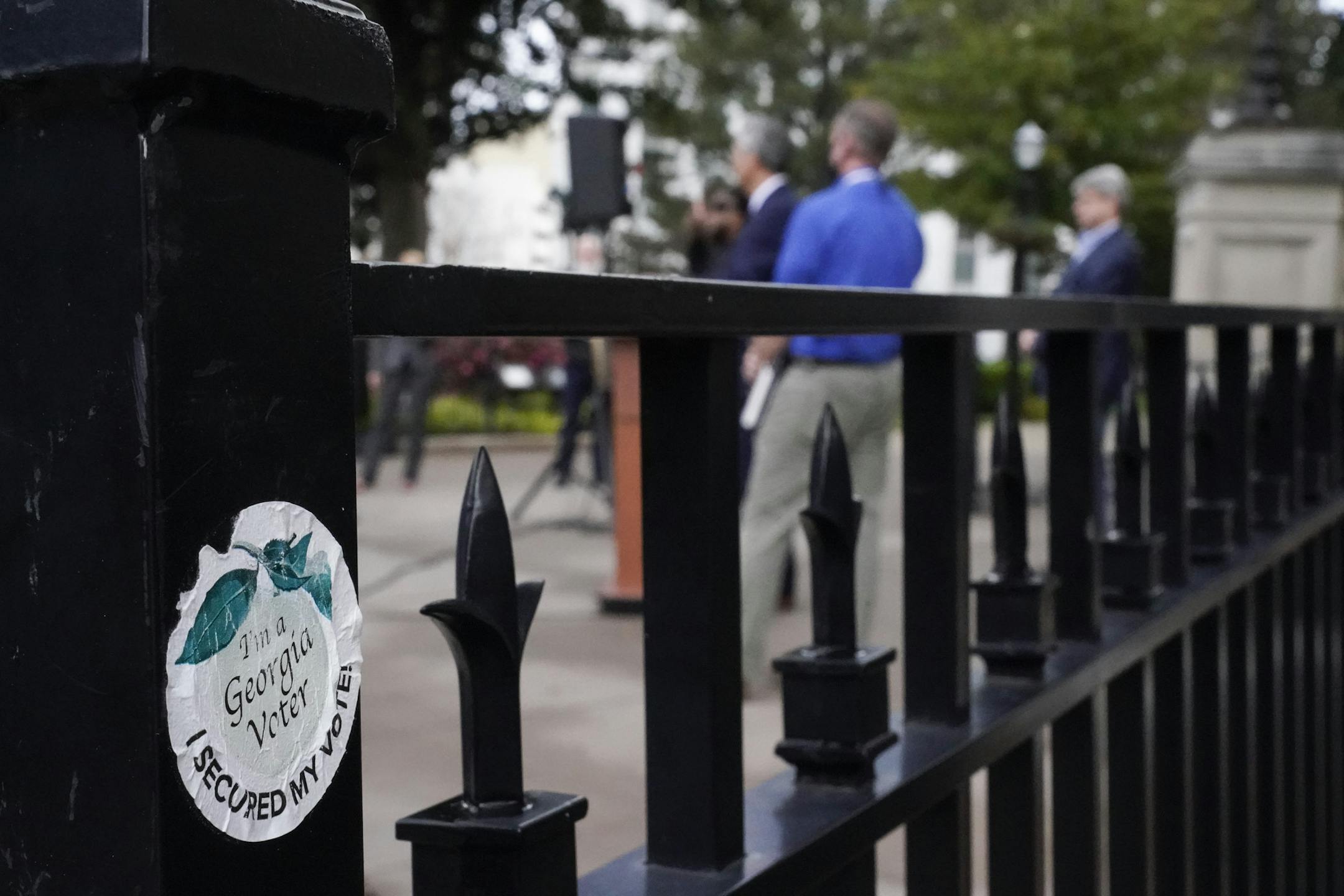
On Jan. 5, two runoff Senate elections in Georgia will basically decide whether a Biden-Harris administration has any real power to pass anything that will actually matter to Democrats. If the party ends up winning those two seats, effectively seizing control of both chambers of Congress and the White House, it will have African Americans voters — and leaders — to thank for it.
Before we get to the Senate races, let's flashback to 2008. After not coming close in either of his first two presidential primary runs, Biden's career was refreshed when Barack Obama put him on the ticket. Without those eight years as vice president, it's hard to see how Biden would have ever run in 2020.
When Biden was on his way to defeat in this year's primaries, he was rescued again. Legendary South Carolina Rep. James Clyburn endorsed his longtime friend on the eve of his home state primary. Sixty percent of African American voters in South Carolina cited Clyburn's stamp of approval as an important factor in their voting decisions. Biden was on his way to the nomination.
Joe Biden selected another trailblazing politician, Kamala Harris, as his running mate. The two campaigned hard in Michigan, Pennsylvania and Wisconsin — on issues that specifically mattered to the Black community — and it paid off. Preliminary data from Edison Research indicates that 90% of African American women turned out for Biden. More than half of whites voted once again for Trump.
Setting aside polling data, which is under withering attack, one African American woman in particular may be more responsible for the Biden-Harris victory than anyone else. Stacey Abrams, the Georgian who came within a whisker of becoming governor in the Peach State two years ago, is the new darling of Democratic Party activism. And she's earned it.
After her 2018 loss, which ended under a cloud of suspicion after allegations of voter suppression at the hands of the GOP, Abrams founded FairFight to organize voters and ensure election security. The movement helped register 800,000 new Georgia voters but didn't stop there. Abrams flexed FairFight's muscles into other battleground states, galvanizing African Americans and other potential Democratic voters to get in the game. Basic math tells us that Abrams' efforts played a role in the razor-thin winning margins that helped to rebuild the "blue wall."
Like so many other American politicians, Abrams was inspired by the legendary civil rights leader, John Lewis, who died this past summer. In his final days battling cancer, Lewis once again admonished his fellow citizens to make sure they exercised their most sacred American right. So it was a fitting nod to history that in the early morning hours of Nov. 5, it was a batch of votes from Clayton County, Georgia — the county that Lewis represented in Congress for three decades — that helped Biden overtake the lead from Trump by 917 votes.
After the election was called, and the two Georgia Senate races were officially headed toward runoffs, I called up my friend Eric Adelstein. His firm, AL Media, handles Abrams' media consulting. I asked him if it was crazy to think that her loss in the governor's race not only catalyzed a new movement but arguably makes Abrams the most influential person in the country for the next 60 days. Not only because of the Democratic electorate she energized to turn out in the 2020 race — but because FairFight has four more weeks to register Georgians to vote in early 2021!


