

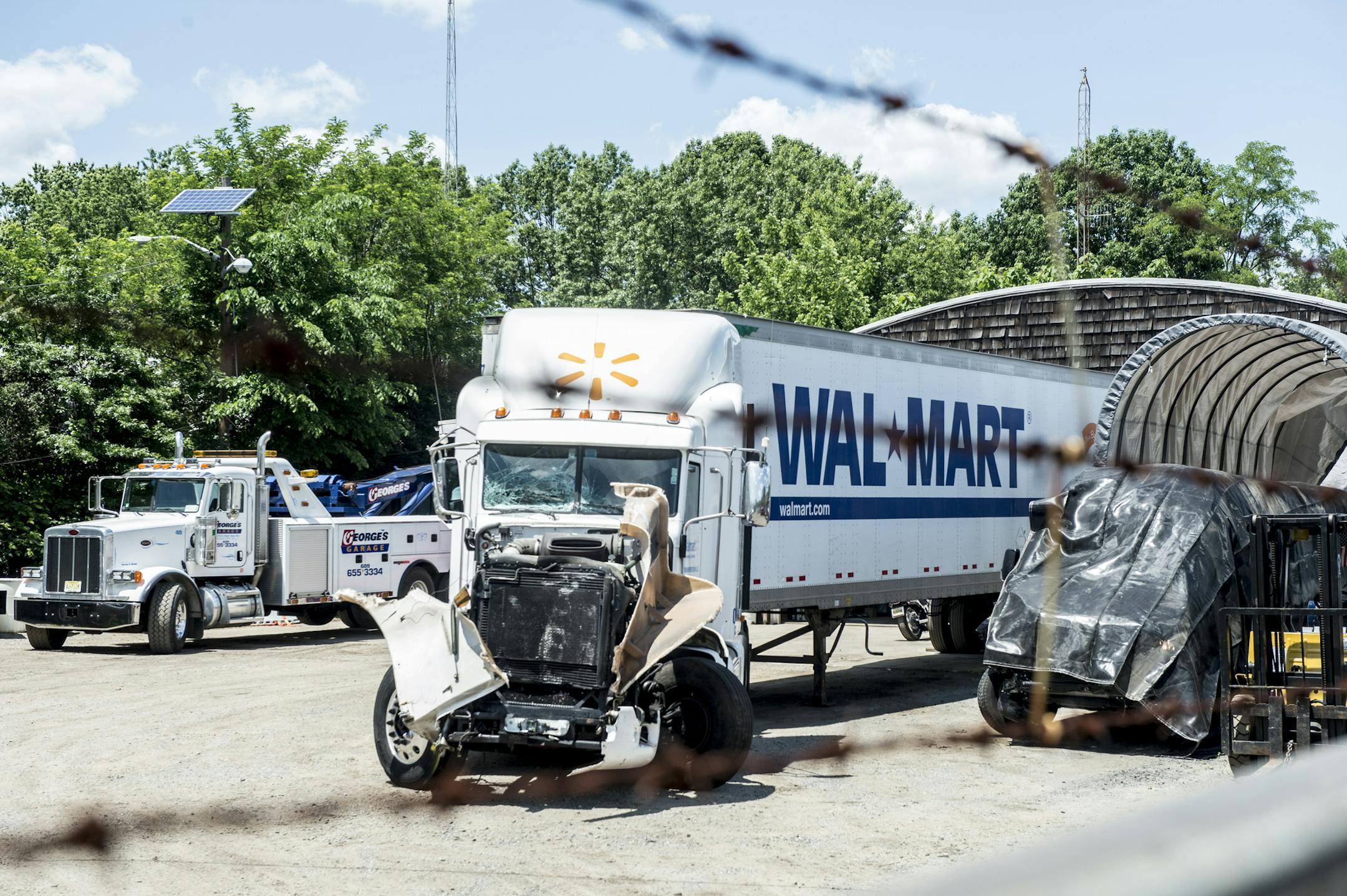
Last month, after a tractor-trailer collided with a vehicle carrying actor Tracy Morgan and others, national attention focused — briefly — on the serious issue of fatigued truck drivers.
The truck's driver, Kevin Roper, was charged with vehicular manslaughter in the death of comedian James McNair, one of the vehicle's passengers, and prosecutors alleged Roper hadn't slept in more than 24 hours. But then an initial report from the National Transportation Safety Board said that Roper had been working for 13 1/2 hours at the time of the crash, just within the legal limit of 14 hours on duty with no more than 11 hours behind the wheel.
Let's hope the discussion doesn't stop there. The nation's trucking system needs to be reformed, and the changes must address root economic causes underlying a range of unsafe practices.
I've spent the last three years researching truckers' compliance with federal regulations limiting the hours they can work. I've spoken with hundreds of truckers and other industry stakeholders to try to figure out what drives truckers to work past the point of fatigue, and what can be done about it.
Truckers don't work without sleep for dangerously long stretches (as many acknowledge having done) because it's fun. They do it because they have to earn a living. The market demands a pace of work that many drivers say is impossible to meet if they're "driving legal."
In the face of rising consumer demand for overnight shipments and for fresh produce trucked from the opposite coast, shippers have upped the pressure both to move goods quickly and to keep costs low. Since many truckers are paid by the mile, they're incentivized to stay on the road as much as possible. (As truckers are fond of saying, "If the wheel ain't turnin', you ain't earnin'!")
One thing that makes this possible is that truck drivers are explicitly exempted from the Fair Labor Standards Act, so they aren't legally entitled to overtime pay or other protections designed to prevent their labor from being exploited.
Trucking firms today operate on razor-thin margins in a highly competitive industry, and many of them, according to the truckers I've interviewed, put tremendous pressure on their employees to break the law by staying on the road too long. Federal safety rules are frequently ignored in service of on-time delivery to the customer.


