

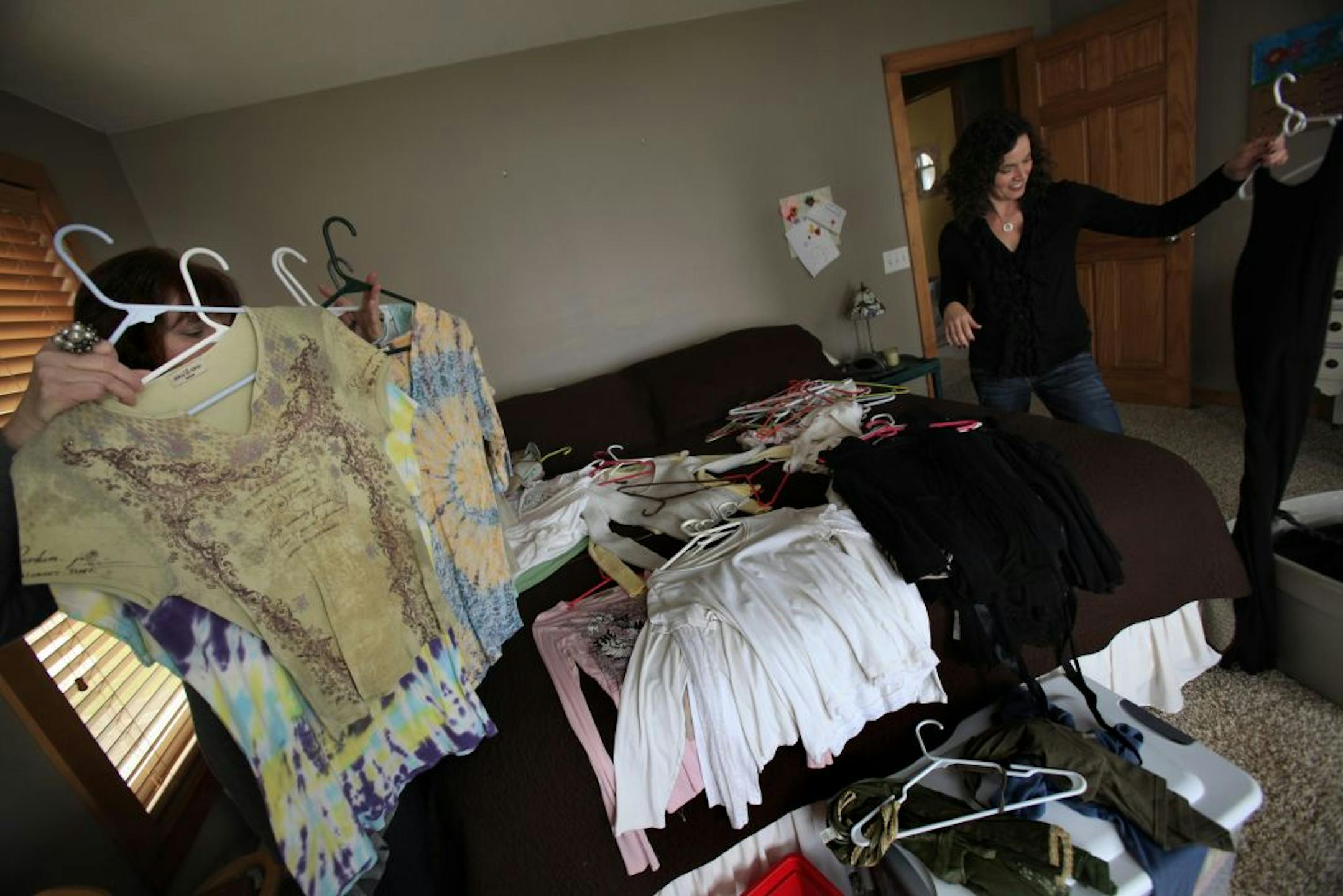
Pat Slaber and her closet weren't in sync anymore. The 55-year-old Shoreview resident dances, practices yoga and works out with a trainer. Her walk-in closet was packed, but only a sliver of the space was devoted to active wear. "Most of it is stuff I haven't touched in years," she said. To help clear the clutter, Slaber did what a small but growing number of people in the Twin Cities are doing: She hired a closet organizer. "My main goal was to be able to walk in my closet in the morning and say 'I'm going to wear this and that' and not have to run to the store," she said. Amy Lindquist, who's an organizer, image consultant and personal shopper, admits that hiring help is more popular on the coasts than it is in the Midwest. "Hiring someone to go through your closets doesn't rate highly on a Minnesotan's practicality scale," she said. Still, she maintains that organizers are indeed practical, because they teach clients to wear what looks good on them, to get rid of what they don't wear and to steer clear of unnecessary purchases the next time they go shopping.
More items of clothing don't make more outfit options, she said. "It actually creates chaos and confusion."
Locally, organizers say they most often get calls from people who have a new job, lost or gained weight, are dissatisfied with their wardrobes, or want to update their look with age-appropriate pieces.
Jessica Anderson of Bloomington called in an organizer because she was busy.
"I'm a mom who hardly has time to shop," she said. "So it saves time and money."
Of course, a pro also costs money. In the metro area, most organizers charge between $50 and $150 an hour, and some have two- or three-hour minimums.
While all of them say they'll travel throughout most of the Twin Cities area, each organizer has his or her own way of working.
Lindquist starts each appointment with an assessment to determine if the client's lifestyle matches what they have in their closet. Then she talks about the best colors and styles for each client. By the time she's done, she cuts the contents of most clients' closets in half. The general rule is that most people wear just 20 percent of their clothing. "I want to flip that percentage so they're wearing 80 percent of it," said Lindquist.



