

A 28-store retailer that grew sales more than 20 percent last year will open a second store in Roseville in a few days.
The chain's typical customer is a suburban woman, aged 30 to 54, with an average household income of $54,000.
Wal-Mart? Target? Sears? Macy's? Nah. They can't hold a candle to that kind of sales growth.
Try Goodwill/Easter Seals Minnesota, the nonprofit skills training and job placement organization for the unemployed and disadvantaged. Goodwill increasingly has funded its mission from a growing network of 26 retail stores and a couple of fashion boutiques that sell mostly donated goods.
Goodwill planned its expansion during good times. But growth has accelerated in the last several years of recession and slow recovery. It competes for donated merchandise and business with nonprofits such as the Salvation Army and Arc's Value Village, in addition to for-profit retailers such as Saver's.
But Goodwill is the biggest nonprofit retailer in the Twin Cities market. And it has proved over the last decade that secondhand retailing, if presented in bright, clean, well-organized stores with bargain prices, can be a bona fide growth strategy, attracting both affluent bargain hunters and working-class shoppers in suburbs such as Eagan, Hopkins, Lakeville, Maple Grove, Minnetonka and Woodbury.
"We have invested to produce the numbers which allow us to expand our mission and the number of people we assist annually," said Debbie Ferry, vice president of retail sales and operations, who joined Goodwill 13 years ago from Jo-Ann Stores. "We've been doing three to five real estate transactions a year -- remodels, relocations. And we've investing in new stores. We have a plan."
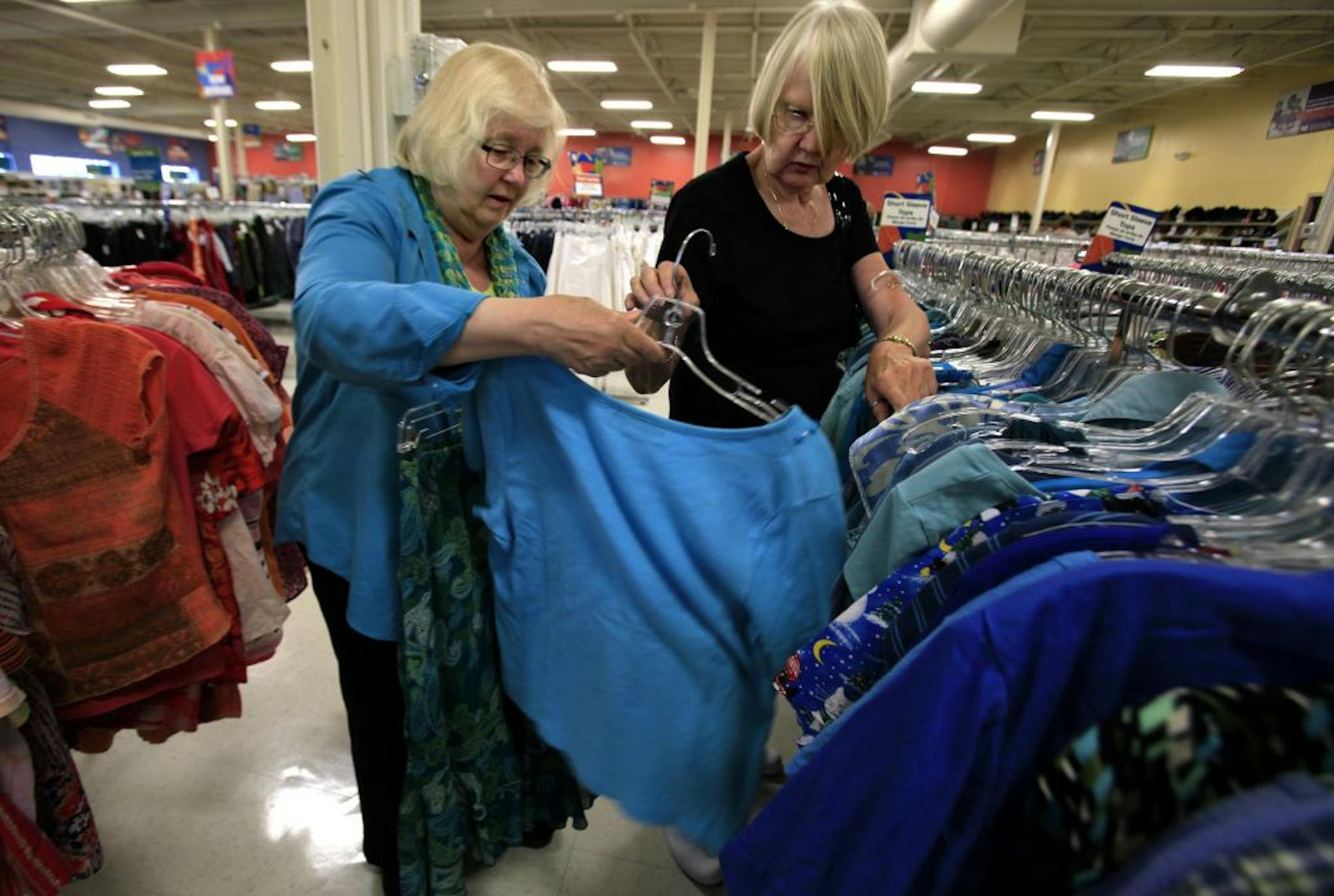
Goodwill's Bloomington store, for example, once housed Seasonal Concepts, an upscale retailer of patio furniture. Last week Beth Glasoe, a visitor from California, and Sue Maki of Chaska shopped for skirts and tops priced under $5. And Mina Ghorashi, a medical researcher from Minneapolis and a collector, was looking for deals on vases.



