

Opinion editor's note: Star Tribune Opinion publishes a mix of national and local commentaries online and in print each day. To contribute, click here.
•••
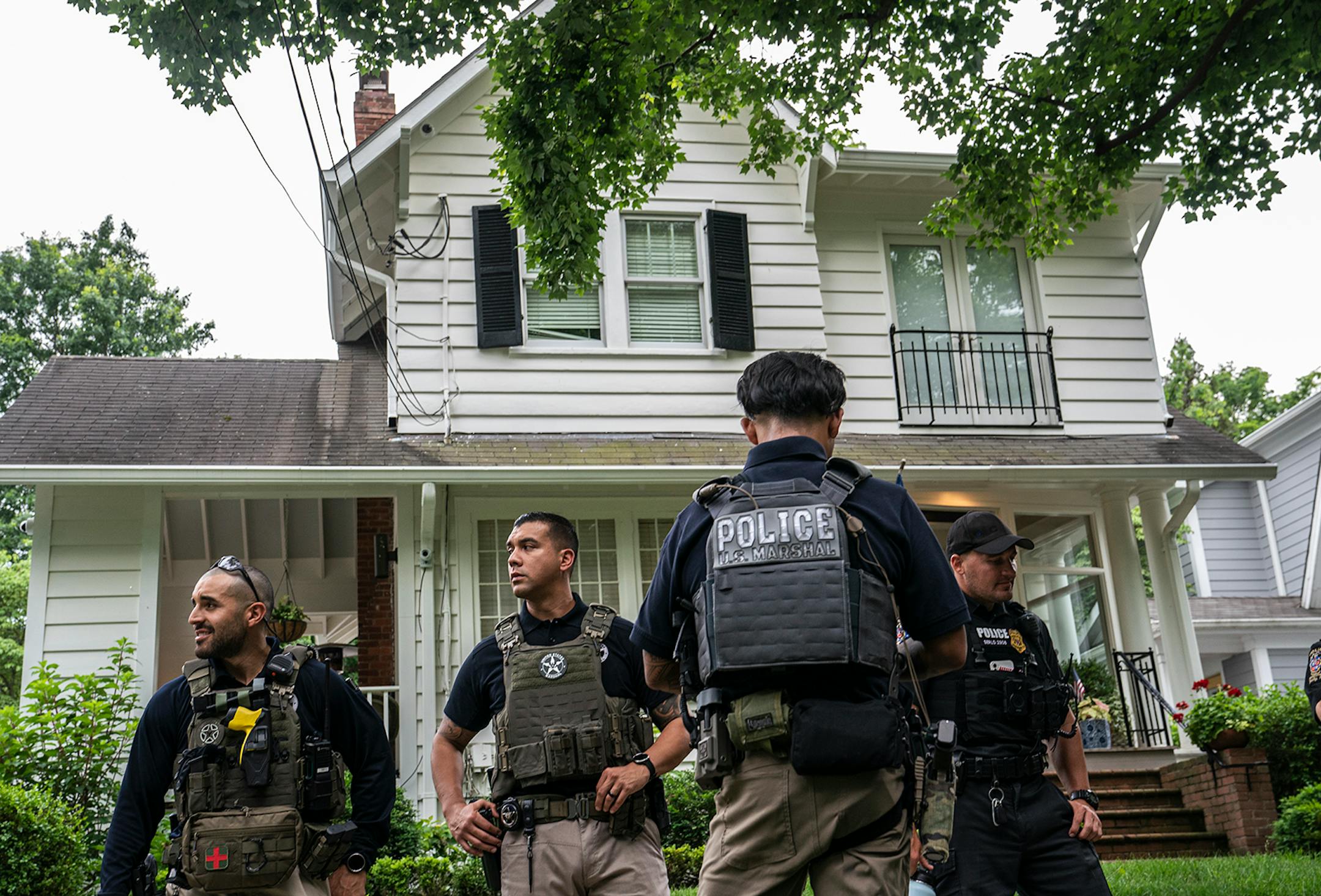
The arrest of an armed man outside the home of Justice Brett Kavanaugh marks a significant milestone in the history of the U.S. Supreme Court.
Now that the justices and their families need permanent, professional and close security, as they unquestionably do, there will be no going back. The court building at One First St. NE will continue its transformation into a garrisoned fortress, not the marble palace of the people's justice it was built to be.
The individual and collective isolation of the justices will be deepened, distancing them further from the currents of ordinary life. Increasingly, they will lose their identities as normal people, disappearing into their symbolic roles. Their lives are changed irrevocably.
This now inevitable development isn't just bad for the justices. It's bad for democracy. And it's terrible for the rule of law, which benefits when the justices can do their jobs with a minimum of spillover into their personal lives.
For more than 200 years, the justices have mostly lived charmed lives, at least from the standpoint of high government officials. From John Marshall through Thurgood Marshall and up to the present day, there has been only one recorded attempt to kill a justice, in 1889 (Justice Stephen Johnson Field's bodyguard, a U.S. marshal, killed the assailant). Someone shot a bullet through a window into Justice Harry Blackmun's chambers in 1985, presumably because he authored Roe v. Wade; no one was injured.
Except for some exceptionally tumultuous periods, the justices' names were hardly known: As recently as 2018, more than half of Americans couldn't name a single one of the nine members. Their faces were close to anonymous. In Washington, D.C., in the late 1990s, I witnessed the greeter at the Capital Grille — a restaurant five minutes from the court — ask Justice David Souter if he was "with the Souter party" that had made a reservation ("I suppose I am," he replied modestly and wryly).


