
Thousands of new ICE agents are on patrol. Are they sufficiently trained?

The Department of Homeland Security hired more than 12,000 agents in the past year, faster than any other recruitment effort in its history.

The Minnesota Star Tribune
January 22, 2026 at 12:00PM
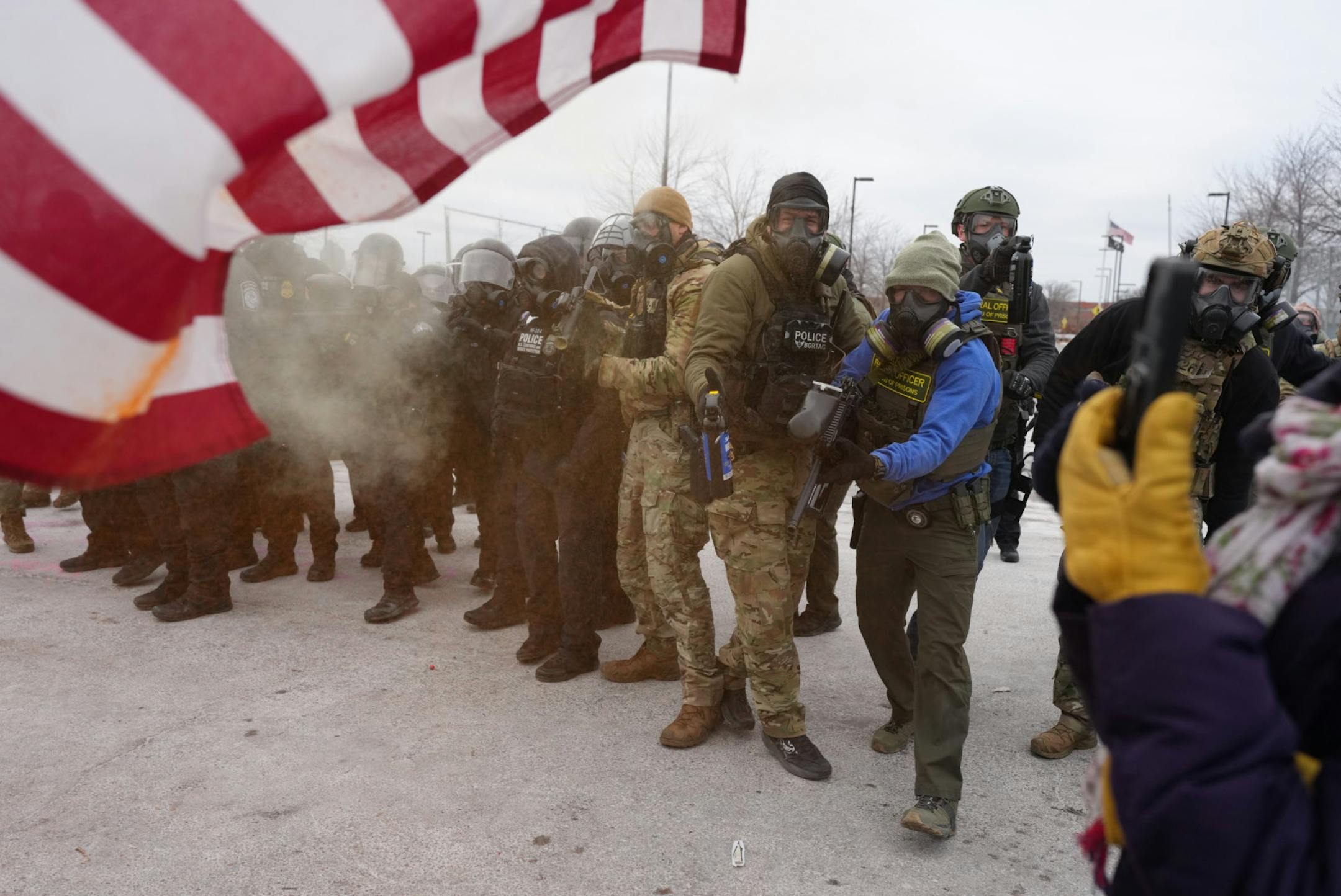
Federal agents deploy chemical spray toward a group of protesters near the Whipple Federal Building at Fort Snelling on Jan. 15. (Richard Tsong-Taatarii/The Minnesota Star Tribune)

Several thousand federal agents have converged on Minnesota in what the Department of Homeland Security claims is the largest immigration enforcement operation in U.S. history.

In many instances, media coverage has featured masked and armed immigration officers in unmarked vehicles unleashing tear gas and tossing smoke bombs into crowds. Earlier this month, Jonathan Ross, an ICE Enforcement and Removal Operations agent, fatally shot Renee Good.

The Trump administration is aiming to detain one million immigrants within a year, and agents have been given daily arrest quotas, according to the Wall Street Journal. Those goals, coupled with aggressive tactics, have led to questions about the training of federal agents.

Department of Homeland Security (DHS) Secretary Kristi Noem told reporters at the White House Jan. 15 that officers conducting immigration enforcement are “very highly trained and skilled, specific for the operations that they’re doing.”

“They’re utilizing the most gifted individuals on these operations,” she said. “Because many times, they’re going after murderers, they’re going after professionals and gangs and terrorists that are here in our country illegally.”

Here’s what we know about their education and training.

Rapid recruitment effort

Homeland Security said earlier this year it has brought in more than 12,000 agents in less than a year, faster than any previous recruitment effort in the agency’s history. It said it received more than 220,000 applications to join ICE and now has 22,000 officers and agents, more than double the number it had in early 2025.

The department said last August it was waiving age limits — previously applicants needed to be between 21 and 40 years old — to join ICE. New hires could receive a $50,000 signing bonus over several years and student loan repayment.

The New York Times reported in September on a visit to a hiring event in Texas, where applicants included large numbers of working-class Black and Latino men and police officers and military veterans. Groups of Transportation Security Administration workers and naturalized citizens were also present, the Times said.

Education requirements differ

The DHS requires ICE agents to have either three years of experience in administrative, professional, technical or investigative work, a bachelor’s degree in any field or a combination of completed post-high school education and experience.

In Minnesota, police officers are required to have at least an associate degree or military or law enforcement experience from elsewhere in the country, as long as they have worked in law enforcement within the previous six years. Those with such backgrounds also take a reciprocity exam. Without experience, potential officers also need a professional peace officer education certificate.

ICE agents train for fewer weeks

A Jan. 10 Washington Post story reported that in 2018, basic training for ICE officers spanned 20 weeks. Homeland Security says that training for recruits at the Federal Law Enforcement Training Center in Georgia is now eight weeks. The department told the Post it has been streamlined “to cut redundancy and incorporate technology advancements.”

That is about half the training time of the Minneapolis Police Department, which requires academy training of 14-16 weeks. The St. Paul Police Department requires five months of training through its academy.

The reduction in training means less drill and technique practice for prospective ICE agents, and less time to go over mistakes in class, according to Marc Brown, director in the University of South Carolina’s Joseph F. Rice School of Law.

NBC News reported earlier this year that an artificial intelligence (AI) error in how job applications were processed resulted in some new recruits being sent into field offices with half the scheduled training they should have received.

Two law enforcement officials familiar with the error told NBC that ICE’s field offices provide more training once officers are through with the academy or the online course, before they begin work. They said the officers chosen by the AI tool most likely received that training, and that the problem was discovered mid-fall and rectified.

ICE training is similar to what Minnesota police learn, which includes defensive tactics, firearms instruction and emergency vehicle operations. Minnesota police officers must also pass the state’s peace officer licensing exam.

A fitness test for ICE agents includes a 1.5-mile run in 14 minutes and 25 seconds, and a 220-yard sprint in 47 seconds, according to the DHS. St. Paul’s fitness test includes rowing 2,000 meters, or a mile and a quarter, on a rowing machine.

The Minneapolis and St. Paul police departments also require several months of field training. ICE agents receive field training, but it is unclear how much.

Feds and local police have same use-of-force standards

Brown — who taught defense tactics at the federal training center in Georgia from 2019 to 2024 — said he has seen video of immigration officers putting knees on necks, a practice that Brown helped remove from training after the 2020 murder of George Floyd by Minneapolis police officer Derek Chauvin.

Legally, federal agents and local police are governed by the same constitutional limits when using force.

In reviewing videos on social media, ProPublica has found more than 40 cases from the past year of immigration agents using banned moves that can cut off breathing, such as chokeholds and knees on necks.

“Arrests can be chaotic, but at the same time, there has to be a degree of control,” Brown said.

DHS Assistant Secretary Tricia McLaughlin said in a statement to the Minnesota Star Tribune on Jan. 16 that the department’s officers are trained to use “the minimum amount of force necessary to resolve dangerous situations to prioritize the safety of the public and our officers.”

She said agents are trained in de-escalation and conflict management tactics and receive ongoing use-of-force training under a policy that is the same as it was in 2023 during the Biden administration. Many officers are veterans with combat experience, and 85% have prior law enforcement experience, McLaughlin said.

Ross has a law enforcement and military career that dates back two decades.

Differences in masking policy

Some public officials and protesters have criticized ICE agents for wearing masks. They say it has made it difficult for the public to identify and distinguish agents from one another. This is in contrast to police, who must identify themselves.

The DHS said on its website that ICE agents wear masks “to prevent doxing, which can (and has) placed them and their families at risk.” The statement continued that “all ICE law enforcement officers carry badges and credentials and will identify themselves when required for public safety or legal necessity.”

The city of Minneapolis, however, has a policy that says police officers will not “mask or shield their identities as officers are interacting with the public” except when an officer is officially working an undercover operation.

about the writer

about the writer

Jana Hollingsworth

Duluth Reporter

Jana Hollingsworth is a reporter covering a range of topics in Duluth and northeastern Minnesota for the Star Tribune. Sign up to receive the new North Report newsletter.

See Moreicon

More from Minneapolis

See More
card image
Richard Tsong-Taatarii/The Minnesota Star Tribune

The Department of Homeland Security hired more than 12,000 agents in the past year, faster than any other recruitment effort in its history.

card image
card image