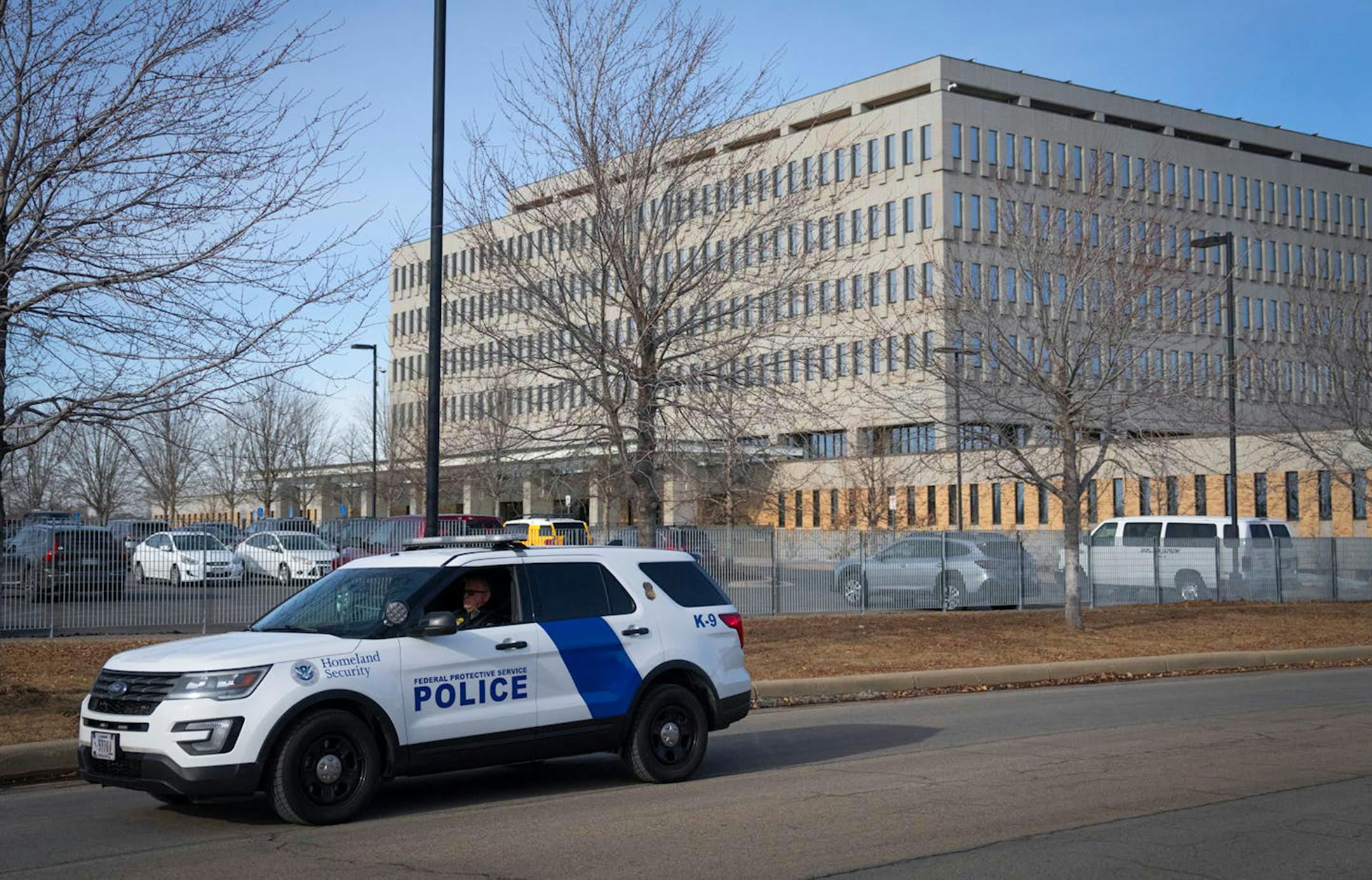
Federal immigration agents are governed by many of the same constitutional limits on use of force as local police. But they operate under different policies and face different accountability systems.
On Dec. 21, an Immigration and Customs Enforcement (ICE) agent fired two shots after being struck by an SUV while attempting to arrest a Cuban national in St. Paul, according to the Department of Homeland Security (DHS).
The DHS said two ICE officers were injured and treated at a hospital, while the suspected undocumented immigrant escaped physical harm and was apprehended.
On Jan. 5, an indictment in U.S. District Court in Minneapolis was unsealed charging 54-year-old Juan Carlos Rodriguez Romero with three counts of assaulting an officer, with two of the counts classifying the vehicle as a dangerous weapon in connection with the stop near Westminster Street.
In a statement, the U.S. Attorney’s Office alleged that Rodriguez Romero twice sped toward ICE agents and struck one of them. After being captured, the statement continued, Rodriguez Romero bit one of the agents. The agents sustained minor injuries during the encounter, the statement added.
Rodriguez Romero remains in federal custody ahead of a court appearance Thursday.
The incident comes as ICE ramps up arrests across Minnesota as part of what the agency calls “Operation Metro Surge,” and as thousands of demonstrators have protested ICE activity in Minneapolis and St. Paul.
Same constitutional rule
Legally, federal agents and local police are bound by the same core standard when using force.