

For years, U.S. officials used a shorthand phrase to describe America's mission in Afghanistan. It always bothered me: We are there to train the Afghan army to fight for their own government.
That turned out to be shorthand for everything that was wrong with our mission — the idea that Afghans didn't know how to fight and just one more course in counterinsurgency would do the trick. Really? Thinking you need to train Afghans how to fight is like thinking you need to train Pacific Islanders how to fish. Afghan men know how to fight. They've been fighting one another, the British, the Soviets or the Americans for a long, long time.
It was never about the way our Afghan allies fought. It was always about their will to fight for the corrupt pro-American, pro-Western governments we helped stand up in Kabul. And from the beginning, the smaller Taliban forces — which no superpower was training — had the stronger will, as well as the advantage of being seen as fighting for the tenets of Afghan nationalism: independence from the foreigner and the preservation of fundamentalist Islam as the basis of religion, culture, law and politics. In oft-occupied countries like Afghanistan, many people will actually prefer their own people as rulers (however awful) over foreigners (however well-intentioned).
"We learn again from Afghanistan that although America can stop bad things from happening abroad, it cannot make good things happen. That has to come from within a country," said Michael Mandelbaum, a U.S. foreign policy expert and the author of "Mission Failure: America and the World in the Post-Cold War Era."
All of which leads to a fundamental and painful question: Was the U.S. mission there a total failure? Here I'd invoke one of my ironclad rules about covering the Middle East: When big events happen, always distinguish between the morning after and the morning after the morning after. Everything really important happens the morning after the morning after — when the full weight of history and the merciless balances of power assert themselves.
And so it will be in Afghanistan — for both the Taliban and President Joe Biden.
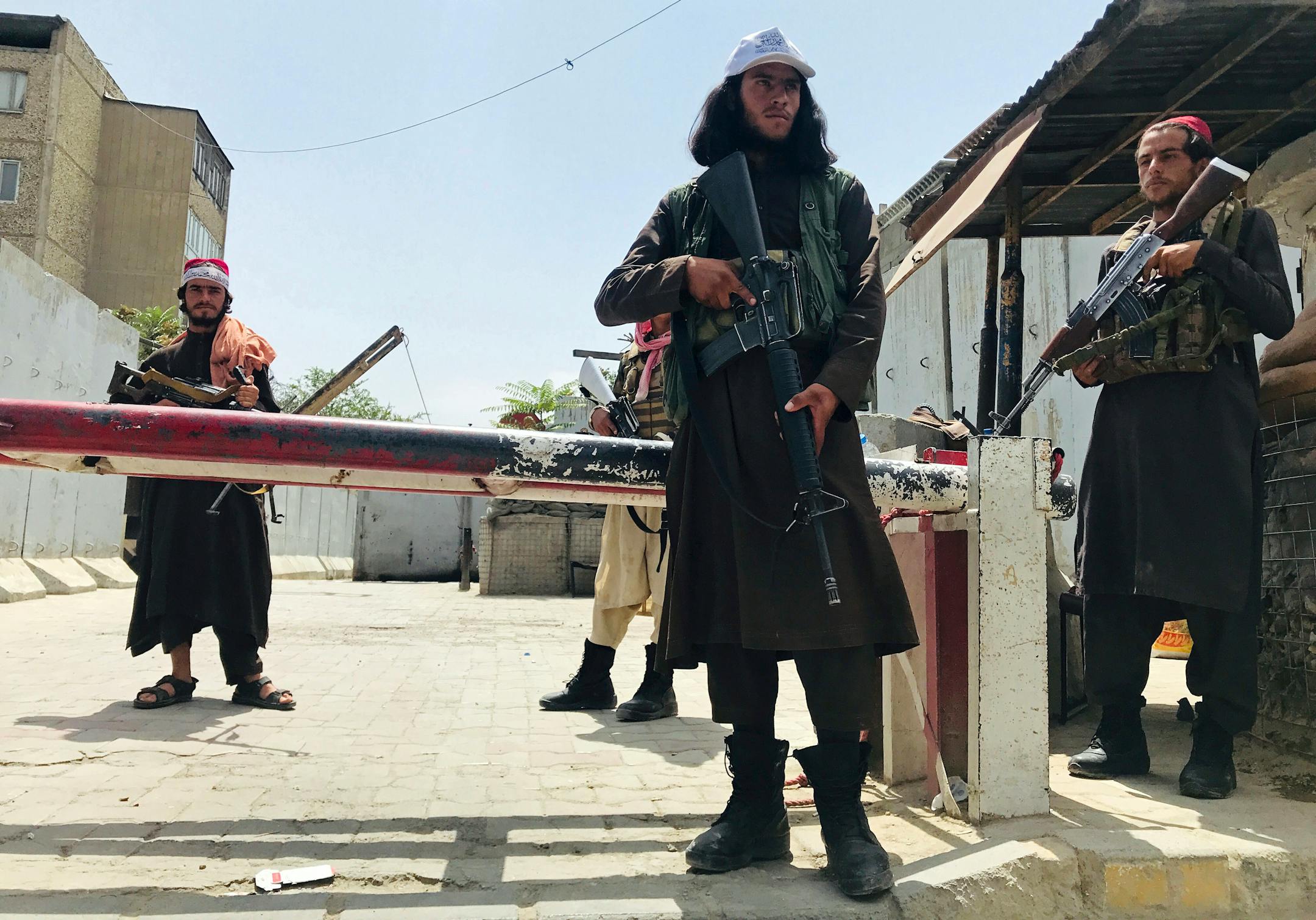
Let's start with the Taliban. They have been having a great morning-after celebration. They are telling themselves they defeated yet another superpower.
But will the Taliban simply resume where they left off 20 years ago — harboring al-Qaida, zealously imposing their puritanical Islam and subjugating and abusing women and girls? Will the Taliban go into the business of trying to attack U.S. and European targets on their soil?


