

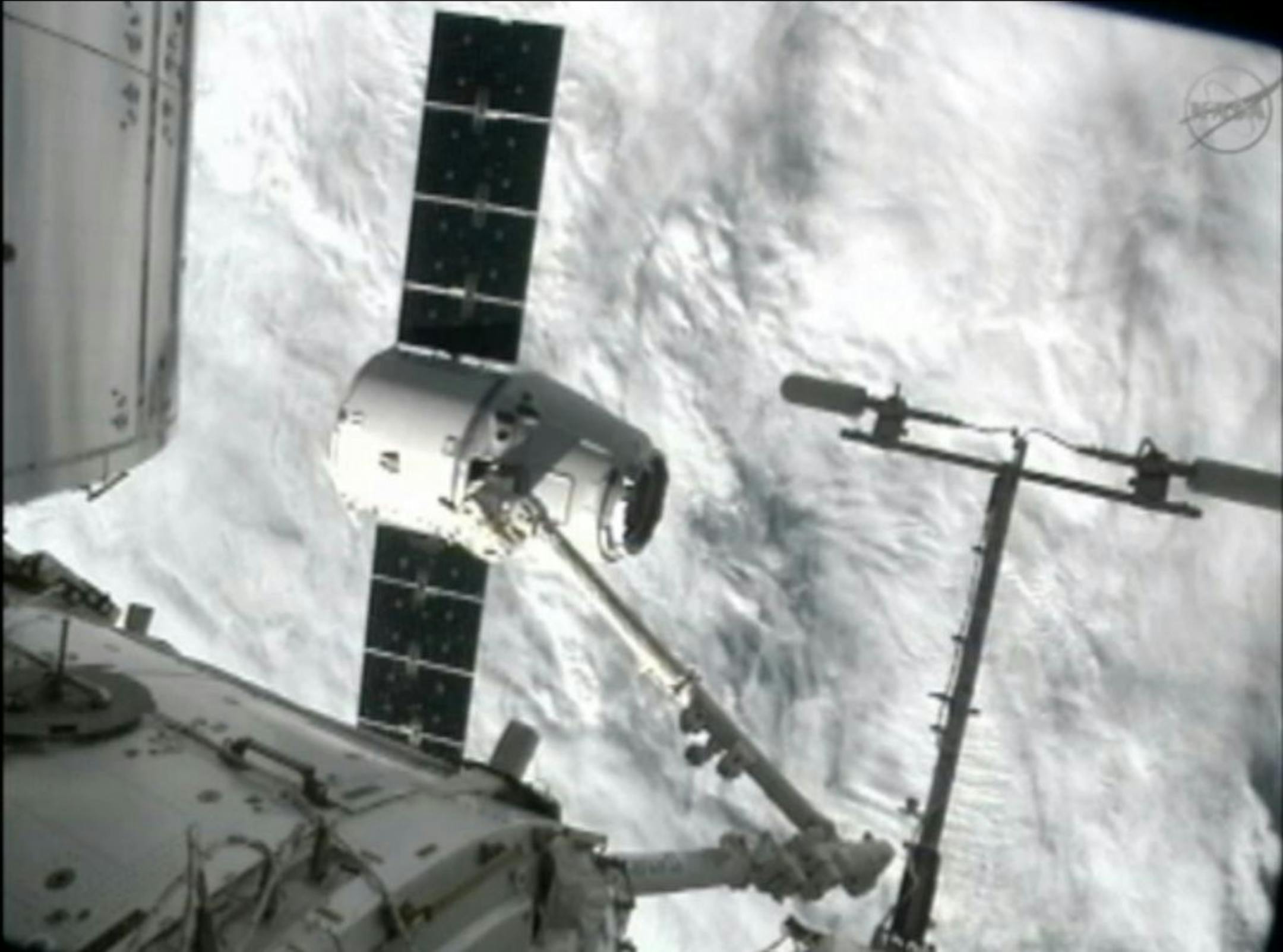
It is hard to think of a better example of how routine space flight has become than the cargo missions that bring supplies to the International Space Station.
But the one that docked on Wednesday is special for two reasons: it included a delivery of ice cream, a rare treat for the astronauts exiled there; and it is the first cargo flight to the station undertaken by a commercial company.
Its success is a vindication of the decision by NASA to delegate such missions to the private sector.
SpaceX, which built the Dragon spacecraft that carried the cargo (as well as the Falcon 9 rocket that blasted it into orbit), has been to the space station before. In May, a demonstration flight saw another Dragon dock successfully with the station.
That flight was the last of a series of technical hurdles that SpaceX had to jump in order to persuade NASA to sign a $1.6 billion contract for cargo trips. Eleven more are planned.
But although the Dragon successfully made it to the space station, the mission was far from flawless. One of the Falcon's nine engines failed about a minute into its flight, forcing the rocket to continue into orbit on its remaining eight motors.
SpaceX was quick to make the point that the ability to carry on despite an engine failure demonstrates a big advantage of multi-engined rockets like the Falcon.
Had the mission been using almost any other type of rocket, its payload would now be at the bottom of the Atlantic. But although the Dragon was unaffected, the engine problem left a small communications satellite that was along for the ride as a secondary payload unable to reach its proper orbit.



