

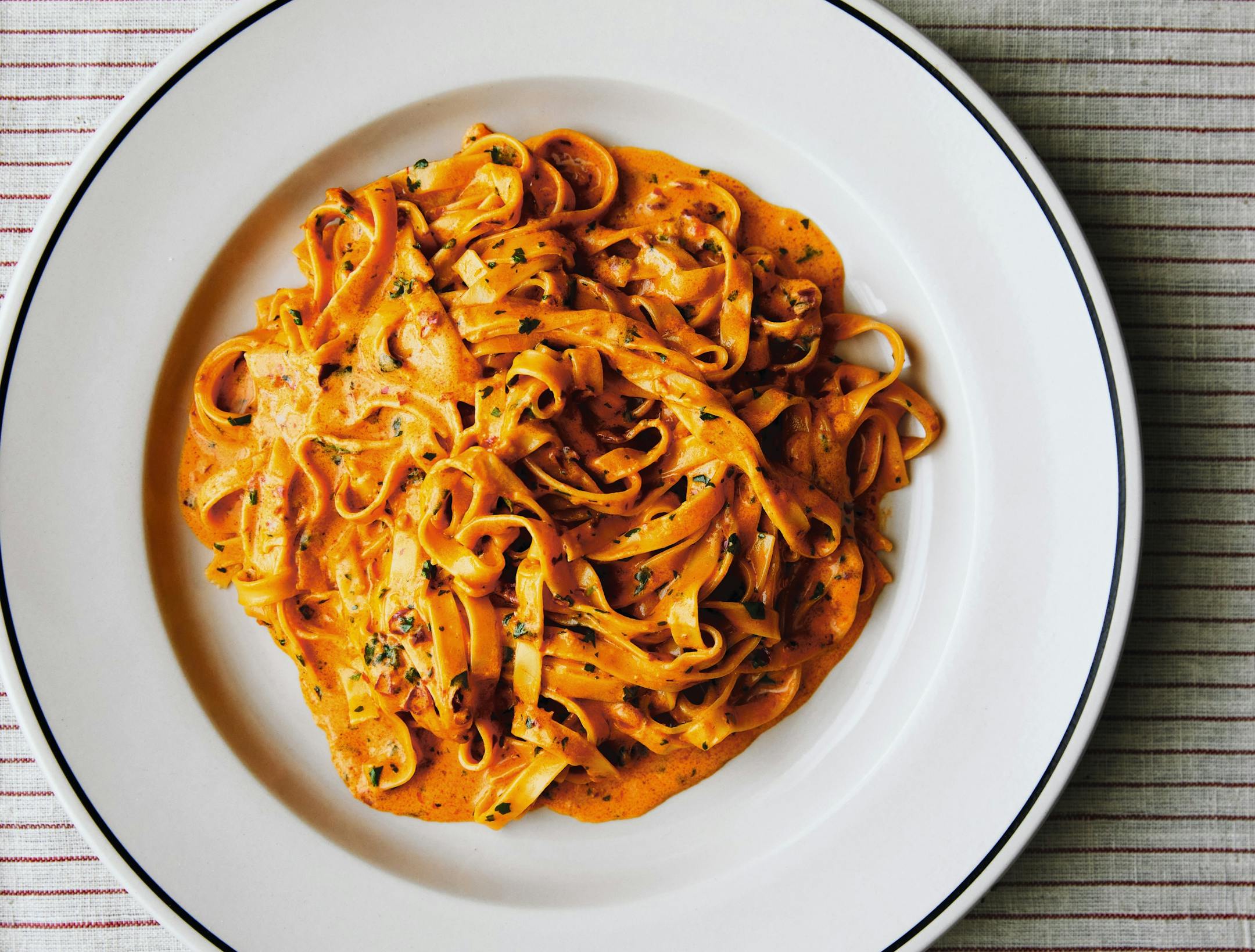
Fettuccine with ’Nduja, Lemon and Mascarpone
Serves 4.
This recipe, from “Padella: Iconic Pasta at Home,” by Tim Siadatan, rarely comes off the menu of the London restaurant. “I’ve always wanted to make a pasta dish using ’nduja (pronounced en-do-yar) where the chile didn’t blow your head off. In this recipe, the addition of mascarpone mellows the spiciness of the sausage and creates a smooth and creamy sauce, lending richness. The strength of ’nduja varies, so you may need to use a bit more or less — taste it first and adjust accordingly. The acidity in the lemon brings balance, harmony and zing to the dish,” Siadatan writes. (Bloomsbury, 2025)
- 3 oz. (about 5 tbsp. or 75 g) ’nduja (see Tips)
- 2 c. (500 g) mascarpone
- Finely grated zest and juice of 1 lemon
- 1 lb. (450 g) fresh fettuccine (see Tips)
- ¼ c. finely chopped Italian parsley
- Sea salt
- Parmesan, finely grated, to finish
Directions
Put the ’nduja into a bowl and bring to room temperature, so it becomes malleable. Add the mascarpone and lemon zest and mix together until well combined to form a smoothish paste. (This can be stored in a sealed container in the fridge for up to 5 days.)
For the pasta, in a large cooking pot, bring 4–5 quarts of water to a boil and add a fistful of salt.
Put the ’nduja-mascarpone paste into a pan large enough to easily hold the cooked pasta. Add ½ cup of the seasoned pasta water and heat gently, stirring, to melt the paste and create a sauce. Take off the heat.
Loosen the pasta bundles so they won’t stick together as they cook. Drop the fettuccine into boiling water and cook for about 1 to 1 ½ minutes. Drain the pasta as soon as it’s ready, keeping 2 cups of pasta water.
Transfer the pasta to the ’nduja sauce and add ½ cup of pasta water, the lemon juice, chopped parsley and a pinch of salt. Stir vigorously for at least 30 seconds until all the ’nduja is mixed around the pasta and you have a smooth, creamy sauce. If the sauce is too dry, add splashes of the reserved pasta water to loosen it as you stir: You want it to be loose and for the strands of pasta to slide freely over each other, and for a layer of sauce to cover the bottom of the pan. Taste and adjust the seasoning with salt and/or pepper if required.


