

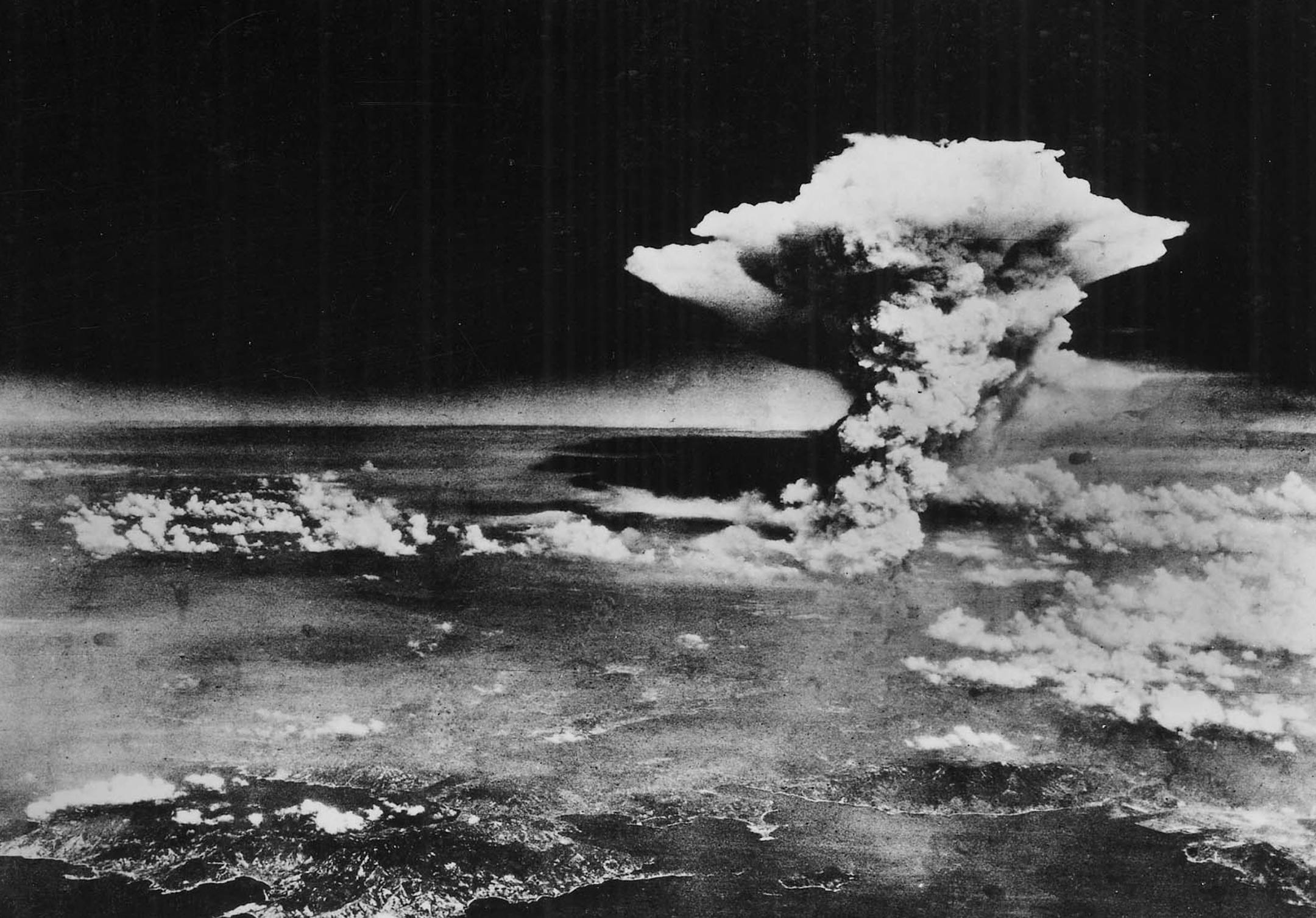
In the early days of his war against Ukraine, President Vladimir Putin told the world that he had ordered his nation's nuclear forces to a higher state of readiness. Ever since, pundits, generals and politicians have speculated about what would happen if the Russian military used a nuclear weapon.
What would NATO do? Should the U.S. respond with its own nuclear weapons?
These speculations all sound hollow to me. Unconvincing words without feeling.
In 1958, as a young scientist for the U.S. Navy, I witnessed the detonation of an 8.9-megaton thermonuclear weapon as it sat on a barge in Eniwetok Atoll, in the Marshall Islands. I watched from across the lagoon at the beach on Parry Island, where my group prepared instrumentation to measure the atmospheric radiation. Sixty-three years later, what I saw remains etched in my mind, which is why I'm so alarmed that the use of nuclear weapons can be discussed so cavalierly in 2022.
Although the potential horror of nuclear weapons remains frozen in films from Hiroshima and Nagasaki, the public today has little understanding of the stakes of the Cold War and what might be expected now if the war in Ukraine intentionally or accidentally spins out of control.
The test I witnessed (video: tinyurl.com/nuclear-test), code-named Oak, was part of a larger series called Hardtack I, which included 35 nuclear detonations over several months in 1958. With world concern about atmospheric testing mounting, the military was eager to test as many different types of weapons as it could before any atmospheric moratorium was announced. The hydrogen bomb used in the Oak test was detonated at 7:30 a.m. A second bomb was set off at noon on nearby Bikini Atoll.
In a nuclear detonation, the thermal and shock effects are the most immediate and are unimaginable. The fission-fusion process that occurs in a thermonuclear explosion happens in a millionth of a second.
As I watched from 20 miles away, all the materials in the bomb, barge, and surrounding lagoon water and air had been vaporized and raised to a temperature of tens of million degrees.


