

Two of the largest regional trade accords in history were agreed on last year.
The Trans-Pacific Partnership involves 12 countries in Asia and the Americas, and was the subject of headlines and heated debate. But most people have never heard of the Tripartite Free Trade Area (TFTA), which covers 26 African countries. It will create the biggest free-trade area on the continent, "from Cairo to the Cape," as its supporters boast.
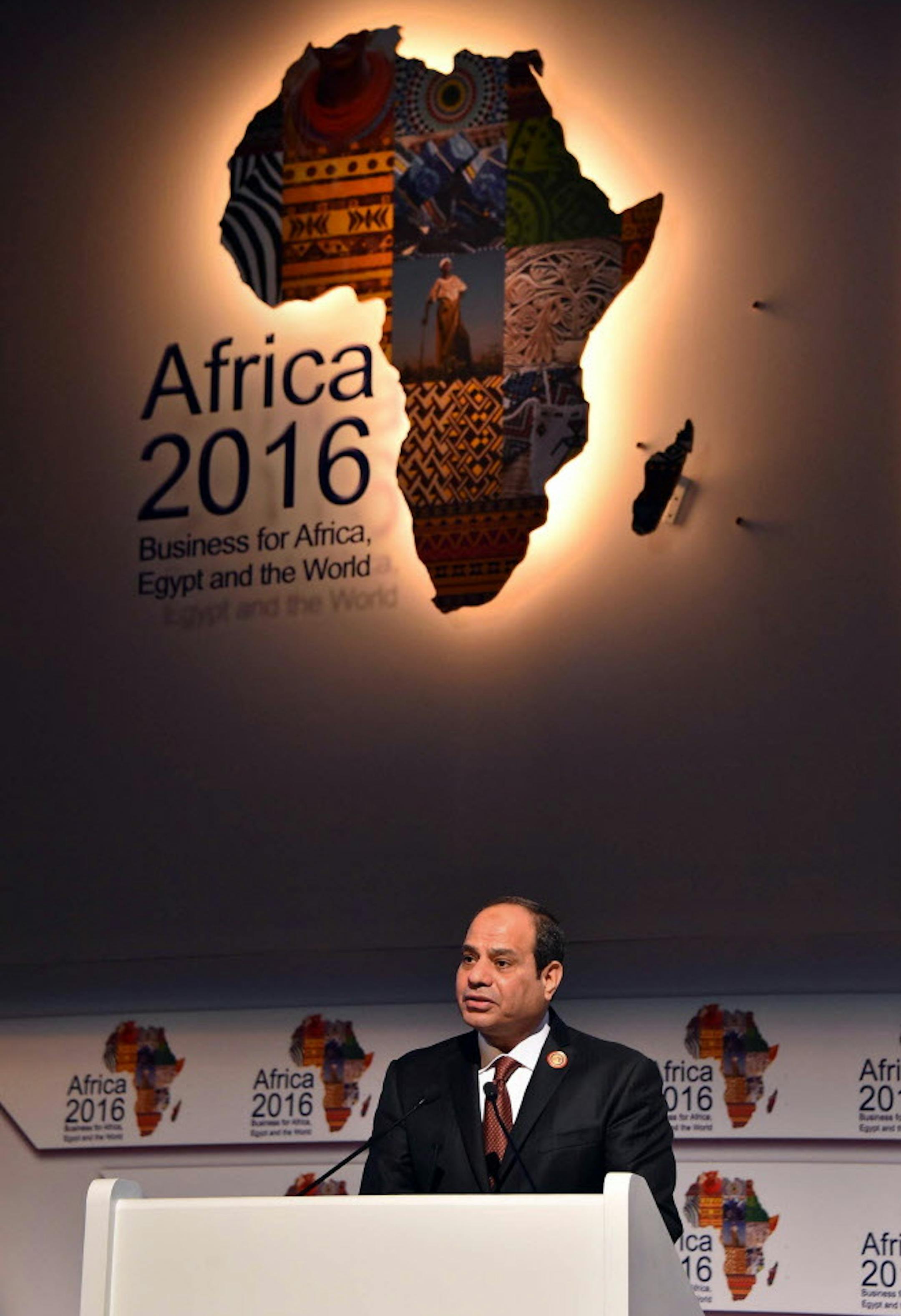
Many in the developing world see global trade as rigged in favor of rich countries. But African regional integration is all the rage. The continent features 17 trade blocs. The TFTA aims to join up three of them: the East African Community (EAC), the Southern African Development Community (SADC) and the Common Market for Eastern and Southern Africa (COMESA). At a conference on African business in the Egyptian resort of Sharm el-Sheikh, several leaders called for a united African market.
An abundance of borders has long divided the continent's 54 countries, limiting economies of scale. Fixing common problems such as a shortage of roads takes teamwork, and in turn should lead to more integration. Average transport costs in Africa are twice the world average and are thought to harm trade on the continent more than tariffs and other barriers.
A shame, then, that regional economic deals are often poorly implemented. An African firm selling goods on the continent still faces an average tariff rate of 8.7 percent, compared with 2.5 percent overseas, says the U.N. Conference on Trade and Development (UNCTAD). That is one reason why intra-African trade as a percentage of total African trade is well below what is seen in other poor regions.
Nearly all African countries are party to more than one regional agreement. These overlapping allegiances can tie them in knots. Members of COMESA, for example, impose a common external tariff on goods of nonmembers. But several members are also in the SADC free-trade area, which requires lower tariffs on goods from some non-COMESA states. The TFTA is meant to iron out these differences.
African countries vary in size, geography and resources, so trade deals affect each differently. Manufacturing tends to cluster in powerhouses such as Kenya, Nigeria and South Africa. Small agricultural producers fear being swamped with food from larger neighbors. There are no mechanisms for helping the losers. So it is difficult to convince countries to make sacrifices in order to increase trade.
Whether to protect their dominance or avoid hardship, most countries revert to protectionism. Take the Economic Community of West African States (ECOWAS). It is meant to be a customs union, but has an extensive list of exceptions. Two decades after it promised free movement of people, goods and transport, implementation is poor. East Africa does better, but Karim Sadek, the director of Rift Valley Railways in Kenya and Uganda, says that not having to stop at the border would make his life easier.


