

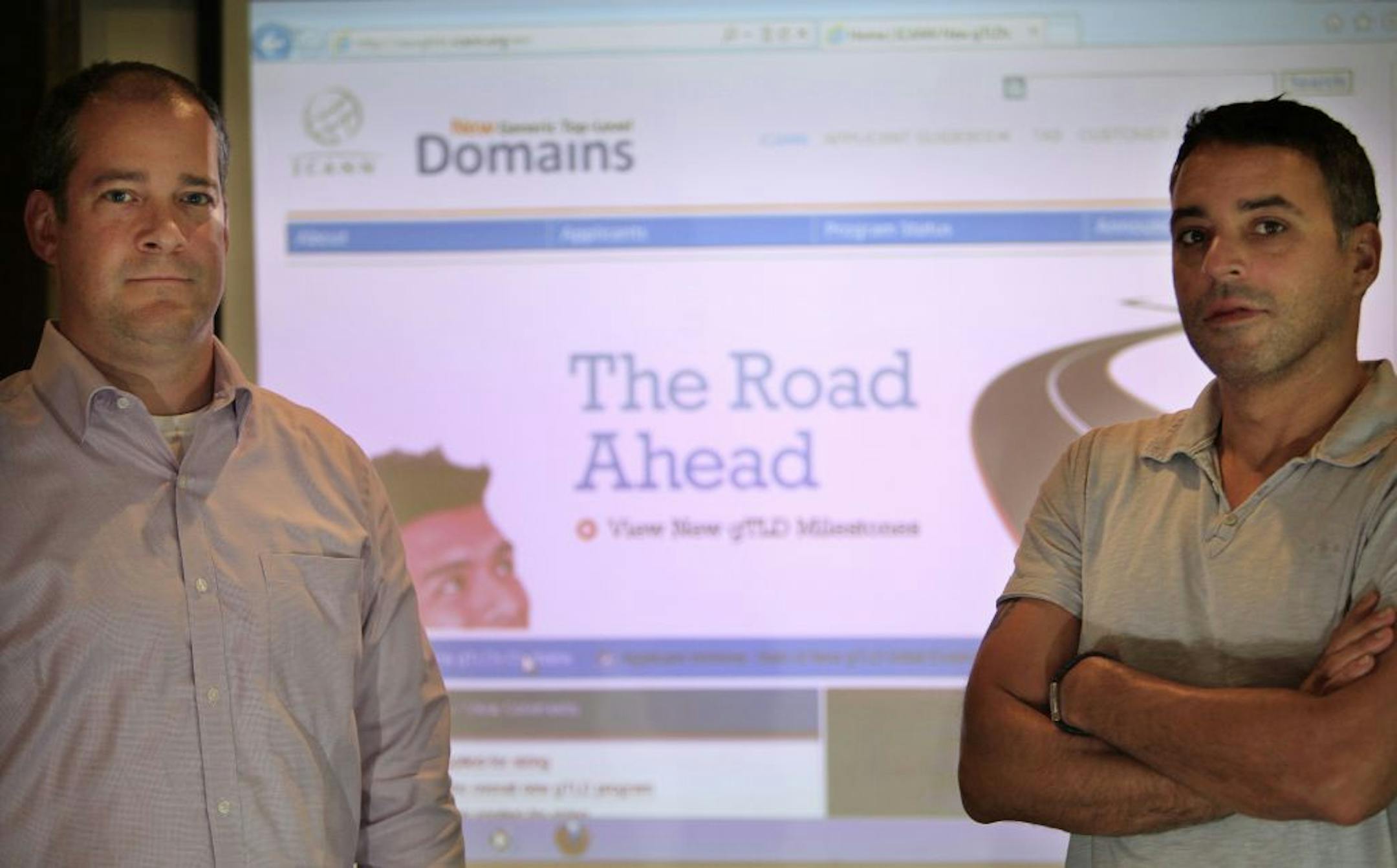
For St. Louis Park attorney Jon Schindel, WWW stands for Wild Wild West.
A specialist in Internet domain names, Schindel has a front-row seat in the latest cyber phenomenon -- a rush for new generic top-level domain names -- that portion of the website's name that comes after the dot, as in ".com" or ".gov." And of course, this top level has its own acronym -- gTLD.
Schindel is advising clients to stay on the sideline until the dust settles. "It's a cutthroat world," he said. "The application for a new name is not something to be taken lightly. This is a Pandora's box that can't be closed."
"It is a solution for a problem that doesn't exist," said Schindel's business partner Miguel Fiol, a consultant who brokers domain names and sold his first one as a University of Wisconsin student in 1993.
Earlier this year, companies and organizations plunked down $185,000 per application for domain names such as ".book," ".movie" and ".music."
More than 1,900 applications were submitted to the domain name clearing house, the Internet Corporation for Assigned Names and Numbers (ICANN), and a total of $350 million in already on deposit for the right to have new domain names sometime in late 2013.
Currently, there are 21 generic domain names ranging from the familiar -- ".org" and ".edu" -- to the more obscure -- " .jobs" and ".museums."
Fiol says there are millions of potential Internet addresses using those 21 domain names. "But people aren't using most of them because ".com" is the single most advertised anything," he said. ".org" is used by just 10 percent of sites and ".net" by 5 percent.



