

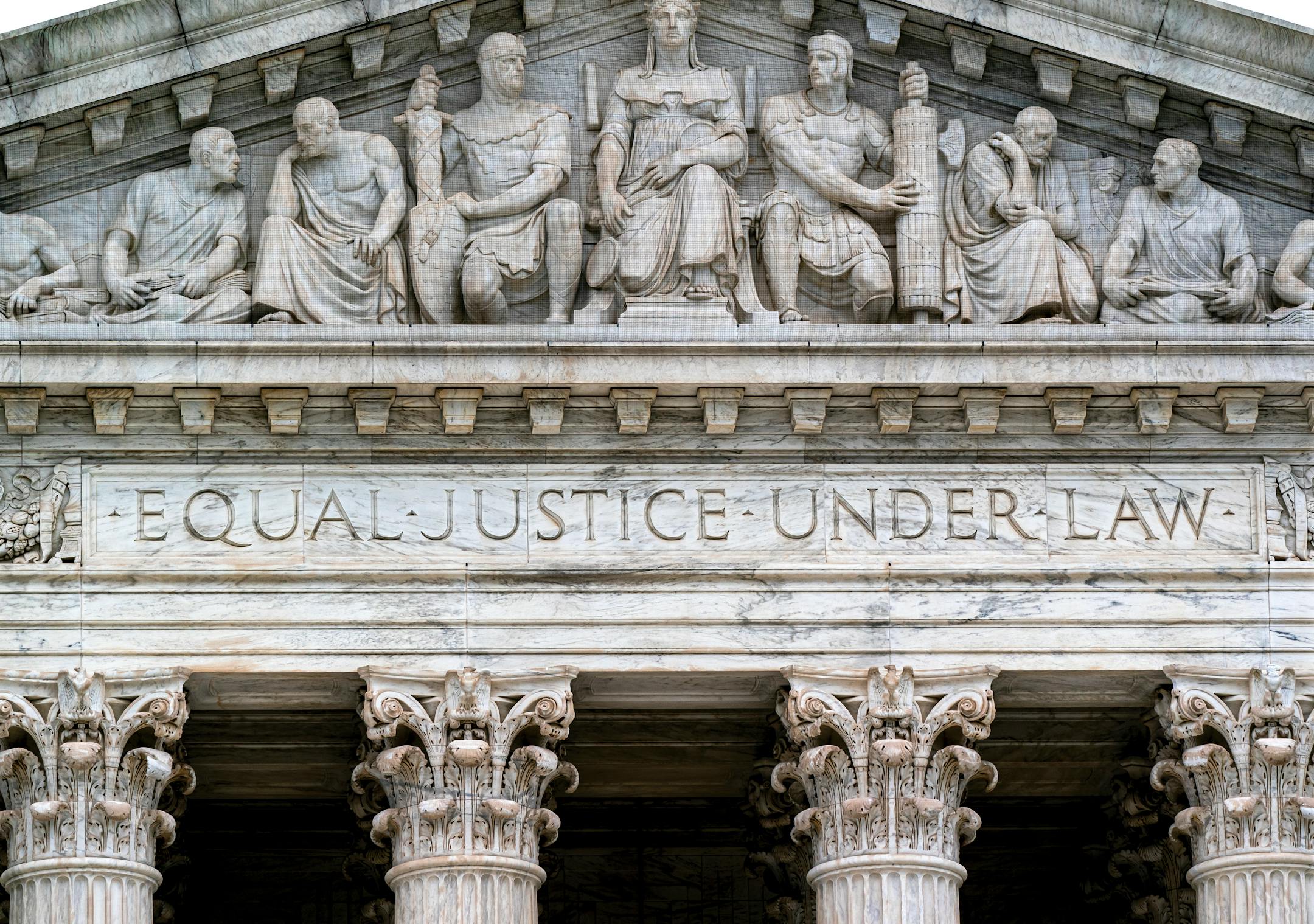
American schoolchildren are growing up with a badly oversimplified lesson about their own government. They are learning that the U.S. Supreme Court is the nation's "highest court," a label that erroneously diminishes the power of state supreme courts. Correcting this understanding goes beyond pedagogical accuracy — it is essential for our democracy.
As future voters, students should gain a proper understanding of the impact of their state supreme courts, rather than learning to aggrandize the U.S. Supreme Court alone.
While Washington alone determines U.S. Supreme Court seats, voters elect state supreme court justices in nearly half the states. In other states, citizens can boot justices by voting not to retain them. In Illinois, state Chief Justice Anne Burke recently announced her retirement, and the Nov. 8 elections will decide which party controls the state supreme court.
Coming on the heels of the demise of Roe v. Wade, the new school year — and a new U.S. Supreme Court term beginning early next month — provide the perfect moment to reassess how teachers and parents characterize the Supreme Court and other courts in the classroom and beyond.
The truth is there is not a single "highest court" in the United States — there are dozens of them. The U.S. Supreme Court is indeed the highest court for the interpretation of federal law, but each state's supreme court pronounces the final word on state law. If a state supreme court recognizes a right under its own state constitution — say the right to abortion access or protection against solitary confinement — the U.S. Supreme Court has virtually no power to step in.
State supreme courts therefore command a sphere of judicial power that no other court can countermand. In a case about state constitutional law, a state supreme court is in effect "higher" than the U.S. Supreme Court.
As California Supreme Court Justice Goodwin Liu said in a lecture, "The crucial point is that state courts, as the ultimate arbiters of state law, have the prerogative and duty to interpret their state constitutions independently" of the U.S. Supreme Court. State supreme courts "often do give respectful consideration to relevant Supreme Court decisions, just as they often give respectful consideration to relevant decisions of sister states," Liu said, but each state supreme court gets the final word on its own law.
Nonetheless, children of all ages imbibe the idea of a unitary "highest court." For example, "The Supreme Court," a book for Level 1 readers, exclaims: "The Supreme Court is powerful. It is the highest court in the United States!" A 208-page book for older students titled "Our Supreme Court" reiterates the term "highest court" eight times.


