

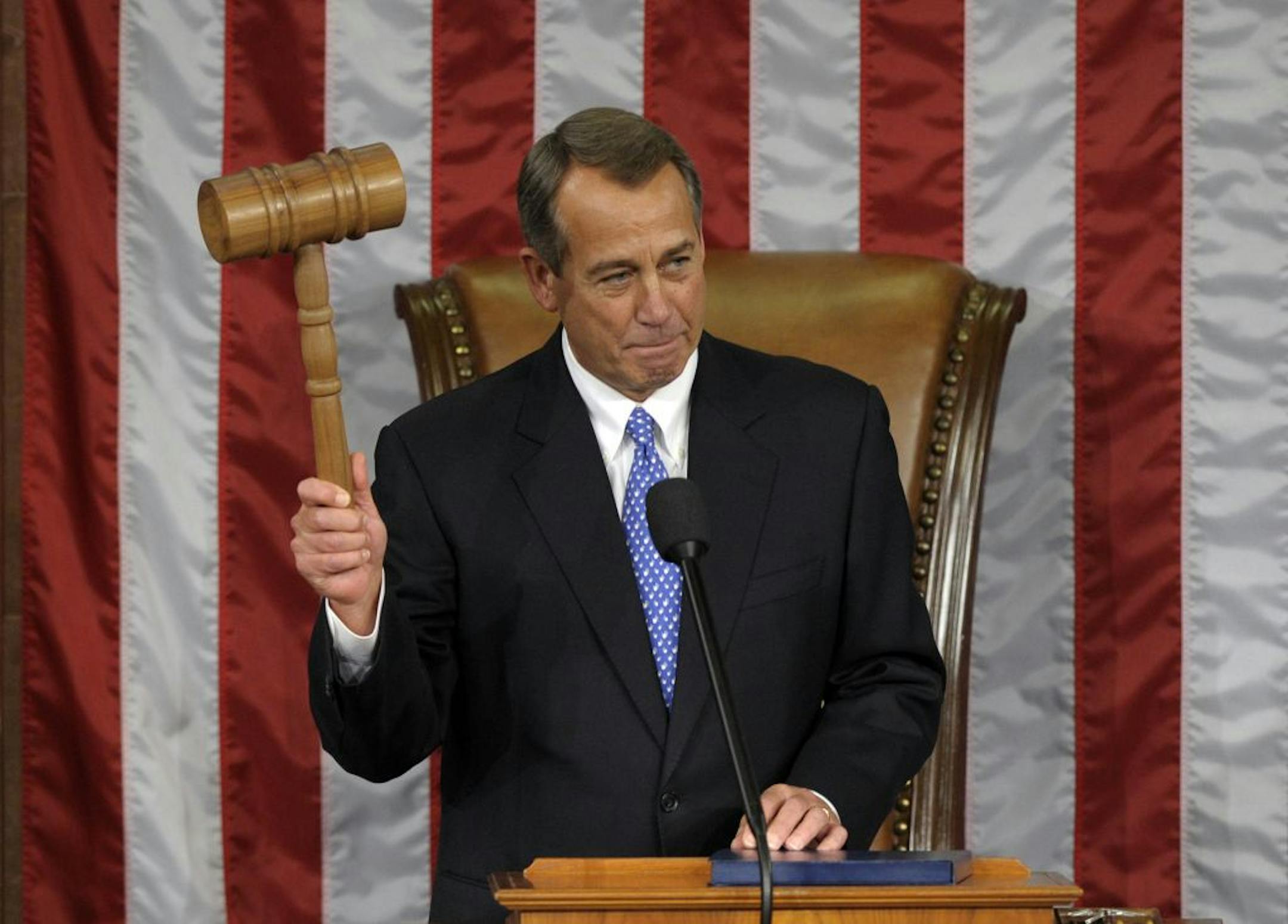
Spare a little sympathy, if you can, for John A. Boehner of Ohio, speaker of the House of Representatives.
On paper, he's the most powerful Republican in the land. In practice, he's caught between a cliff and a ceiling as the uneasy chairman of an unhappy and fractious caucus.
The "fiscal cliff" melodrama wasn't kind to Boehner and his party. President Obama won his top priority, an increase in tax rates on the wealthy, without reducing federal spending in return.
For Boehner, the process was even more disastrous than the outcome. The speaker tried to negotiate a deal with the White House, but failed. He proposed a Plan B, but his own party rejected it.
In the end, he found himself voting with Nancy Pelosi and her Democrats for an outcome he didn't like. Then he stumbled one more time, postponing a vote on aid for states ravaged by Superstorm Sandy because he wasn't sure his caucus would support it.
And now he has to go through a similar process all over again when the federal government runs up against its debt ceiling next month.
It's no wonder that by Thursday, when Boehner was narrowly reelected as speaker over protest votes from disgruntled conservatives, the sour joke in the Capitol was that his caucus was punishing him for his failings by letting him keep his job.
Two years ago, when he first became speaker, Boehner wept with joy and awe. This year, he wept again, but that may have been out of relief that he needed only one round of votes to keep his job.


