The world's central banks must kick their stimulus drug habit

November 22, 2015 at 8:00PM
Doug Obey has over 30 years experience helping people as a financial planner and investment advisor and is the author of Money & the Human Condition. Learn more about Obey at http://www.dougobey.com/ ORG XMIT: MIN1508261818140360
About the author Douglas Obey is a financial planner and investment adviser and is the author of “Money & the Human Condition” (Mason Tiler, 2015). (The Minnesota Star Tribune)

I can't help but draw the comparison between a heroin addict and today's economies.

The world's economies have become as dependent on monetary stimulus (central banks printing money and driving interest rates to near zero) as a junkie is on heroin.

The initial use gives the high and provides the escape, but after a while it's needed just to maintain the ability to function and then continued use deteriorates any productivity that once existed until an overdose eventually kills the addict.

So what's the solution? Is there a place for monetary ­policy and in what doses? And if so, how do we wean the patient off the drug and back to economic health?

Just as opioids in various forms are used to dull the pain until the patient can recover from illness and regain strength and health, monetary policy is just that to economies. It can be used effectively in various doses for short periods of time, but if it isn't used in conjunction with good fiscal policy, the economy in ­question never recovers.

Responsible fiscal policy (governments' tax and spending policies) is the only long-term solution to recovering worldwide economic health. Unfortunately the necessary fiscal policies of most countries have been sorely lacking over the past couple decades.

Without proper fiscal policy being enacted by governments, their respective economies will never regain enough strength to wean themselves off their pain-killing drug. Many feel economies have relied on monetary stimulation for so long now that it is already too late and the patients are doomed to overdose.

That may be the case, but I haven't lost hope. My only fear is that people in power usually don't react until there is a crisis, and unfortunately the next crisis may cause the overdose we have to avoid.
We need leaders who can start to reverse the welfare mentality and policies too many countries have adopted before they crumble under their own weight. We need to use monetary policy to support governments while they reduce taxes and increase spending on desperately needed infrastructure or repairs to existing infrastructure, creating massive amounts of jobs. And hope we don't overdose before these fiscal policies kick in the economic growth needed to regain worldwide economic health.

We need to support new technologies, especially in the medical field to mitigate or eliminate the looming health crises we face as our populations age. We need to crack down on all types of corruption in government, institutions and corporations in an effort to eliminate crony capitalism, nepotism and reduce the influence of power brokers and lobbyists of all sorts.

Leaders worldwide have to start acting as statesmen, altruistically working for the common good rather than selfishly enriching themselves and garnering votes for the next election.

As I write this I can't help thinking of John Lennon's song, "Imagine," only in the sense that all of this relies on the good judgment, wisdom and selflessness of our leaders in power in all the world's institutions.

Hopefully they realize that it is in their own self interest, as well as the interest of people everywhere to address these problems before it is too late.


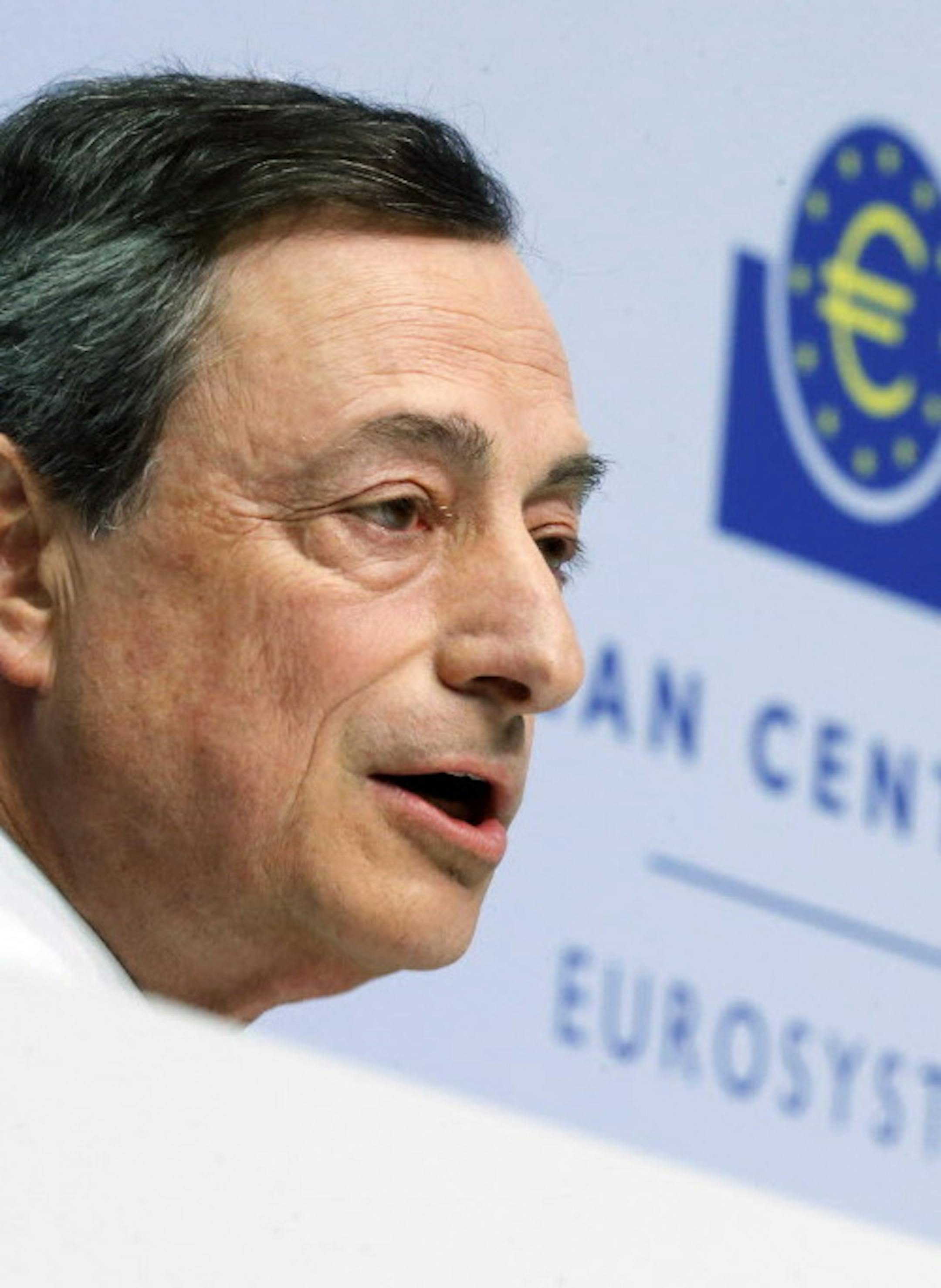
FILE - In this Wednesday, April 15, 2015 file photo, President of European Central Bank (ECB) Mario Draghi speaks during a press conference of the ECB in Frankfurt, Germany. Consumer price inflation crept up to an annual rate of zero in October in the 19 countries that use the euro, a weak reading that could help push the European Central Bank to expand its stimulus program. Inflation rose from minus 0.1 percent the month before, the European Union statistics agency Eurostat said Friday, Oct. 30
In this Wednesday, April 15, 2015 file photo, President of European Central Bank (ECB) Mario Draghi speaks during a press conference of the ECB in Frankfurt, Germany. Consumer price inflation crept up to an annual rate of zero in October in the 19 countries that use the euro, a weak reading that could help push the European Central Bank to expand its stimulus program. Inflation rose from minus 0.1 percent the month before, the European Union statistics agency Eurostat said Friday, Oct. 30. Falling energy prices were a major factor in keeping the rate low. But weak price increases are also a sign of less than robust demand in the economy. (AP Photo/Michael Probst, file) (The Minnesota Star Tribune)
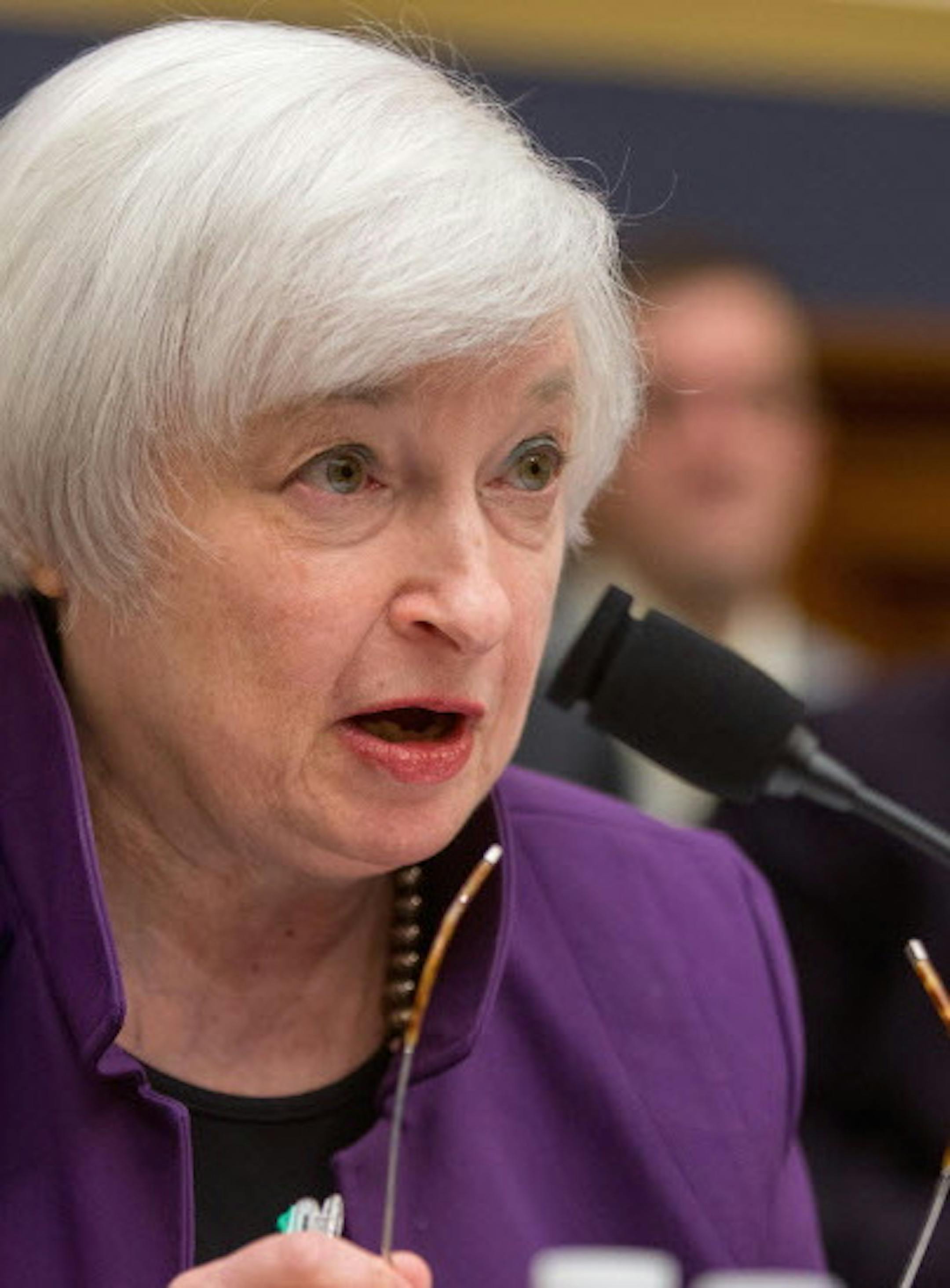
Federal Reserve Chair Janet Yellen testifies on Capitol Hill in Washington, Wednesday, Nov. 4, 2015, before the House Financial Services Committee hearing on banking supervision and regulation. Yellen said Wednesday that the Fed has not made a decision yet on whether to raise a key interest rate in December. She said the move will depend on how the economy performs between now and the Dec. 15-16 meeting. (AP Photo/Andrew Harnik)
Federal Reserve Chair Janet Yellen testifies on Capitol Hill in Washington, Wednesday, Nov. 4, 2015, before the House Financial Services Committee hearing on banking supervision and regulation. Yellen said Wednesday that the Fed has not made a decision yet on whether to raise a key interest rate in December. She said the move will depend on how the economy performs between now and the Dec. 15-16 meeting. (AP Photo/Andrew Harnik) (The Minnesota Star Tribune)
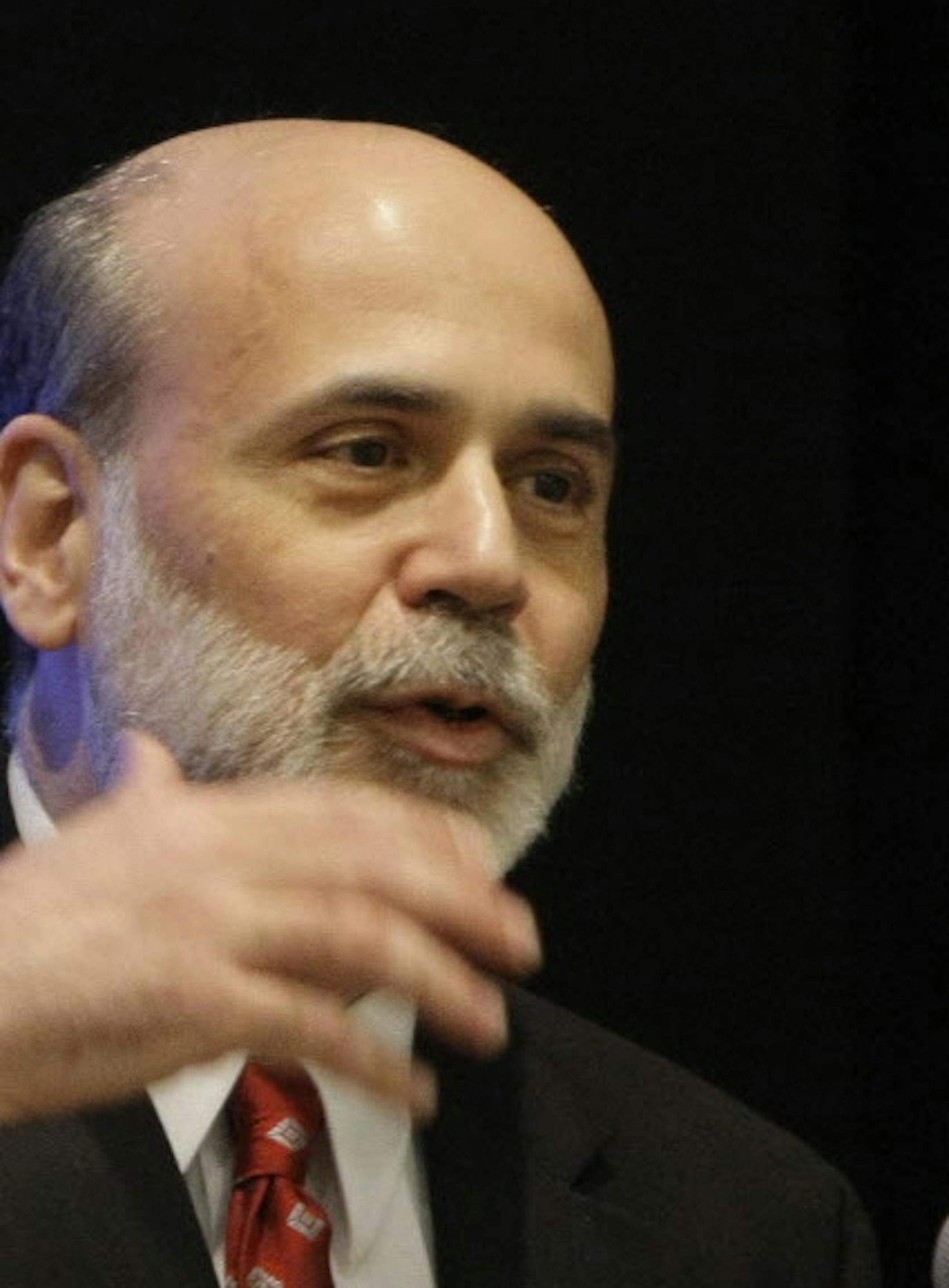
U.S. Federal Reserve chairman Ben Bernanke delivers a speech to the London School of Economics in London, Tuesday Jan. 13, 2009. Bernanke said Tuesday the stimulus package being crafted by President-elect Barack Obama and Congress could provide a "significant boost" to the sinking economy. But he warned that such a recovery won't last unless other steps are taken to stabilize the shaky financial system. (AP Photo/Matt Dunham)
Ben Bernanke, former Federal Reserve chairman; Mario Draghi, president of the European Central Bank, and Janet Yellen, current Federal Reserve chairwoman: Can they help kick the stimulus fix? (The Minnesota Star Tribune)
about the writer

about the writer

Douglas Obey

More from Business

See More
card image

Fourth high-profile assault of hospital workers since last fall underscores challenge of managing patients in mental health crises.

card image
This transmission electron microscope image shows SARS-CoV-2, the virus that causes COVID-19, isolated from a patient in the U.S., emerging from the surface of cells cultured in the lab. (NIAID/TNS) ORG XMIT: 1659810