

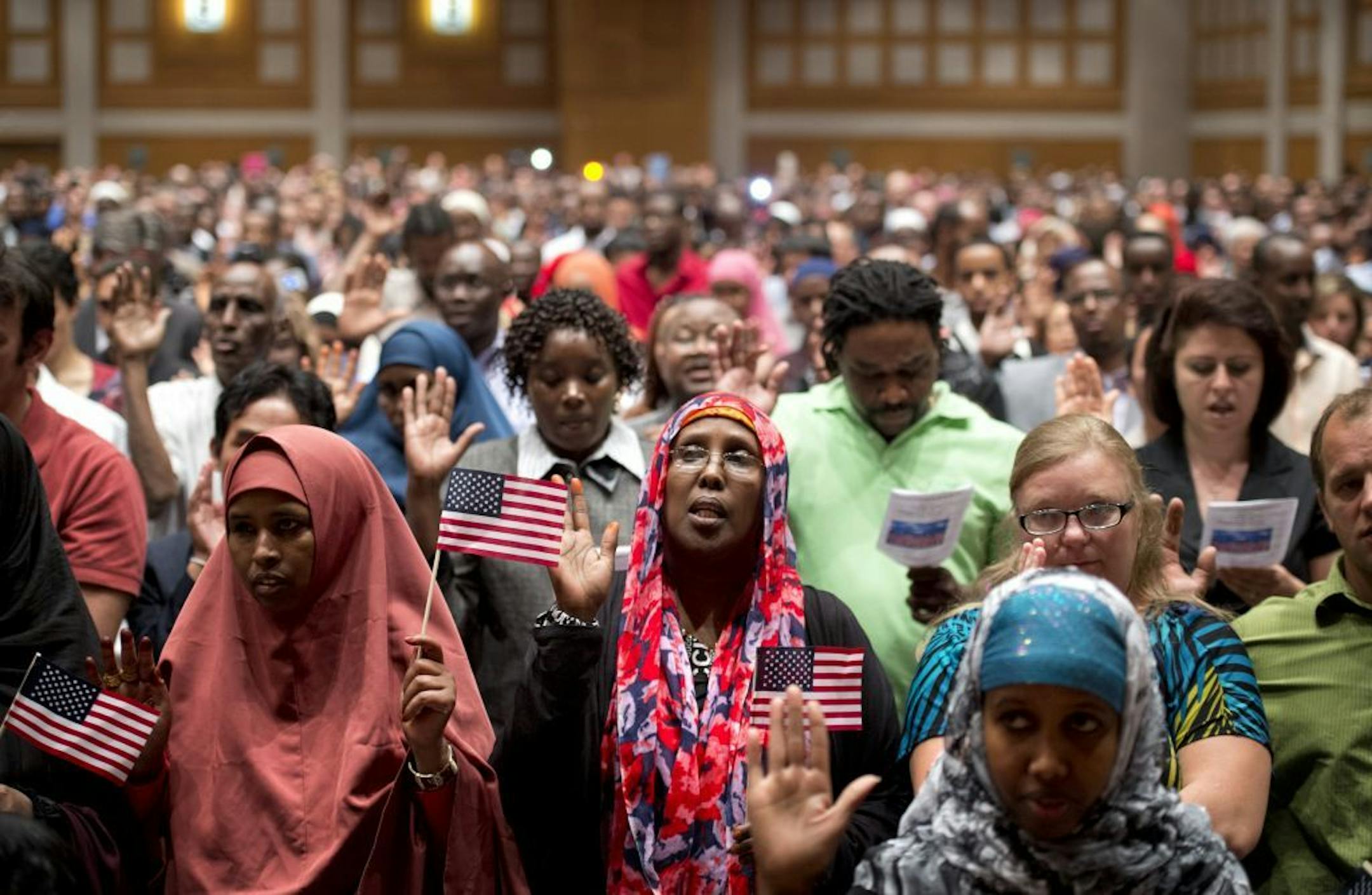
LONDON - It has been five years since Shirwa Ahmed, a 26-year-old from Minneapolis, blew himself up in northern Somalia, and sent shivers up American spines about young immigrants from war-torn Muslim countries who were turning into terrorists. Unconfirmed reports that American Muslims might have been among the gunmen who stormed Nairobi's Westgate shopping mall over the weekend will no doubt revive fears of the "enemy within."
I know the Westgate well. Nairobi was my jumping-off point for many research trips to Somalia in 2011 and 2012. The sunny terrace of the ArtCaffe, with its excellent coffee and free Wi-Fi, became my virtual office. I shopped often in the mall's Nakumatt supermarket, where the jihadis staged their attack. They reportedly singled out non-Muslims for execution by asking them the name of the Prophet's mother: a test that I would not have passed.
I remain, however, unafraid of Somalis, least of all of Americanized ones. I spent time in Minnesota in 2011 - the Twin Cities is home to the greatest concentration in the United States of Somalis in exile - and uncovered this reassuring truth: Hotheads inclined to support the Shabab may exist in Minneapolis, but they are a mere handful in a community of tens of thousands of Somalis who want nothing to do with extremist Islamism.
While Islamist recruiters remain active, officials report far less traffic on the route back to the terror war at home than there was five years ago. (The Justice Department contended in a terrorism-related trial last fall that more than 20 men had left Minnesota for Somalia since 2007 to join the Shabab.)
Meanwhile, the diaspora in Minnesota sends a steady flow of remittances to relatives in Somalia, along with leadership and advice for the country's fragile new government. Cedar-Riverside, the Minneapolis district known as Little Somalia, feels integrated and safe. In short, and despite the disaster in Nairobi, there is reason to hope that the generation of young Somalis whom some Americans fear may actually be one of Somalia's best hopes for a stable future.
That transition is partly a result of changes in Somalia: African Union troops drove the Shabab from Mogadishu, the capital, in 2011 and remain as peacekeepers. (Kenya's military involvement in the African Union operation appears to be the Shabab's main justification for the Westgate attack.)
An elected government rules with United Nations backing. Although the Shabab still control much of the countryside and an occasional bomb goes off in the capital, Mogadishu is being rebuilt; its beach-side restaurants have been full on weekends, as have been arriving flights.
But the main motor of change in Somalia has been Somalis themselves, and their links between home and exile. Tellingly, many of the new government's cabinet ministers are returned exiles. Total remittances from diaspora communities, furthermore, dwarf international aid. In the Twin Cities the chief source for those remittances has been Somali-owned businesses: Hundreds were operating there in 2012.


