

I finally saw "Hamilton" the other day, streamed online, and admired it. Yet I was struck by how quickly a revolutionary updating of America's founding story has come to feel a touch behind the times.
Though impressively candid in many ways, "Hamilton" does not portray America's creation fundamentally as a crime bestowing mainly superpower-sized racism and exploitation on the world. That has become the mandatory fashionable view only since the musical's premiere five years ago, partly a symptom of the ensuing Trump Fever pandemic.
With all that in mind, along with the looming 2020 election, something else struck me. With actors portraying Alexander Hamilton, George Washington, Thomas Jefferson, James Madison and Aaron Burr leaping and twirling about the stage (and even John Adams getting mentioned several times) — arguably the most consequential of America's Founding Fathers makes no appearance in the Broadway sensation.
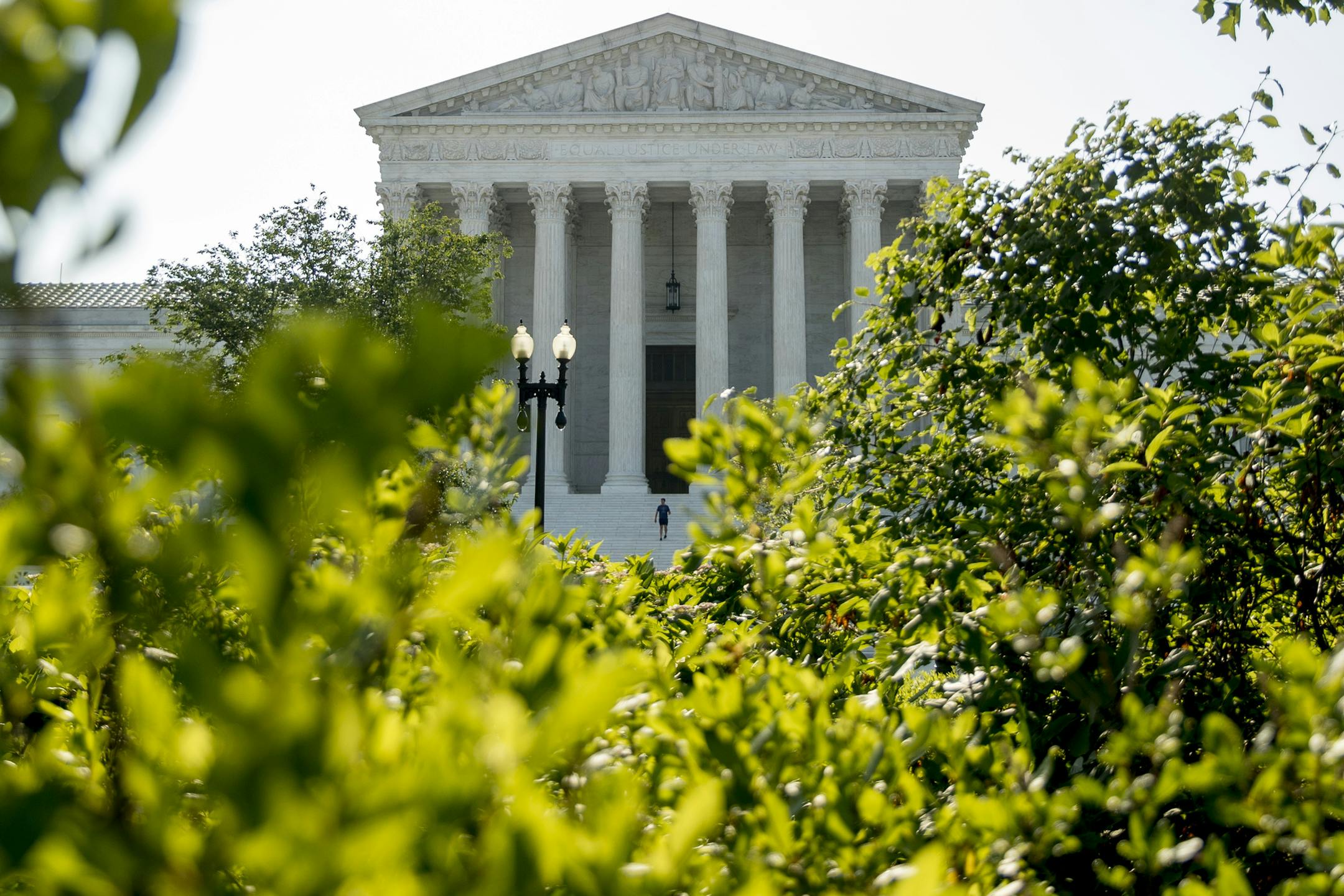
The missing framer was on my mind because his legacy arose prominently just 10 days ago in the culminating drama of the U.S. Supreme Court's notable 2020 term.
In twin rulings affirming the principle that neither President Donald Trump nor any other president is above the law, Chief Justice John Roberts began by citing a core constitutional principle established 213 years ago.
"The President," Roberts wrote, quoting an 1807 landmark case, "does not 'stand exempt from the general provisions of the constitution.' "
Who said so? The great Chief Justice John Marshall, who was named to lead the Supreme Court by Adams in 1800 and served until 1835, decades after the other giants of his generation had left public life. Marshall also established the doctrine of judicial review — under which laws contrary to the Constitution are void — and, among much else, the sanctity of contracts, the freedom of commerce across state lines, and the reality of America as a true nation, not merely an association of rival states.
Point being: Nothing presidents do is more important than the Supreme Court justices they appoint. Those justices often go on shaping American life and law long after the heated controversies of almost any election year are forgotten.


