

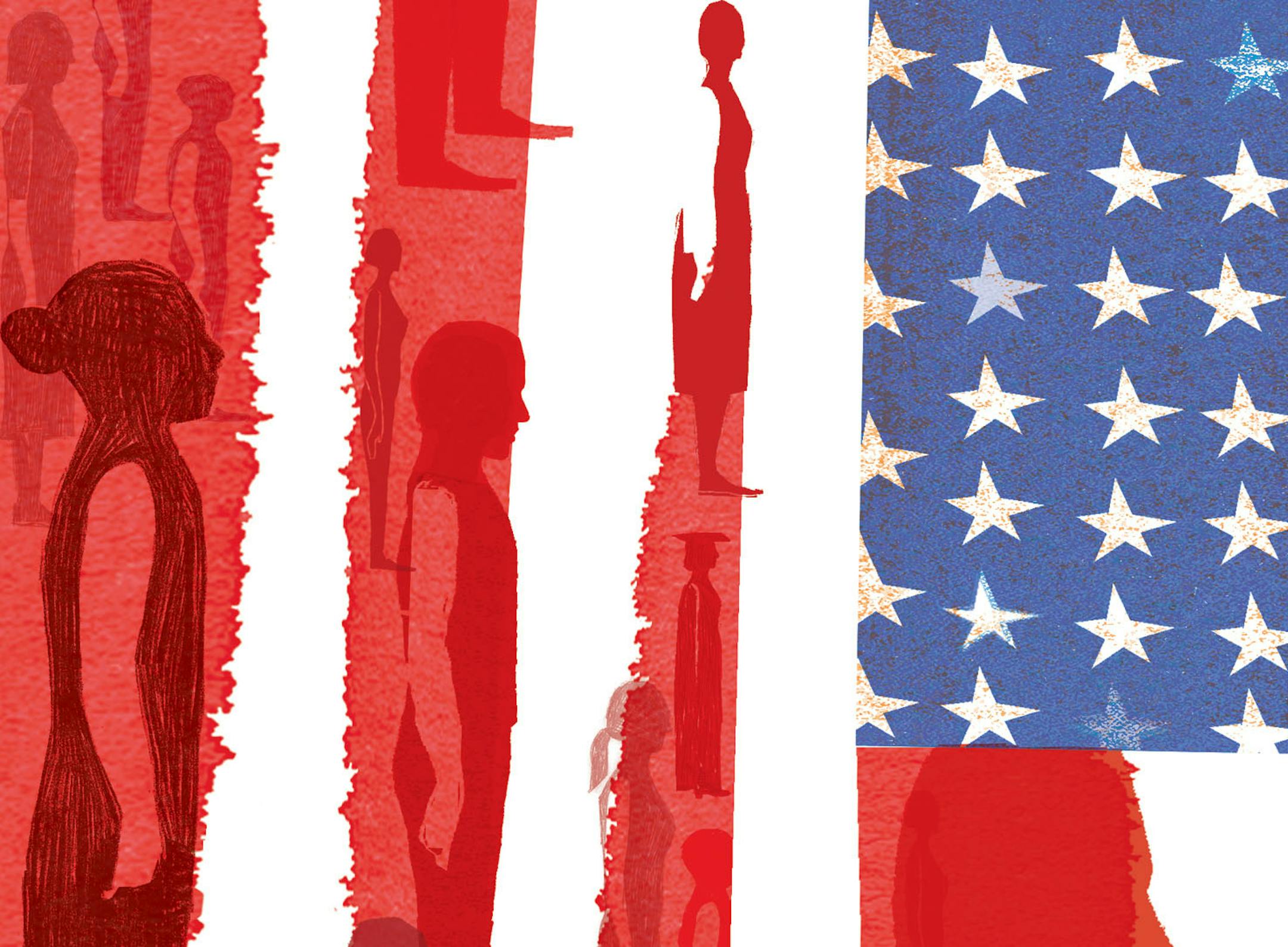
The Immigration and Nationality Act of 1952 created the current oath of citizenship that exists today. It's an unwieldy and bulky and wordy oath, but one that declares, in no uncertain terms, one's loyalty to the United States of America:
"I hereby declare, on oath, that I absolutely and entirely renounce and abjure all allegiance and fidelity to any foreign prince, potentate, state or sovereignty, of whom or which I have heretofore been a subject or citizen; that I will support and defend the Constitution and laws of the United States of America against all enemies, foreign and domestic; that I will bear true faith and allegiance to the same; that I will bear arms on behalf of the United States when required by the law; that I will perform noncombatant service in the armed forces of the United States when required by the law; that I will perform work of national importance under civilian direction when required by the law; and that I take this obligation freely without any mental reservation or purpose of evasion; so help me God."
Since that time, there have been millions of people who have come to America and become citizens by uttering these 140 words.
And, as of today, there are nearly 11 million people in America who are not citizens who have yet to say these words as a requirement of becoming legal United States citizens.
That must change. It has to change.
Members of Congress recently have been away from Washington for their August recess. During this time, many of them were back in their districts listening to what their constituents care about and what concerns them.
I suspect that many in the Minnesota delegation got an earful about jobs, the economy and the cost of health care, particularly the negative impact that Obamacare is having on small businesses and the 40-hour workweek. They also likely heard about the issue of comprehensive immigration reform.
The U.S. Senate has passed a comprehensive immigration reform bill — one that is tough, but fair, and that provides the strongest border security measures in history.


