


One half of “The Typewriter and the Guillotine” is compelling, and it’s probably not the half you’d think.
“The Typewriter” part of Mark Braude’s account of midcentury Paris is the better part (and it’s actually about 80% of the book). It’s about American Janet Flanner, who was hired to write “Letter from Paris” columns for a brand-new magazine, the New Yorker, in 1925, with virtually no knowledge of France or journalism. She ended up writing versions of the column for the next 50 years.
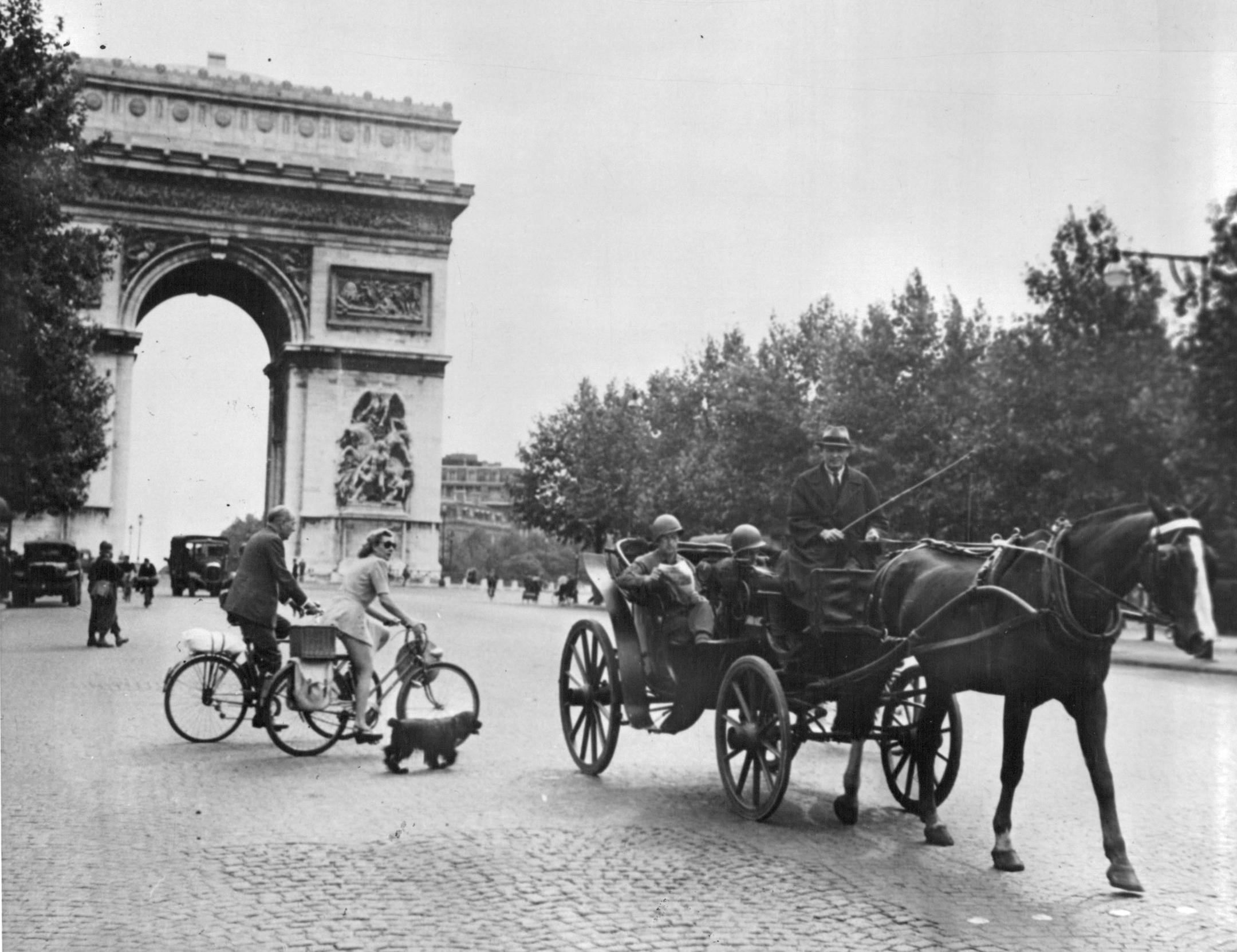
Braude, whose last book (“Kiki Man Ray: Art, Love and Rivalry in 1920s Paris”) featured some of the same real-life characters as “Typewriter,” skillfully recaptures the glittering milieu in which Flanner was constantly partying with Gertrude Stein, Ernest Hemingway or some other luminary.
He captures the strengths of Flanner’s work, which began with an inventive, curious mind but deepened as she gradually refined her writing skills. She was careful to keep herself out of her columns in the early years but soon became a sharp observer of the tactics with which Hitler absorbed much of Europe: “Everything that is happening in Europe now is happening according to the characters, rather than the politics, of a few leading men. What is taking place here is psychology, not history. History will come later.” Eventually, like Edward R. Murrow, Flanner saw her job as waking up the world to horrors it was trying to ignore.
“Typewriter” also unpacks Flanner’s complicated love life, which included an early marriage to a man and then multiple, frequently overlapping, relationships with women. And it tracks her growing awareness of her power. Excerpts from Flanner’s letters to her bosses back in New York reveal her to be hard-working, argumentative and self-deprecating — a mighty appealing combo. Before I read the book, I knew next to nothing about Flanner, other than her byline, and now I want to know even more.
I have no behind-the-scenes knowledge of the creation of the book but it reads like it started out as a biography of Flanner into which Braude inserted blah serial killer sections in an attempt to duplicate the Erik Larson formula of two contemporaneous storylines that gradually wind around each other, as demonstrated by nonfiction bestsellers “The Devil in the White City” and “Thunderstruck.”
The other storyline deals with a German con man named Eugen Weidmann, the guillotine, who must be the dullest and most hapless serial killer ever. Essentially, his victims are random people who get in his way and whose bodies are almost immediately discovered. The brevity of these infrequent Weidmann chapters, which are often just a page or two long, attests to how little there is to be said about “The Guillotine” and his crimes.
Flanner and Weidmann’s paths did cross — she wrote about the police investigation and may have attended parts of his trial — but the connection feels tenuous.


