

Opinion editor’s note: Strib Voices publishes a mix of guest commentaries online and in print each day. To contribute, click here.
•••
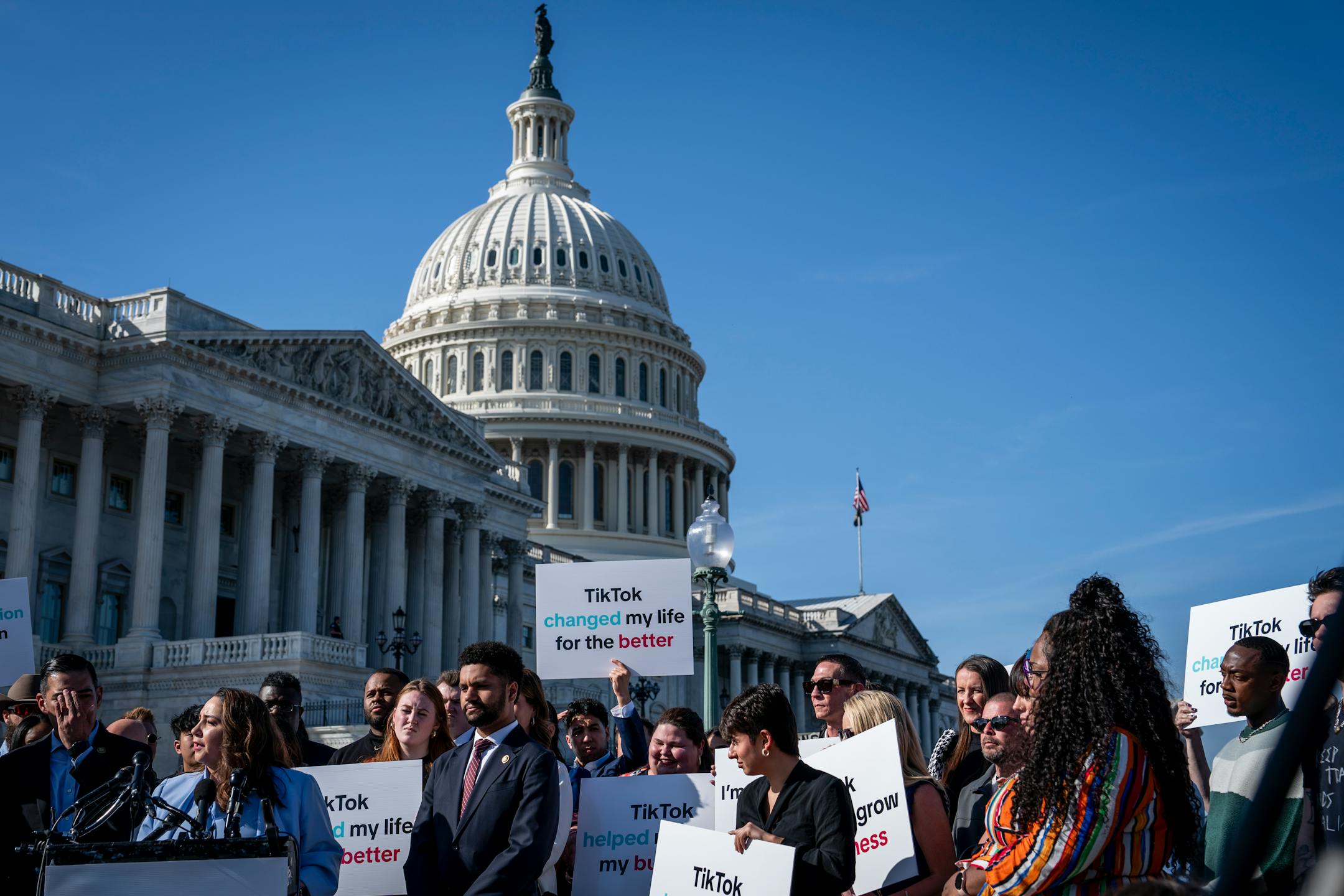
The free speech implications of the coming ban on TikTok in the United States are staggering and unprecedented. On Friday, the U.S. Court of Appeals for the District of Columbia Circuit upheld a federal law that requires TikTok to stop operating here on Jan. 19 if its owner, ByteDance, does not sell it to a non-Chinese company. The 150 million Americans who use TikTok to share and receive information no longer would be able to do so.
In upholding the law, D.C. Circuit Court of Appeals minimized the 1st Amendment impact of banning TikTok, while uncritically accepting the federal government’s claim that national security is threatened by this app.
This is the first time in history that the government has ever banned a medium of communication. It is not simply outlawing a single newspaper or publisher, which itself would be deeply troubling under the 1st Amendment, but banning a platform on which billions of videos are uploaded a year. As the circuit court’s chief judge, Sri Srinivasan, said in a concurring opinion, the TikTok ban will cause a huge number of people in this country to “lose access to an outlet for expression, a source of community and even a means of income.”
The decision stressed that TikTok is controlled by a “foreign adversary,” the People’s Republic of China, and that those outside the United States do not have 1st Amendment rights. But this ignores the rights of millions of users of TikTok in this country to post on the site and to receive information.
Moreover, the Supreme Court has long made clear that the identity of a speaker should not matter under the 1st Amendment. This was the basis for the court’s Citizens United holding that corporations have the right to spend unlimited amounts in election campaigns. The central premise of the 1st Amendment is that more speech is inherently better, regardless of the source.
The court of appeals recognized the free speech implications of the TikTok ban but concluded the ban was justified by national security considerations. In doing so, the court professed the need to give great “deference” to the government and its “evaluation of the facts” concerning TikTok.


