

Opinion editor's note: Editorials represent the opinions of the Star Tribune Editorial Board, which operates independently from the newsroom.
•••
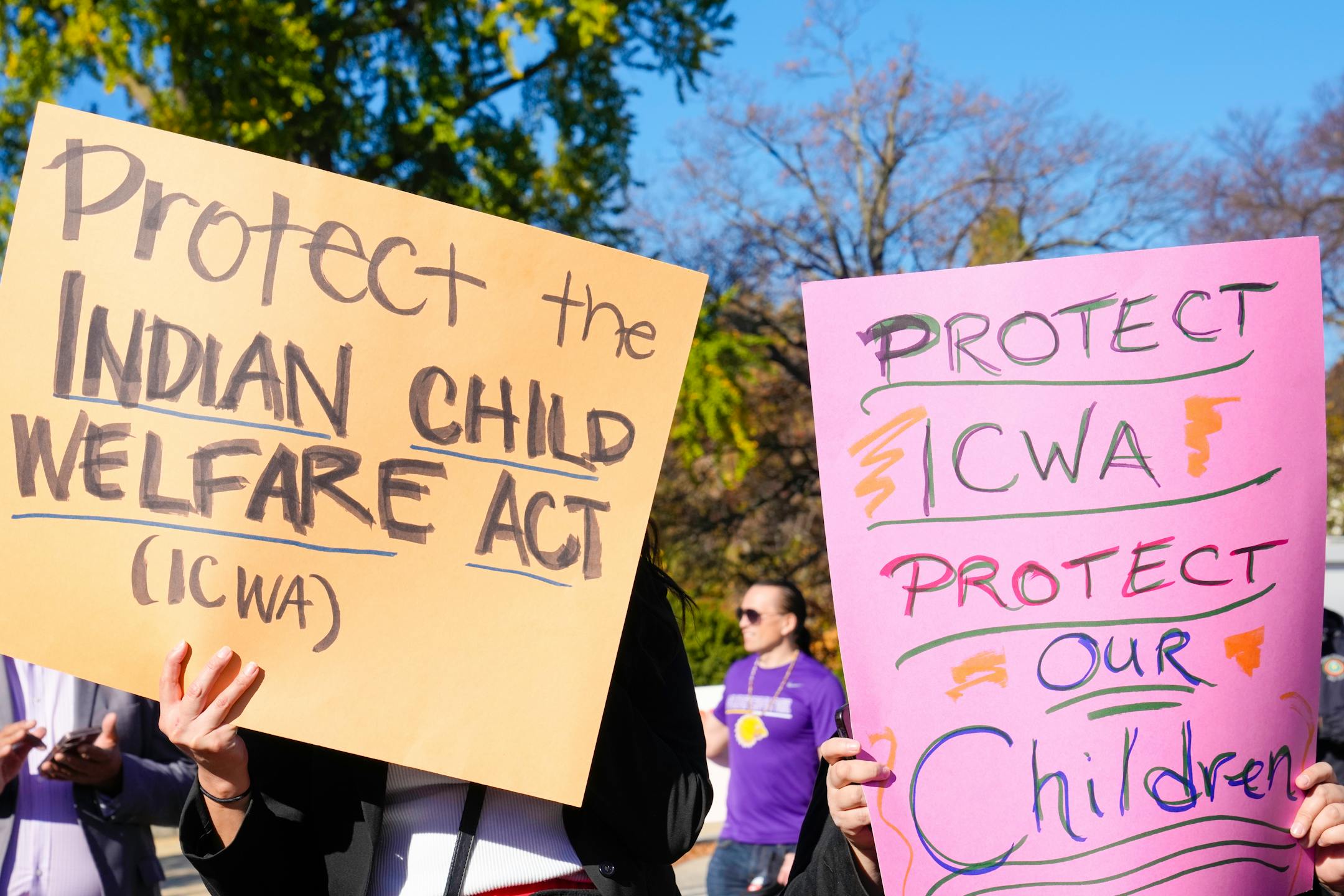
The U.S. Supreme Court decision upholding the Indian Child Welfare Act stands as an affirmation of this country's special obligations to protect the integrity of Native American tribes and cultures and to safeguard each tribe's most precious resource: its children.
Minnesota tribes were jubilant at the recent news that the court voted 7-2 to preserve the federal law, even after white foster families — including a Minnesota couple — challenged the act in Haaland v. Brackeen, arguing that the act was race-based and gave the federal government too much power over Indian adoptions and placements that more properly should reside with the states.
Justice Amy Coney Barrett, writing the majority opinion for the court, noted decisively that congressional power to legislate where tribes are concerned was both "well established and broad," while also affirming that tribal rights and protections are rooted not in a race-based classification but a political one, as sovereigns.
Melanie Benjamin, chief executive of the Mille Lacs Band of Ojibwe, told an editorial writer that deciding otherwise "could have upended almost 200 years of federal Indian law. If being the citizen of an Indian tribe became just a racial classification, there could be chaos across Indian Country. It would change everything. Our status as a tribe is based on political standing, not race. Tribes are political sovereign entities."
Benjamin said Congress passed ICWA in 1978 primarily because Indian children continued to be taken regularly from their families and tribes and placed with non-Indian adoptive or foster families. "Even in the 1970s the rate was still about 25 to 30 percent placement with non-Indians," she said. "It has always been the position of this country to have us become part of the melting pot. But because of our status, culture, land holdings, that can never happen. If there are no more Indians, there are no more reasons for treaties or Indian laws, so assimilation is always an underlying intent, whether it's acknowledged or not."
Justice Neil Gorsuch, a noted expert in Indian law, wrote in a forceful and moving concurrence that, "Often, Native American Tribes have come to this Court seeking justice only to leave with bowed heads and empty hands. But that is not because this Court has no justice to offer them. Our Constitution reserves for the Tribes a place — an enduring place — in the structure of American life. It promises them sovereignty for as long as they wish to keep it."


