

Opinion editor's note: Star Tribune Opinion publishes a mix of national and local commentaries online and in print each day. To contribute, click here.
•••
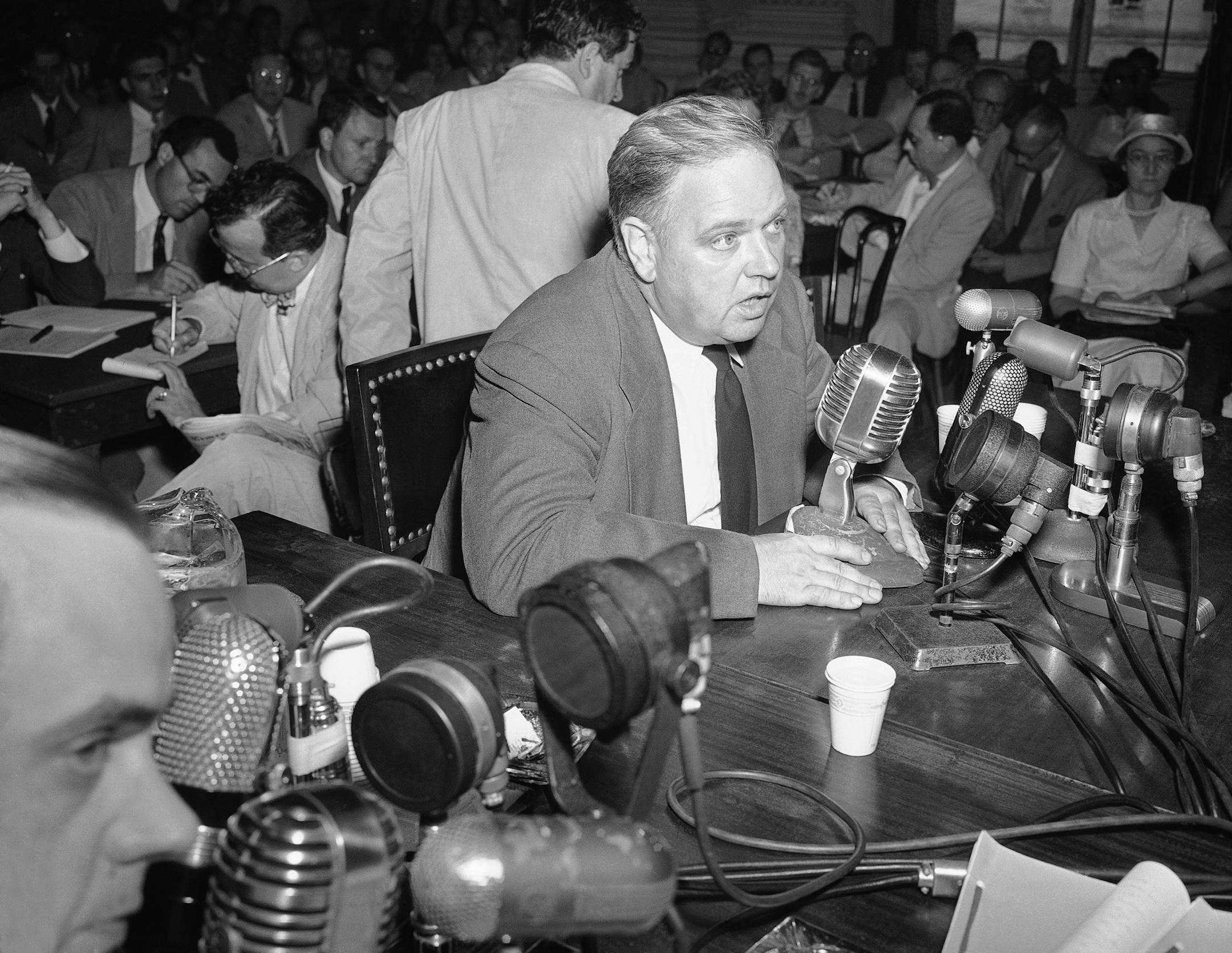
In August 1948, 75 years ago this summer, America was transfixed by the testimony of an obscure Time magazine editor before the House Un-American Activities Committee. For the first time, television broadcast a congressional hearing, and what a hearing. At issue was Soviet espionage in the United States. Soon, Whittaker Chambers, Alger Hiss and Richard Nixon were household names.
Chambers had joined the Communist Party of America in 1924. Then in his early 20s, he had convinced himself that communism was the only solution to the dual problems of war and "economic privation."
For a number of years Chambers wrote for the "Daily Worker." Eventually he agreed to go underground to function as a courier for embedded spies, including Alger Hiss, a high-ranking Roosevelt administration official who would ultimately be imprisoned for perjury in connection with Chambers' allegations.
Chambers had abandoned the Communist Party in 1937. His de-conversion, while gradual, was capped off by something very large (the murderous Stalinist purges in the Soviet Union) and something very small (an epiphany inspired, he wrote, by contemplating the perfection of his infant daughter's ears).
Until then, Chambers had regarded himself as a "typical modern man" living life "without God" save for "tremors of intuition." As of 1948, he had spent nearly a decade living the "other typical American life," namely a life of "career and success" as a writer for Time.
By testifying before Congress he traded in both the "revolutionary ending and the success ending" for a "third ending." He would become a "witness" twice over — a witness against communism and a witness for God. The communist courier had become a faithful Quaker.


