

Movements are not trending topics. They're not celebrity scandals that excite the mediasphere like brush fires. They are paradigm shifts, and they do their work through legislation, court proceedings, disciplinary measures and the evolution of social hierarchies, political power and the allocation of capital.
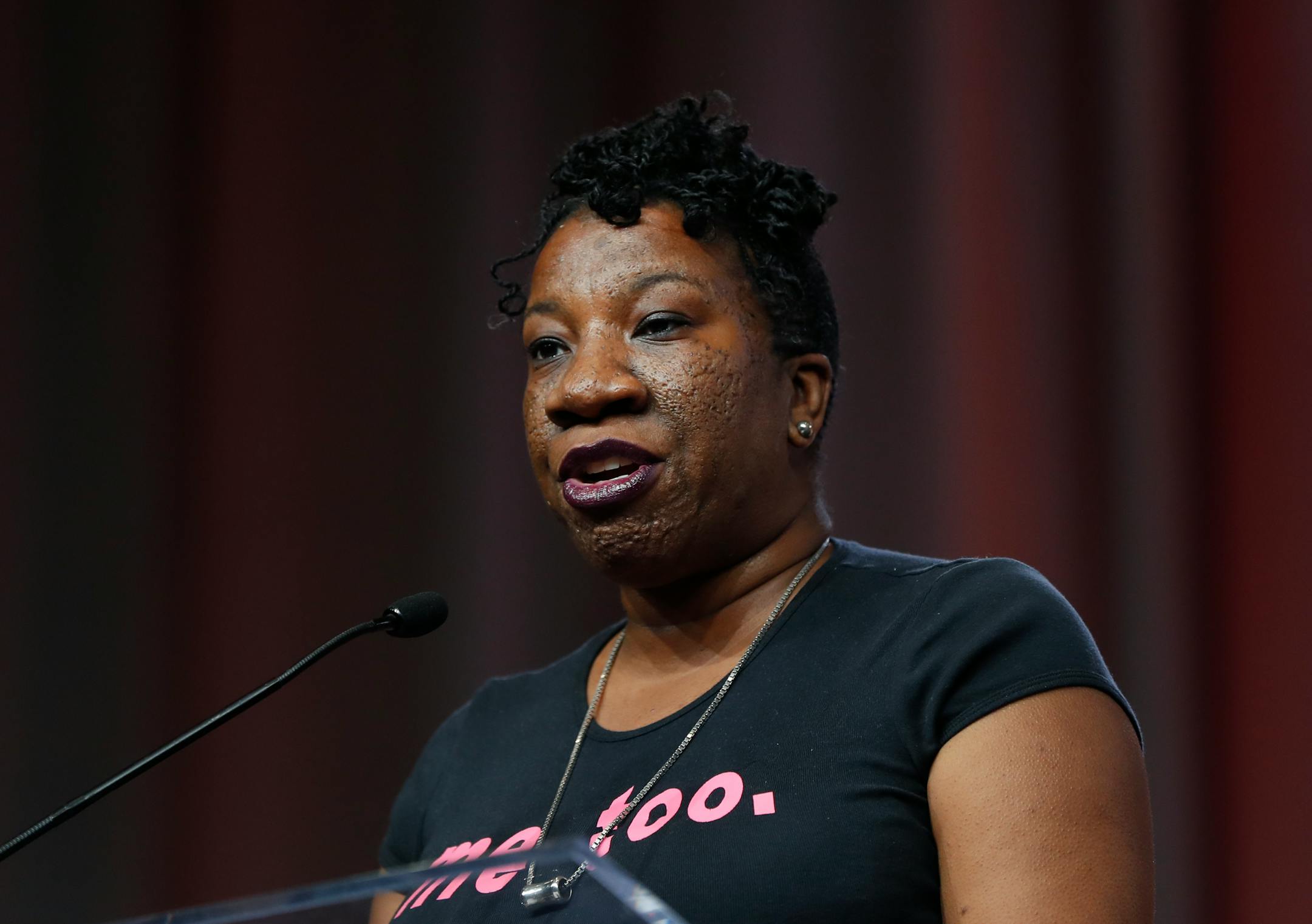
In 2006, when Twitter hashtags didn't exist, the activist Tarana Burke coined MeToo to promote solidarity among survivors of sexual violence, especially women of color. Her term succinctly described a formidable campaign far more powerfully than "fight the patriarchy" does. Patriarchy describes the rigid top of a power structure; MeToo describes a dynamic grassroots threat to it.
The central tenet of Burke's political philosophy? That sexual violence is so widespread in America as to represent its own sociology. That sociology establishes brutal power relations, with rituals of sexual subjugation, exploitation and humiliation. It comes with specific practices of witness intimidation and silencing. Institutions such as corrections departments, the Boy Scouts, the military, sports programs, universities and religious organizations have protected it systematically, through payoffs, settlements and extrajudicial arbitration.
Having survived sexual violence during her childhood in a Bronx housing project, Burke as a teenager led campaigns to address racial discrimination and economic injustice. Her advocacy continued at Alabama State University in Selma.
It was in Selma that Burke encapsulated her approach with the simple phrase "Me Too," a prompt for girls and women — and eventually people across the gender spectrum — to tell their stories and find social and legal support. After a decade of building resources and protocols for testifying, reporting and prosecuting sexual violence, Burke's movement was name-checked by actress Alyssa Milano in 2017, and what Burke had developed snowballed.
In fact, perhaps more than any other contemporary political philosophy, Burke's MeToo ideology has passed into what philosophers call "praxis"— the application of a theory to ordinary life. More people should know Tarana Burke's name.
And in case there's any doubt that her project has radically changed society, it's worth noting the progress seen in swifter and surer reaction — and even remediation — when sexual subjugation is exposed. Systematic abuse is met now by revelation and collective resistance.
Avatars of powerful institutions can't hide. The governor of New York, Andrew Cuomo, has denied inappropriate touching but has apologized for making people uncomfortable and is under investigation after two former aides and a woman he encountered socially have accused him of sexual harassment and, in the case of one of the aides, a forced kiss.


