By Cass R. Sunstein • Bloomberg
Many Americans have forgotten, or never learned about, the Alger Hiss case. One of the most dramatic trials of the 20th century, it helps explain not only the rise of McCarthyism in the early 1950s and the presidencies of Richard Nixon and Ronald Reagan, but also the contemporary roles of Rush Limbaugh, Ted Cruz and the Tea Party.
The Hiss case casts light on why conservatives and liberals are suspicious of each other, on their different attitudes toward elitism, on their understandings of patriotism — and on the parallel universes in which they seem to live.
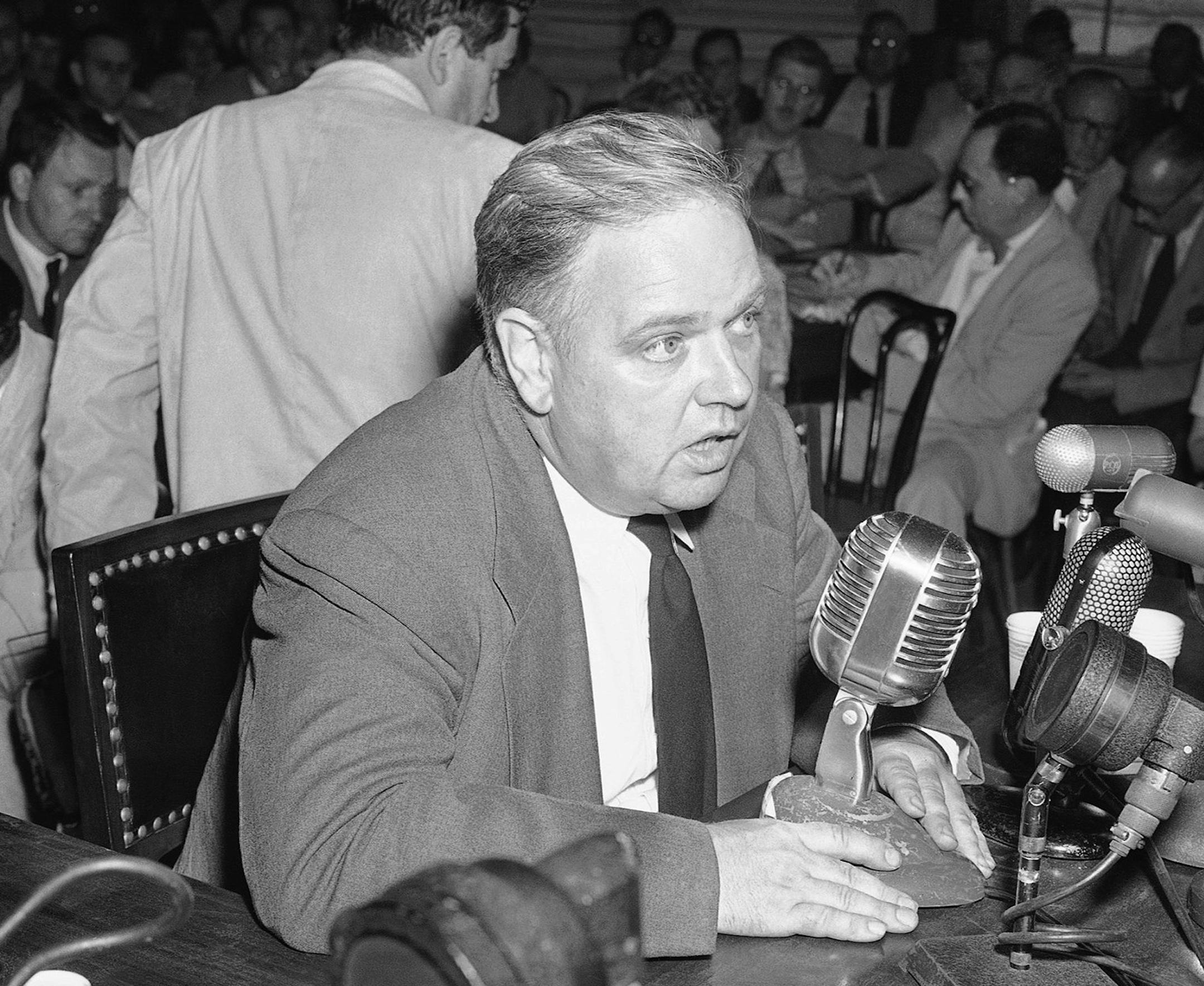
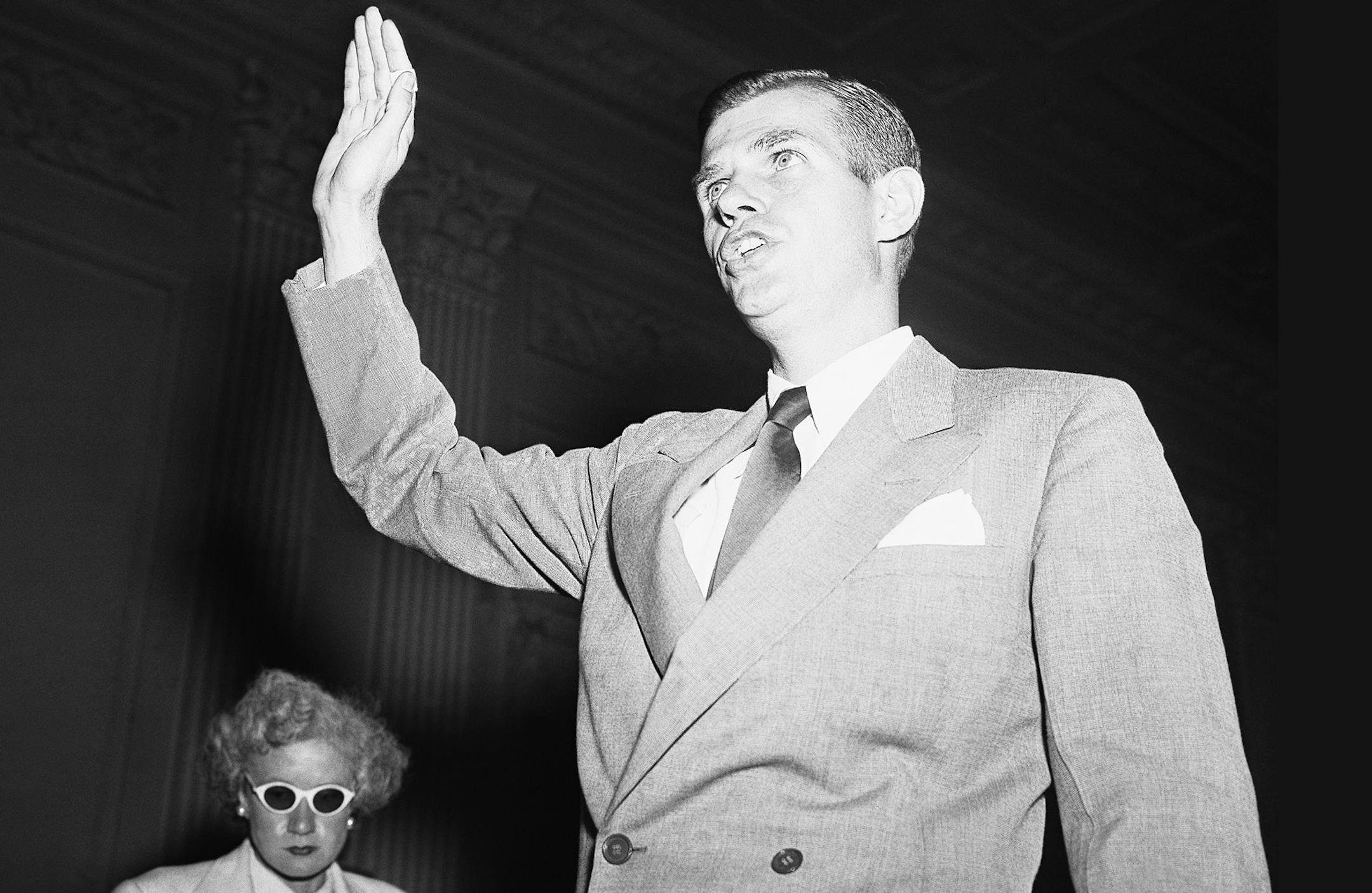
In his 1948 testimony before the House Committee on Un-American Activities, Whittaker Chambers, a writer and editor for Time magazine and a former Communist, identified Hiss as a Communist. Hiss adamantly denied the charge. He said he didn't know anyone named Whittaker Chambers. Encountering his accuser in person, Hiss spoke directly to him: "May I say for the record at this point that I would like to invite Mr. Whittaker Chambers to make those same statements out of the presence of this committee without their being privileged for suit for libel?"
Chambers took Hiss's bait. In an interview on national television, Chambers repeated his charges. In response to the libel suit that followed, he produced stolen State Department documents and notes that seemed to establish not merely that Hiss was a Communist, but that he had spied for the Soviet Union. Hiss was convicted of perjury.
The conviction was stunning, for Hiss had been a member of the nation's liberal elite. A graduate of Harvard Law School and a law clerk for the revered Supreme Court Justice Oliver Wendell Holmes, he had held positions of authority in the Agriculture, Justice and State Departments. He was tall, handsome, elegant, gracious, even dashing.
At his 1949 perjury trial, an extraordinary number of liberal icons served as character witnesses for Hiss, including two Supreme Court justices (Stanley Reed and Felix Frankfurter); John W. Davis, who was the Democratic presidential nominee in 1924, and Adlai Stevenson, who was to become the Democratic nominee for the presidency in 1952 and 1956.
By contrast, Chambers was short, plump and badly dressed. He was a college dropout. After abandoning Communism, he became a conservative and a Christian, and he saw the 20th century as a great battle between Communism on one hand and religious devotion on the other.